Rugby History: Origins, Evolution, and Key Moments in the Game
When you think of rugby, a full-contact team sport that evolved from football in 19th-century England. Also known as rugby football, it’s not just about tackling—it’s about tradition, grit, and a rulebook that changed how sports are played. The story starts not in a professional stadium, but in a schoolyard. In 1823, at Rugby School in Warwickshire, a boy named William Webb Ellis supposedly picked up the ball during a football match and ran with it. Whether it’s true or not, the moment became the myth that launched a global sport.
What followed wasn’t instant fame—it was chaos. Different schools played by different rules. Some allowed handling, others didn’t. Some let you pass forward, others banned it. By the 1870s, clubs in England started pushing for standardization. That’s when the Rugby Football Union, the first governing body for the sport, formed in 1871 to bring order. Around the same time, a split happened. Some clubs wanted to pay players. Others said no. That disagreement led to the creation of rugby league, a faster, more streamlined version of the game that broke away in 1895. Rugby union stayed amateur until 1995—long after other sports had gone professional.
The game spread fast. British soldiers, sailors, and teachers took it to Australia, New Zealand, South Africa, and beyond. By the early 1900s, international matches were common. The British and Irish Lions, a touring team made of top players from England, Scotland, Wales, and Ireland, became a symbol of rugby’s global reach. The Rugby World Cup didn’t start until 1987, but it quickly became the biggest event in the sport. New Zealand’s All Blacks, South Africa’s Springboks, and Australia’s Wallabies didn’t just play—they became legends.
And the rules? They kept changing. The tackle got safer. The scrum got more structured. The try went from 3 points to 5. The introduction of the sin bin, the video referee, and the high tackle crackdown all show one thing: rugby is always adapting. It’s not stuck in the past. It’s learning from it.
Today, senior players across Nottinghamshire still play the game—not for TV deals or sponsorships, but because they love the physicality, the teamwork, and the history behind every pass and tackle. You’ll find them in local clubs, on muddy pitches, wearing the same kind of gear their grandfathers did. The game hasn’t lost its soul. It’s just grown up.
Below, you’ll find real posts that dig into rugby’s rules, its culture, and the moments that shaped it. No fluff. No hype. Just the facts, the stories, and the details that matter to anyone who’s ever worn a jersey and hit the field.
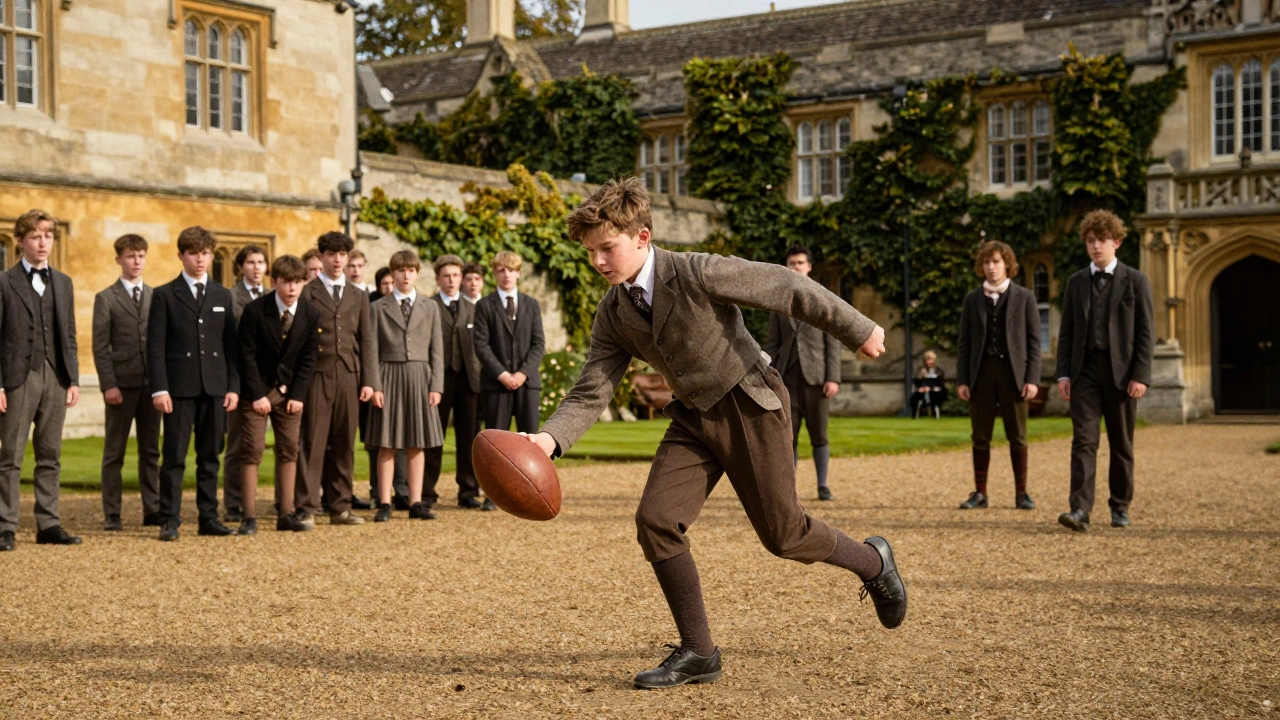
Rugby predates modern football by nearly two decades, with its first written rules dating to 1845. The sport evolved from school games in England and became official before soccer standardized its rules.

Rugby isn't named after a person or the ball's shape-it comes from Rugby School in England, where the game's unique rules were first developed in 1823. The name stuck because of place, not play.
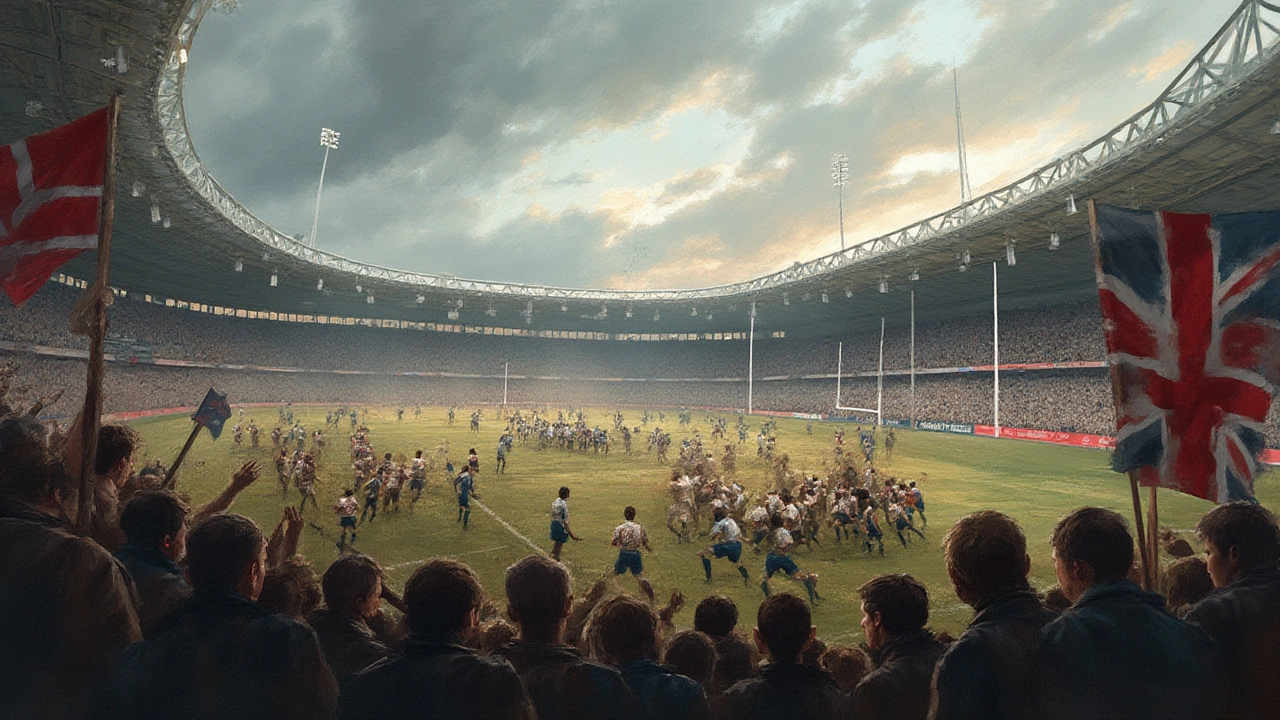
Discover which country tops the list for the best rugby in history. Get details, stats, rivalries, and stories that define the world’s greatest rugby nation.