How to Know When It's Time for New Running Shoes: Signs & Mileage
Running Shoe Lifespan & Wear Checker
Select any signs you currently observe. These override mileage estimates if severe.
Your feet probably don't send you a clear text message when your running shoes are dying. Instead, they whisper through subtle changes in how the ground feels underfoot, or worse, they scream through a nagging knee pain that won't quit. Knowing exactly when to retire your current pair is one of the most overlooked aspects of running gear maintenance, yet it directly impacts your performance and injury risk.
Most runners stick with their shoes until the outsole looks shredded, but that’s often too late. The internal structure fails long before the rubber wears down. By understanding the specific indicators of wear, you can protect your joints and maintain consistent energy return on every stride.
The Mileage Rule: Your Primary Metric
If you want a simple baseline, look at your odometer. For the average runner, running shoes typically last between 300 and 500 miles. This range isn't arbitrary; it reflects the compression set of modern foam materials. Once a foam loses its ability to bounce back after being compressed, it stops protecting your body from impact forces.
However, mileage is just a starting point. Several factors shift this number up or down:
- Body Weight: Heavier runners compress the midsole faster. If you weigh over 180 lbs (82 kg), expect your shoes to hit the end of their life closer to the 300-mile mark.
- Running Surface: Concrete and asphalt are unforgiving. They abrade the outsole and stress the midsole more than trails or treadmills. Trail running often extends shoe life because the softer ground reduces impact shock, though rocks may tear the upper.
- Foam Type: High-rebound foams like those found in premium daily trainers tend to degrade faster than stable EVA foams. Carbon-plated super shoes often have a shorter functional lifespan due to the aggressive geometry and stiff plate interacting with the soft foam.
Track your miles using a GPS watch or a simple app. Don’t guess. If you run 20 miles a week, you’ll burn through a pair of shoes roughly every 6 to 10 months. That’s your replacement window.
Physical Signs of Wear: What to Look For
Mileage tells you *when* to check, but physical inspection tells you *if* it’s time to replace. You need to examine three specific areas: the outsole, the midsole, and the heel counter.
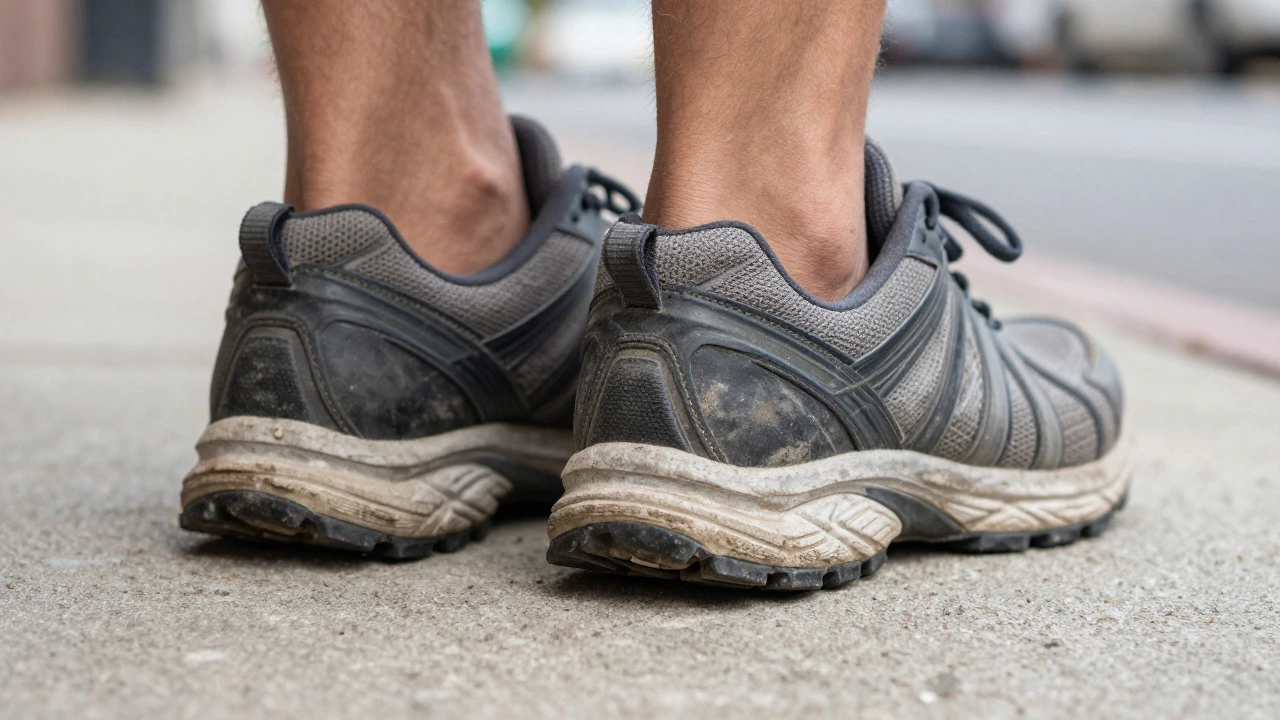
- The Outsole Tread: Flip your shoe over. Look at the pattern in the high-impact zones, usually the heel strike area and the forefoot push-off zone. If the lugs are worn flat or the rubber is thin enough that you can see the midsole material underneath, traction is compromised. Slipping on wet pavement becomes a real hazard here.
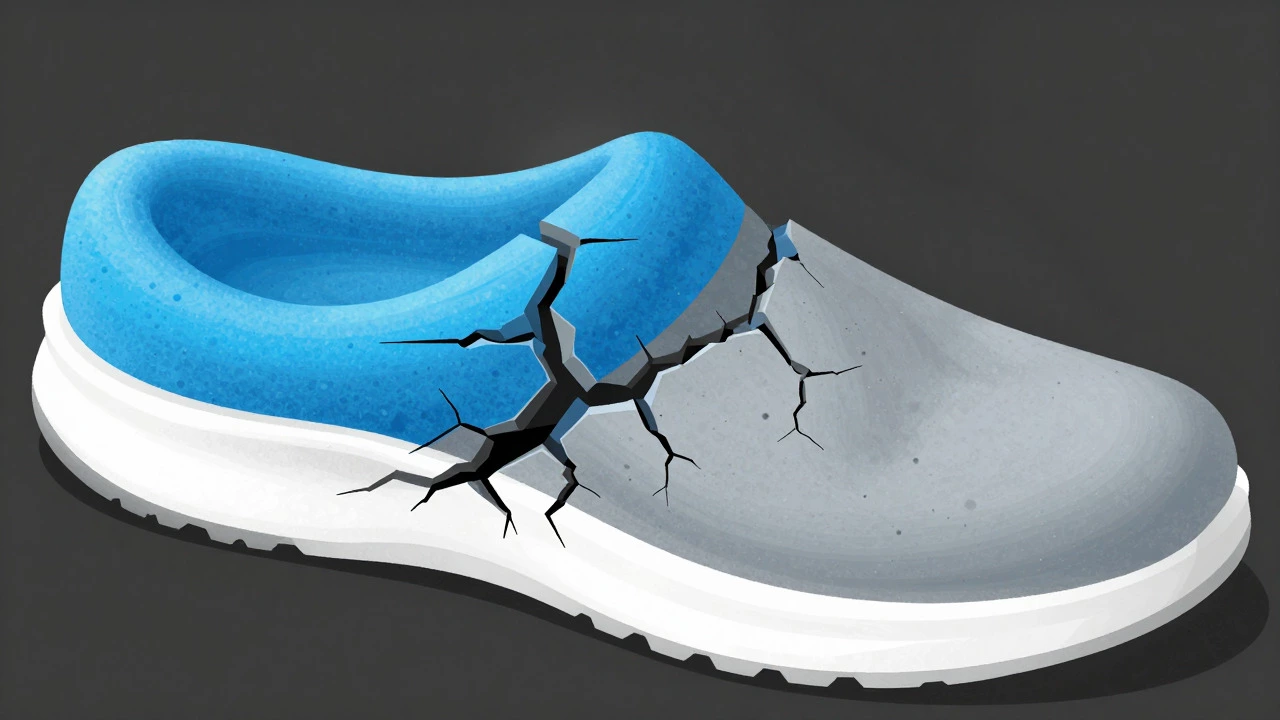
- Midsole Compression Lines: This is the most critical sign. Bend the shoe in half. If you see deep creases or cracks forming in the foam, especially near the arch or heel, the material has lost its integrity. These cracks indicate that the foam is breaking apart rather than flexing. A healthy midsole should spring back smoothly without leaving permanent dents.
- Heel Counter Stability: Press the back of the shoe where your heel sits. If it feels mushy or collapses inward easily, the structural support is gone. This leads to excessive ankle motion and can cause instability issues during turns or uneven terrain.
| Component | Function | Sign of Failure | Risk if Ignored |
|---|---|---|---|
| Outsole | Traction and durability | Flat treads, visible midsole | Slips, reduced grip |
| Midsole | Cushioning and energy return | Deep cracks, permanent dents | Joint impact, fatigue |
| Upper | Fit and breathability | Torn mesh, loose stitching | Blisters, poor lockdown |
| Insole | Arch support and comfort | Flattened shape, odor | Discomfort, foot fatigue |
Biological Cues: Listening to Your Body
Sometimes the data says your shoes are fine, but your body disagrees. This is often the most reliable indicator that something is wrong. If you start experiencing new pains that weren't there six months ago, suspect your footwear first.
Common biological red flags include:
- Knee Pain: Specifically, anterior knee pain or patellofemoral syndrome. Worn-out cushioning transmits higher vertical ground reaction forces directly into your knee joint.
- Plantar Fasciitis: Morning stiffness or sharp pain in the heel arch. This often happens when the midsole no longer supports the arch properly, causing the plantar fascia to stretch excessively.
- Shin Splints: Pain along the inner lower leg. Reduced shock absorption means your shins absorb more impact, leading to inflammation.
- General Fatigue: If your legs feel heavier or more tired after runs of the same distance and pace, your muscles are working harder to compensate for the lack of energy return from dead foam.
Don't wait for pain to become chronic. A slight increase in discomfort after a standard workout is a signal that the protective buffer between your bones and the road has failed.
How Gait and Terrain Change the Equation
Not all running styles wear shoes down equally. Your gait pattern determines which parts of the shoe suffer the most stress.
Overpronators, whose ankles roll inward significantly, often wear down the medial side of the outsole faster. Supinators, who land on the outside edge, wear down the lateral side. Neutral runners distribute wear more evenly. If you have a strong pronation bias, your stability features may fail before the cushioning does, making the shoe feel unstable even if the foam looks okay.
Terrain also plays a massive role. Road runners face constant abrasion from hard surfaces. Trail runners deal with rock strikes and mud clogging the lugs. If you switch between both, consider rotating two pairs of shoes. This allows each pair to dry out completely and recover its shape, effectively doubling their usable life by reducing cumulative compression stress per mile.

Cost-Benefit Analysis: Is It Worth Replacing Early?
Some runners hesitate to buy new shoes because they cost $100 to $160. But compare that to the cost of an MRI, physical therapy sessions, or weeks off the track due to injury. A new pair of shoes is insurance for your musculoskeletal system.
Consider the "cost per mile" metric. If a pair lasts 400 miles and costs $130, that's about $0.33 per mile. If you ignore the warning signs and run another 100 miles on dead shoes, risking a stress fracture that requires 8 weeks of recovery, the financial and emotional cost far exceeds the price of a new pair. Furthermore, running on degraded shoes can alter your biomechanics, leading to compensatory injuries in hips or lower back that are harder to diagnose.
Replacing shoes proactively isn't an expense; it's a performance investment. Fresh foam provides better responsiveness, allowing you to maintain speed with less effort. This efficiency gain is tangible, especially during tempo runs or race preparation.
Practical Checklist for Replacement Timing
To make this process effortless, use this quick checklist every month or after every 50-mile block:
- Check the Mileage: Have you passed 300 miles? Start inspecting closely. Passed 450 miles? Plan for replacement within the next month.
- Bend Test: Fold the shoe in half. Are there deep cracks in the foam? If yes, replace immediately.
- Outsole Inspection: Can you see the foam through the tread? If yes, traction is compromised.
- Pain Audit: Did you feel any new joint pain or unusual muscle fatigue in the last two weeks? If yes, assume the shoes are part of the problem.
- Smell Test: Do the insoles smell bad despite washing? Bacteria buildup indicates moisture retention, which degrades materials and hygiene.
If you answer "yes" to any of these questions, it’s time to visit a specialty running store. Bring your old shoes so a professional can analyze your wear patterns and recommend the right fit for your next pair.
Do I need to replace running shoes if I only run twice a week?
Yes, but the timeline will be longer. If you run 10 miles a week, you might get 2 to 3 years out of a pair. However, foam degrades over time regardless of use due to oxidation. Even if the mileage is low, check for cracking or hardness after 18 months of storage or light use.
Can I extend the life of my running shoes by washing them?
Washing removes dirt and bacteria, which helps hygiene, but avoid machine washing. Heat and agitation can break down the glue holding the sole to the upper. Hand wash with mild soap and air dry away from direct heat sources. This preserves the structural integrity while keeping the shoes fresh.
Is it better to rotate two pairs of shoes or buy one expensive pair?
Rotating two moderate-quality pairs is generally better for longevity and injury prevention. It allows each pair to fully decompress and dry out between runs. This reduces the cumulative stress on any single pair, extending their effective lifespan compared to wearing one pair daily.
What happens if I keep running in worn-out shoes?
You increase the risk of overuse injuries like shin splints, plantar fasciitis, and stress fractures. The loss of cushioning means higher impact forces travel up your kinetic chain, affecting your knees, hips, and lower back. Performance also drops as you spend more energy stabilizing your foot instead of propelling forward.
How do I know if my gait is causing uneven wear?
Look at the outsole wear pattern. If one side is significantly more worn than the other, you likely have a pronounced pronation or supination tendency. A podiatrist or running coach can analyze your gait video to confirm if you need stability features or neutral shoes to correct the wear pattern.