What Does 'Match' Mean in Soccer? Rules, Duration, and Structure Explained
Soccer Match Structure Simulator
Select Match Scenario
Choose a competition type to see how the match structure changes:
League Match
Regular season game where draws are allowed
Knockout Tournament
Elimination match requiring a winner
Championship Final
High-stakes match with extended play
Match Analysis
Select a scenario and click "Analyze Match Structure" to see detailed information about how the match would be structured.
You watch the clock tick down. The referee blows the whistle. One team celebrates; the other walks away empty-handed. But what exactly just happened? In soccer, that event is called a match, also known as a football game. It is the fundamental unit of competition where two teams battle for points on the league table or progression in a tournament.
If you are new to the sport, the term might seem simple, but the structure of a soccer match is surprisingly complex. Unlike basketball or American football, which have continuous stoppages and clear quarter structures, a soccer match flows differently. It has specific durations, unique tie-breaking mechanisms, and strict rules about who can play. Understanding these elements helps you appreciate why a 0-0 draw feels different from a 3-2 thriller.
The Basic Structure: Two Halves and Stoppage Time
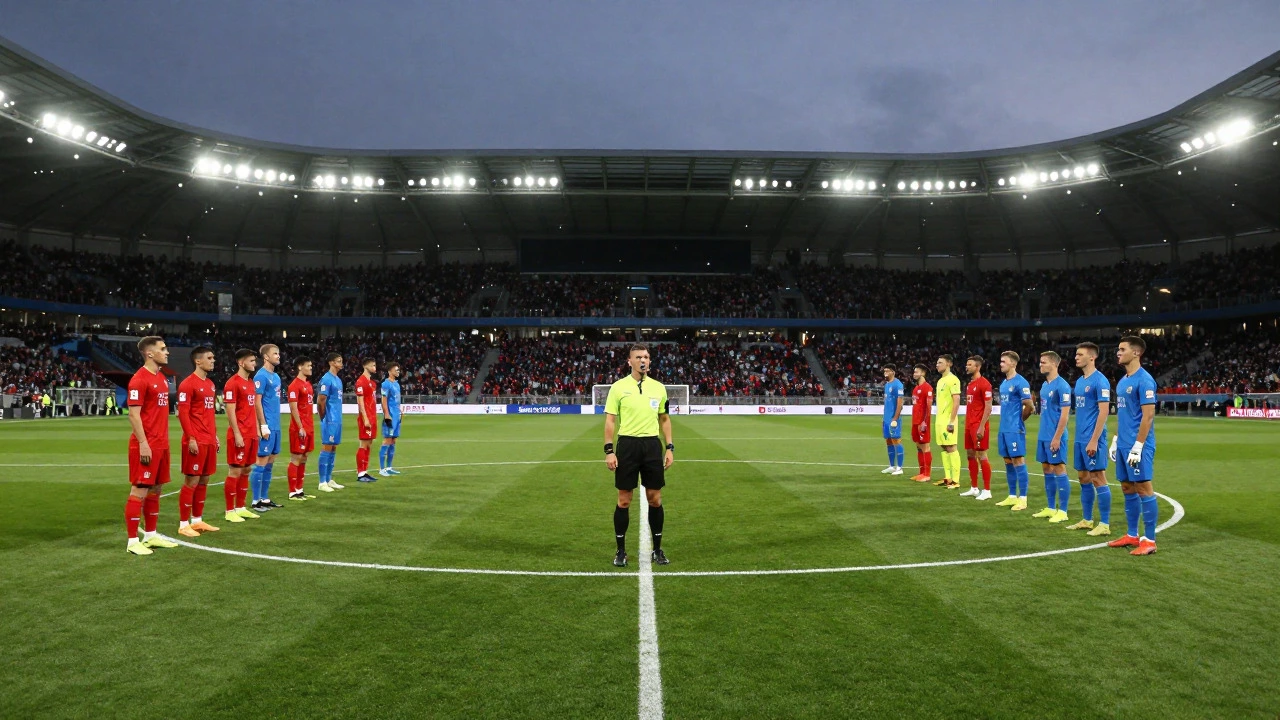
A standard professional soccer match consists of two equal periods called halves. Each half lasts 45 minutes. This totals 90 minutes of regulation time. However, if you look at a broadcast, you will notice the clock never stops when the ball goes out of bounds or when players are injured. This running clock is one of the most distinct features of the sport.
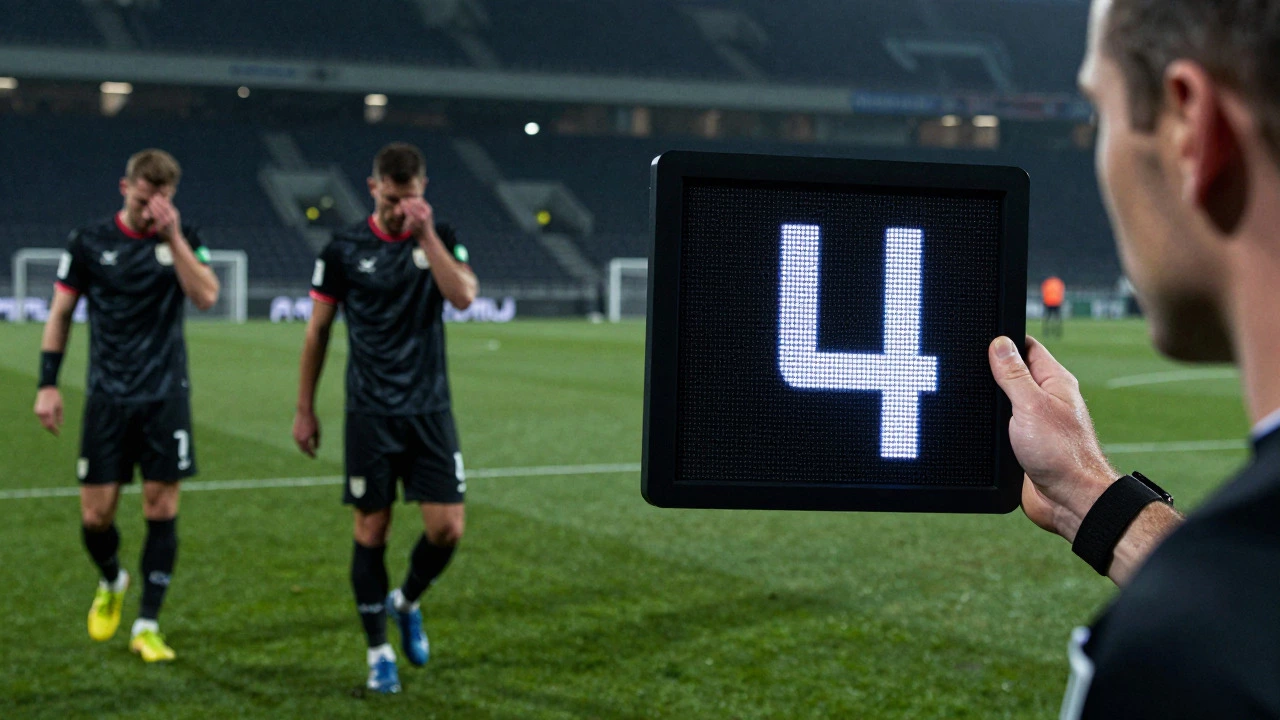
Because the clock keeps running during delays, the referee adds extra time at the end of each half. This is called stoppage time, or added time. The fourth official holds up a board showing how many minutes (and sometimes seconds) will be added. This ensures that the actual playing time remains close to 45 minutes per half, compensating for substitutions, injuries, goal celebrations, and VAR checks.
- First Half: 45 minutes + stoppage time.
- Half-Time Break: A mandatory 15-minute rest period where teams switch sides of the field.
- Second Half: 45 minutes + stoppage time.
The referee has the final say on how much time to add. If a player fakes an injury to waste time, the referee might add three minutes instead of one. This human element makes every minute count, especially in tight games.
Scoring and the Outcome: Wins, Losses, and Draws
In many sports, a winner is always determined by the end of the game. Soccer is different. A match can end in a draw, or tie. If both teams score the same number of goals after 90 minutes, the result is a draw. In league competitions like the English Premier League or La Liga, this is a valid final result. Teams earn one point for a draw, three for a win, and zero for a loss.
However, in knockout tournaments-such as the FIFA World Cup, UEFA Champions League, or domestic cups-a winner must be decided. You cannot have a draw in the final stages because someone needs to advance. This leads to two additional phases that extend the match beyond the standard 90 minutes.
| Competition Type | Standard Result | Tie-Breaker Method |
|---|---|---|
| League (e.g., Premier League) | Win, Loss, or Draw | None (Draw stands) |
| Knockout Tournament (Early Rounds) | Win, Loss, or Draw | Extra Time & Penalties |
| Group Stage | Win, Loss, or Draw | None (Draw stands) |
Extra Time: The Sudden Death Myth
When a knockout match ends in a draw after 90 minutes, it goes into extra time. This consists of two additional halves, each lasting 15 minutes. There is no stoppage time usually added unless there are significant delays. So, a match can potentially last 120 minutes.
A common misconception is that extra time uses "sudden death" rules, meaning the first team to score wins immediately. While this was true in some older formats, modern major tournaments like the World Cup use full 30-minute extra time regardless of goals scored. If Team A scores in the 105th minute and Team B scores in the 110th minute, the game continues until the 120th minute. Only if the score is still tied after 120 minutes does the match move to penalties.
Playing extra time is physically grueling. Players are already fatigued from 90 minutes of high-intensity running. Managers often make additional substitutions here to bring on fresh legs, particularly attackers, to try and break the deadlock.
Penalty Shootouts: Deciding the Winner
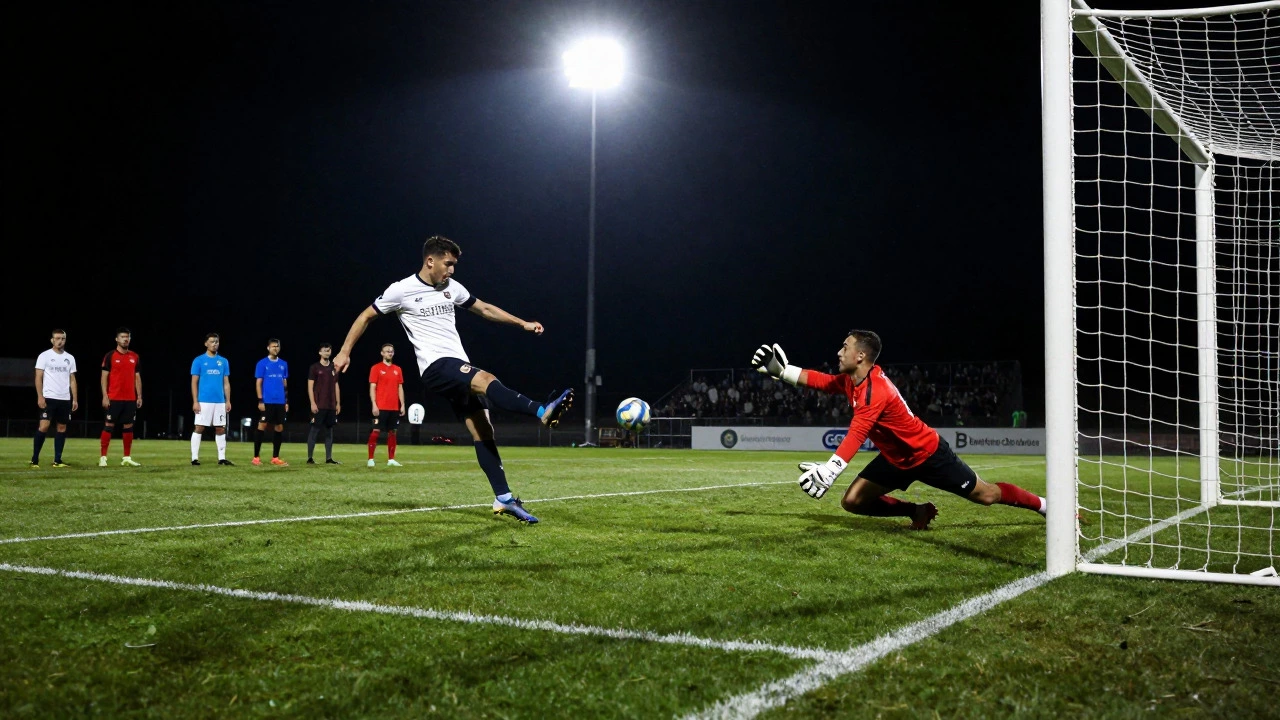
If the score remains level after extra time, the match is decided by a penalty shootout. This is not part of the match score itself. If a game ends 1-1 after 120 minutes and Team A wins the shootout 4-3, the official match record shows a 1-1 draw, with Team A advancing via penalties.
Here is how a shootout works:
- Selection: Each team selects five players to take penalties.
- Alternation: Teams take turns shooting from the penalty spot (12 yards from the goal).
- Goalkeeper: Only the goalkeeper defends. All other players must stay outside the penalty area.
- Scoring: After five rounds, the team with more goals wins.
If the shootout is still tied after five rounds, it goes to "sudden death." Both teams take one shot at a time. If one team scores and the other misses, the scoring team wins immediately. This format creates immense psychological pressure, often deciding championships based on nerve rather than skill over 90 minutes.
Player Substitutions and Squad Limits
A soccer match involves 11 players per side on the field at any given time. However, teams have larger squads available for substitution. The rules for substitutes have changed significantly in recent years, largely due to the impact of the pandemic and fixture congestion.
Currently, under IFAB (International Football Association Board) regulations, most top-tier leagues allow a maximum of five substitutions per match. These substitutions can be made across three separate stoppages, plus half-time. For example, a manager could swap two players at halftime, two more in the 60th minute, and one final change in the 80th minute.
This rule allows managers to manage player fatigue and tactical adjustments. It also means that bench players can have a significant impact on the outcome of a match, especially in the late stages when tired legs lead to mistakes.
Officiating: The Referee's Role
A soccer match is controlled by a team of officials. The primary authority is the referee. They carry a whistle, cards, and a stopwatch. Their decisions are final, though they are now aided by technology.
- Assistant Referees (Linesmen): Two officials positioned along the touchlines. They raise flags to indicate offside, throw-ins, and corner kicks.
- Fourth Official: Manages the bench, displays stoppage time, and can replace other officials if needed.
- VAR (Video Assistant Referee): In top competitions, a video review system checks for clear errors in goals, penalties, red cards, and mistaken identity.
The introduction of VAR has slowed down matches slightly but increased accuracy. Fans often debate whether VAR ruins the flow of the game, but it prevents obvious injustices, such as a disallowed goal due to a millimeter of offside.
Why Match Format Matters for Strategy
Understanding the match structure changes how you view tactics. In a league game, a team might settle for a draw if it guarantees them a top-four finish. In a knockout game, they must attack. The knowledge that extra time exists changes risk assessment. A manager might hold back their star striker in the second half of regular time to save energy for extra time, knowing that a penalty shootout favors fresher legs.
Furthermore, the lack of a reset clock means momentum shifts are critical. A goal in the 89th minute leaves almost no time for the conceding team to respond, whereas in basketball, a late basket gives the other team possession for a final shot. This asymmetry makes late-game defense crucial in soccer.
How long is a soccer match including breaks?
A standard soccer match lasts 90 minutes of playing time, split into two 45-minute halves. With a 15-minute half-time break and typically 3-5 minutes of stoppage time per half, the total elapsed time is approximately 1 hour and 45 minutes. If extra time is played, add another 30 minutes plus a short break, totaling around 2 hours and 20 minutes before penalties.
Can a soccer match end in a tie?
Yes, in league competitions, a match can end in a draw. Both teams receive one point. However, in knockout tournaments like the World Cup, a winner must be decided, so ties are resolved through extra time and penalty shootouts.
What happens if the score is tied after extra time?
If the score is tied after 120 minutes (90 minutes regular + 30 minutes extra), the match proceeds to a penalty shootout. Five players from each team take alternating shots. If still tied, it goes to sudden death, where teams take one shot at a time until one misses and the other scores.
How many substitutions are allowed in a match?
Most professional leagues currently allow up to five substitutions per team per match. These can be made in up to three separate stoppages, plus half-time. This rule varies slightly in lower divisions or youth leagues, which may allow unlimited subs.
Does the clock stop in soccer?
No, the clock generally runs continuously throughout each half. The referee accounts for lost time due to injuries, substitutions, and VAR checks by adding stoppage time at the end of the half. This is different from sports like basketball or American football, where the clock stops frequently.