Essential Sports Equipment Guide: Everything You Need to Get Started
Sports Gear Starter Checklist
Select the sport you are starting with to generate your essential gear checklist.
Your Gear List
Quick Essentials Checklist
- Footwear: Sport-specific shoes to prevent ankle rolls and slips.
- Apparel: Moisture-wicking fabrics that breathe and stretch.
- Protection: Helmets, pads, or mouthguards depending on the contact level.
- Hydration: A durable bottle and electrolyte replacements for long sessions.
- The Basics: The ball, racket, or club required for the specific activity.
The Foundation: Choosing the Right Footwear
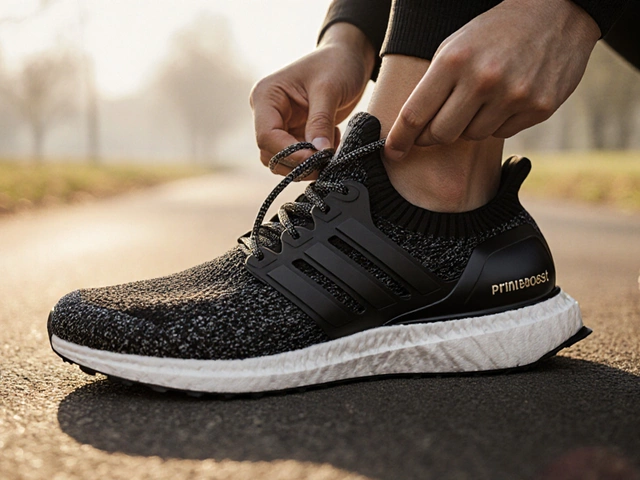
Your shoes are the most critical piece of sports equipment is a collection of tools, clothing, and protective gear designed to facilitate athletic activity and ensure safety. Also known as athletic gear, it ranges from simple footwear to complex electronic tracking systems.. If you wear the wrong shoes, you're not just slowing yourself down; you're asking for a stress fracture or a sprained ligament. For example, running in a flat-soled gym shoe on asphalt is a recipe for shin splints because you lack the necessary arch support and heel cushioning.
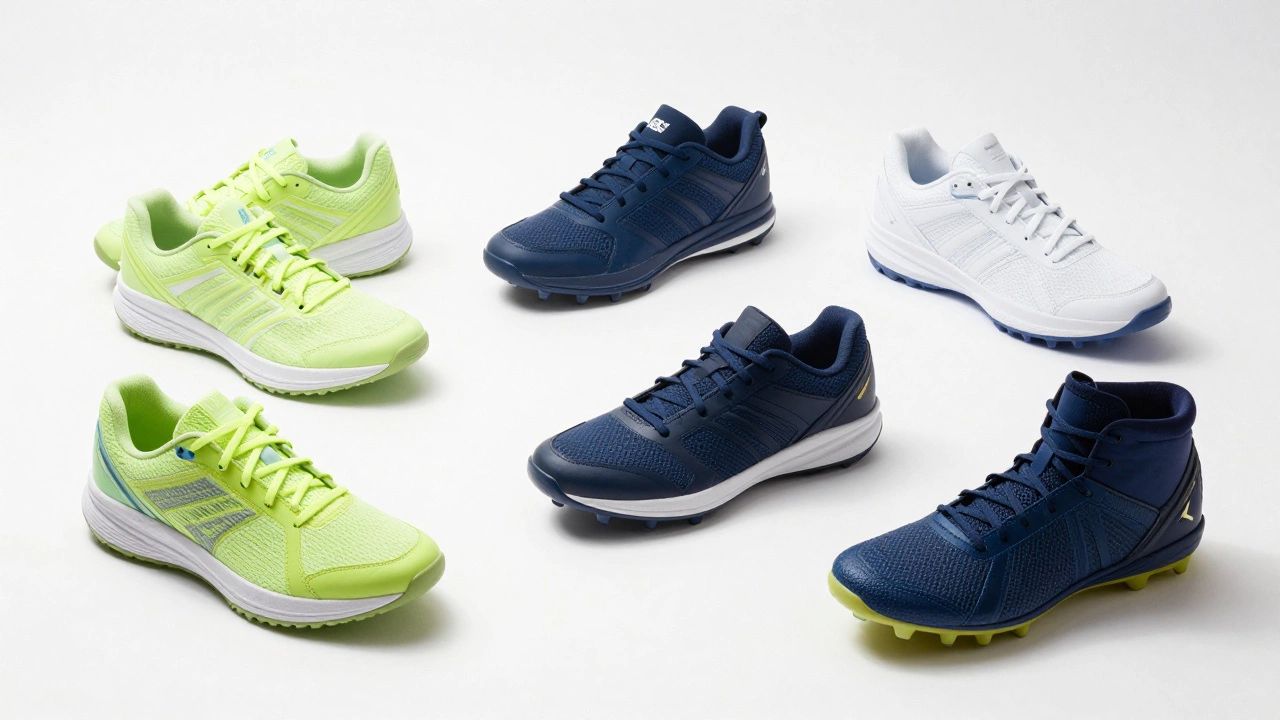
Different surfaces require different grip patterns. Running Shoes are built for linear movement and shock absorption. In contrast, court shoes for basketball or tennis have reinforced sides to handle lateral (side-to-side) movements. If you try to play tennis in running shoes, you'll likely feel your foot sliding inside the shoe, which is how most ankle sprains happen. Then there are cleats, which use studs to dig into grass or turf, preventing you from slipping during a sudden change in direction in football or rugby.
| Sport | Surface | Shoe Type | Key Feature |
|---|---|---|---|
| Running | Pavement/Trail | Running Shoe | Cushioning & Flexibility |
| Tennis/Pickleball | Hard Court | Court Shoe | Lateral Stability |
| Football/Soccer | Grass | Cleats/Studs | Traction & Grip |
| Basketball | Hardwood | High-Tops | Ankle Support |
Performance Clothing: Why Cotton is Your Enemy
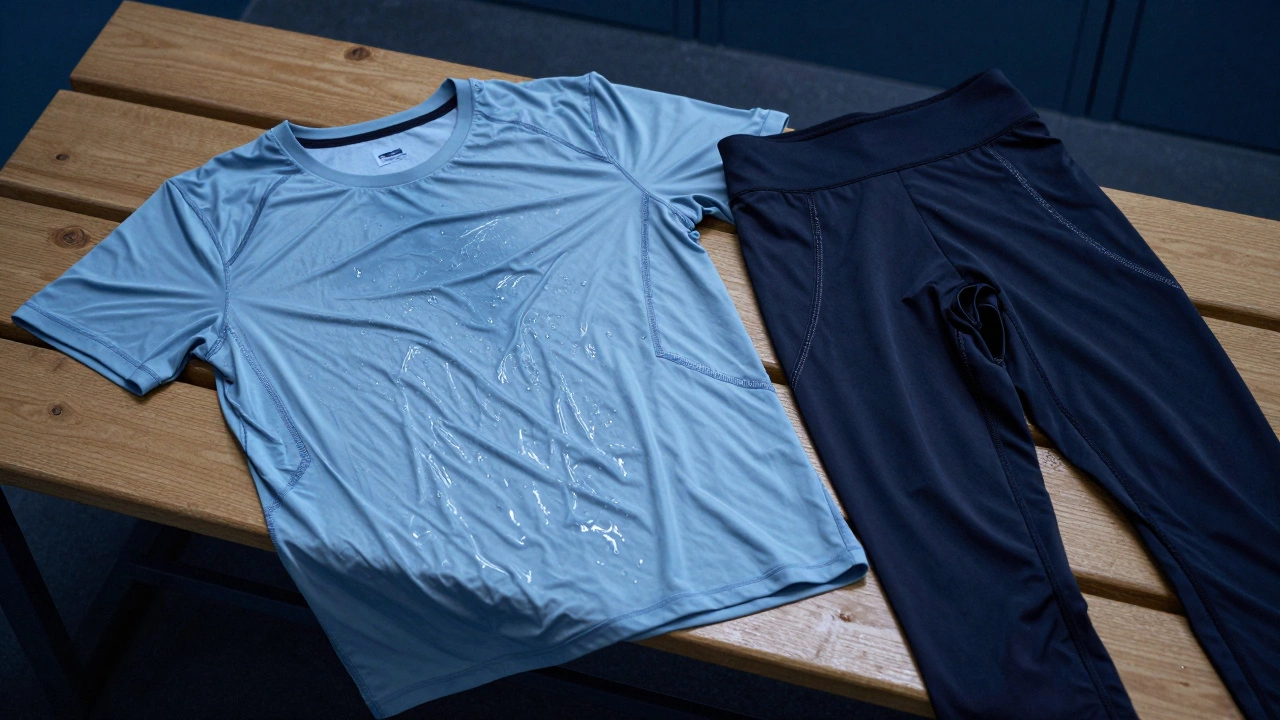
You've probably seen athletes wearing sleek, tight-fitting clothes. It's not just for aesthetics. The biggest mistake beginners make is wearing a heavy cotton T-shirt. Cotton absorbs water and holds onto it. Once you start sweating, a cotton shirt becomes a heavy, wet blanket that chafes your skin and makes you feel colder if there's a breeze. This is where Moisture-Wicking Fabric comes in. These are usually synthetic blends like polyester or nylon that pull sweat away from your skin and push it to the surface of the fabric where it can evaporate.
Think about the layers you need. For outdoor sports in cooler weather, a base layer of compression gear helps keep muscles warm and improves circulation. Over that, a breathable mid-layer and a windbreaker can keep you from freezing without overheating. For high-intensity sports, look for "four-way stretch" fabrics. If you're doing squats in a gym or lunging on a tennis court, you need clothes that move with your body rather than resisting it. Ripped seams during a game are an avoidable embarrassment if you just pick the right material.
Safety and Protection: Non-Negotiable Gear
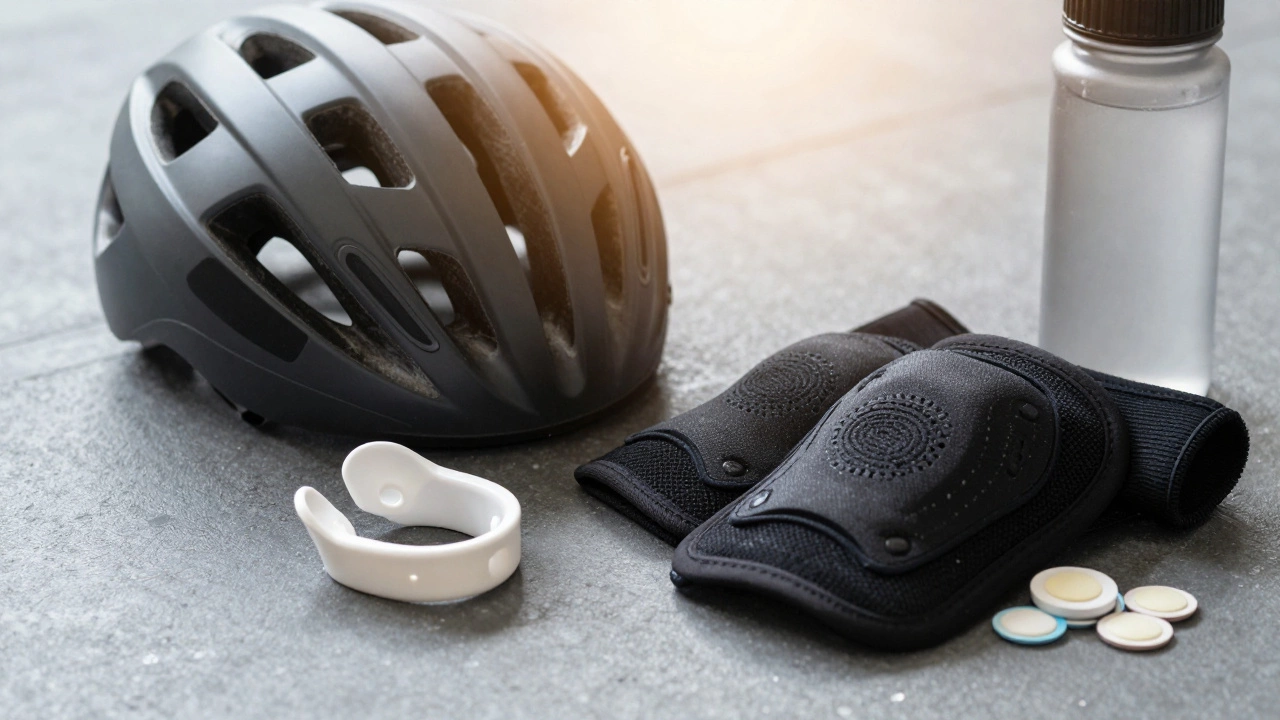
Some sports are low-impact, but many carry a high risk of injury. Protection shouldn't be an afterthought. In contact sports, Protective Gear is the only thing standing between you and a trip to the emergency room. A mouthguard is essential in rugby or boxing to protect your teeth and reduce the risk of concussions. Similarly, helmets in cycling or skateboarding aren't just a suggestion-they're a necessity. A high-quality helmet should be snug and sit level on your head, not tilted back, to actually protect your forehead during a fall.
Even in non-contact sports, protection matters. Think about ankle braces for those with a history of sprains or wrist wraps for heavy lifting in the gym. Knee pads are a lifesaver for volleyball players who spend half the game diving on hard floors. The rule of thumb is: if there's a chance your joint or head will hit a hard surface, you need a piece of equipment designed to absorb that impact. Don't try to "tough it out"-the gear is there so you can play longer and more consistently.
The Tools of the Trade: Rackets, Balls, and Clubs
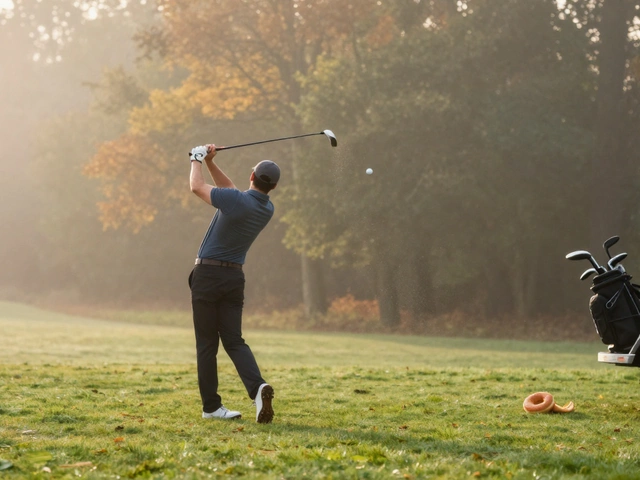
Now we get to the actual equipment that makes the sport what it is. While you can buy a professional-grade Tennis Racket or a high-end set of golf clubs, beginners should avoid the most expensive options. Most pro gear is designed for people with a very specific, refined technique. If you use a high-tension string on a racket before you've mastered your swing, you'll likely find it too stiff and lose control of the ball.
Instead, look for "beginner" or "intermediate" versions. These are usually more forgiving. For example, a larger sweet spot on a racket means you can still get a decent shot even if you don't hit the ball exactly in the center. In golf, hybrid clubs are often better for newcomers than long irons because they launch the ball higher and straighter. Once you've played for a few months and know your style, that's when you should invest in the top-tier equipment that fine-tunes your performance.

Recovery and Maintenance: Keeping Your Gear Alive
Buying the gear is only half the battle; taking care of it ensures you don't have to buy it again every six months. Most people ignore the "expiration date" on their shoes. Even if the tread looks fine, the internal foam in running shoes typically breaks down after 300 to 500 miles. Once that cushioning is gone, your joints take the hit. If you start feeling new aches in your knees or hips, it's time to check the mileage on your footwear.
Hydration gear also needs maintenance. Water Bottles can grow mold if not cleaned properly, and electrolyte drinks should be used strategically. Don't just drink water during a three-hour game; you'll dilute your sodium levels and potentially cramp up. Use an isotonic drink to replenish the salts you lose through sweat. Similarly, clean your gear. Washing your moisture-wicking clothes with a gentle detergent (and avoiding fabric softener, which clogs the "breathable" pores of the fabric) will make them last significantly longer.
Do I really need expensive brand-name gear to start?
No, you don't. For most sports, mid-range equipment from a reputable brand is more than enough for a beginner. The only area where you should avoid the cheapest possible option is footwear. Poorly made shoes can lead to actual injuries, whereas a cheap racket or ball won't hurt you-it might just be slightly less performant. Focus your budget on shoes and safety gear first.
How do I know if a helmet or pad fits correctly?
A helmet should feel snug but not cause a headache. When you shake your head, the helmet shouldn't wobble. For pads, they should stay in place during a full range of motion-if your knee pads slide down when you bend your leg, they won't protect you during a fall. Always test gear by mimicking the movements of the sport before leaving the store.
What is the best fabric for workout clothes?
Look for synthetic blends like polyester, spandex, or nylon. These are designed to be moisture-wicking, meaning they move sweat away from the skin. Avoid 100% cotton for high-intensity activities because it absorbs moisture and becomes heavy and cold. For yoga or pilates, a mix of nylon and spandex provides the necessary stretch and support.
How often should I replace my sports shoes?
For running shoes, every 300 to 500 miles is the standard. For other sports, replace them when the tread is worn flat or if you notice a significant drop in support (e.g., the heel feels "squishy" or the ankle support has stretched out). If you start feeling unusual pain in your joints, it's a sign the cushioning has failed.
Are compression garments actually useful?
Yes, they can be. Compression gear helps by supporting muscles, reducing vibration during impact (which can lower muscle fatigue), and keeping you warm in cold weather. While they aren't a magic pill for performance, they can help with circulation and may speed up recovery time after a grueling session.
Next Steps for New Athletes
If you're just starting out, don't buy everything at once. Start with a high-quality pair of shoes and a basic set of clothing. Join a local club or a "pick-up" game to see what the regulars are using. You'll quickly notice if there's a specific piece of gear-like a certain type of grip or a specific brand of sock-that everyone prefers for your specific sport. This prevents you from wasting money on gadgets you'll never use.
If you're transitioning from a casual hobby to something more competitive, consider getting a professional fitting. A gait analysis for runners or a racket fitting for tennis players can reveal a lot about how you move and what equipment will prevent injury. Investing a little time in the setup phase saves you a lot of time in the recovery phase later on.