Has Any Tennis Player Won All Four Majors? The Calendar Grand Slam Explained

Tennis Grand Slam Explorer
What is a Grand Slam?
Winning all four major tournaments in one year.
- Australian Open: Hard Court (Jan)
- French Open: Clay Court (May-Jun)
- Wimbledon: Grass Court (Jun-Jul)
- US Open: Hard Court (Aug-Sep)
Career vs. Calendar
(More common, e.g., Federer, Nadal, Djokovic)
(Extremely rare, last done by Graf in 1988)
Don Budge (Men's)
1938 - First ever Calendar Grand Slam.
Maureen Connolly (Women's)
1953 - First woman to achieve it.
Rod Laver (Men's)
1962 & 1969 - Only man to do it twice. 1969 was in the Open Era.
Margaret Court (Women's)
1970 - Completed her Career Slam this way.
Steffi Graf (Women's) 🥇
1988 - The only Golden Slam (4 Majors + Olympic Gold).
Loading question...
You’re watching a tennis match, and the commentator drops a phrase that stops you in your tracks: "He’s going for the Calendar Grand Slam." It sounds impressive, but what does it actually mean? Is it just about winning four tournaments, or is there something more specific-and much harder-about doing it in one year?
The short answer is yes, players have won all four major titles. But whether they did it in a single calendar year or across their career changes everything. This distinction defines some of the greatest achievements in sports history. Let’s break down exactly who has done it, why it’s so rare, and what separates a true Calendar Grand Slam from a Career Grand Slam.
What Counts as a Major in Tennis?
To understand the achievement, you first need to know the targets. In professional tennis, "the majors" refer to the four most prestigious tournaments on the annual tour. These aren’t just big events; they are the pillars of the sport’s history and prestige.
Winning one of these is a career-defining moment. Winning two in a row? That’s a streak. But winning all four? That’s where the terminology gets tricky for casual fans.
The Difference Between Career and Calendar Grand Slams
This is the core confusion. When people ask if anyone has won all four majors, they might mean two different things:
- Career Grand Slam: A player wins all four major titles at any point during their entire professional career. They don’t have to be consecutive, and they can span over a decade.
- Calendar Grand Slam: A player wins all four major titles within the same calendar year (January through December).
Think of it like climbing mountains. A Career Grand Slam means you’ve summited Everest, K2, Kilimanjaro, and Denali eventually. You might have climbed Everest in 2010 and K2 in 2015. A Calendar Grand Slam means you summited all four in the same twelve months. One is a testament to longevity and versatility; the other is a testament to peak dominance and consistency.
There is also the "Non-Calendar Year Grand Slam," sometimes called the "Serena Slam" after Serena Williams achieved it twice. This happens when a player holds all four major titles simultaneously, but not within a single calendar year. For example, winning Wimbledon and the US Open in 2014, then the Australian Open and French Open in early 2015. Technically, they held all four titles at once, which is an incredible feat, but it doesn’t count as a Calendar Grand Slam because the years didn’t align perfectly.
Who Has Achieved the Calendar Grand Slam?
If we look strictly at the Calendar Grand Slam-the holy grail of tennis consistency-the list is shockingly short. Only five players in the history of professional tennis have managed to win all four majors in the same year.
| Player | Gender | Year(s) | Notes |
|---|---|---|---|
| Don Budge | Men | 1938 | First ever to achieve it |
| Maureen Connolly | Women | 1953 | First woman to achieve it |
| Rod Laver | Men | 1962, 1969 | Only man to do it twice |
| Margaret Court | Women | 1970 | Completed her Career Slam this way |
| Steffi Graf | Women | 1988 | Also won Olympic Gold (Golden Slam) |
Rod Laver stands out here. He is the only male player to have won the Calendar Grand Slam twice. His 1969 run is particularly legendary because he did it in the Open Era, meaning he was competing against other professionals who had previously been banned from playing with amateurs. Before 1968, top pros couldn’t play the majors. Laver bridged that gap and dominated both eras.
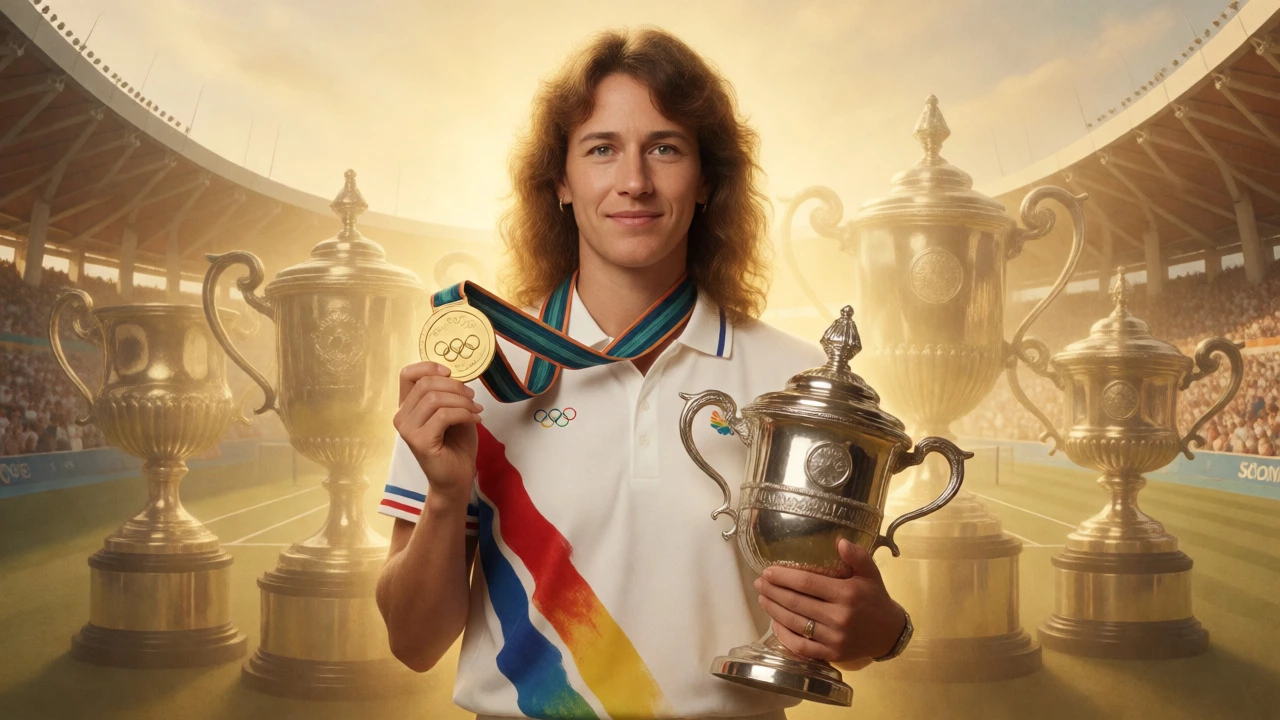
Steffi Graf’s 1988 season is arguably the single greatest year in tennis history. Not only did she win all four majors, but she also won the Olympic Gold Medal in Seoul. This combination is known as the Golden Slam, defined as winning all four Grand Slam titles and the Olympic gold medal in the same calendar year. No other player has achieved this in singles.
Why Is It So Hard to Do in One Year?
You might wonder, if the best players in the world are dominating the tour, why hasn’t someone done this since Steffi Graf in 1988? The physical and mental toll is immense.
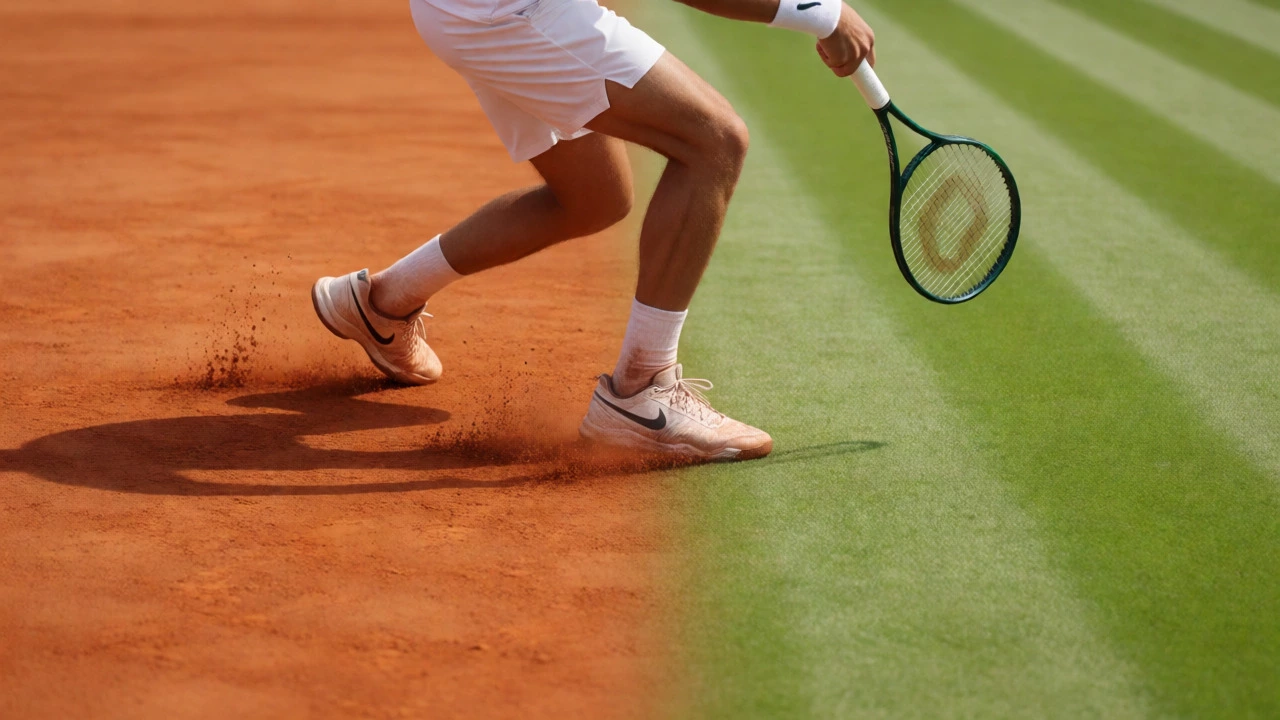
Each major requires a different skill set. The Australian Open demands heat tolerance. The French Open tests patience and footwork on slippery clay. Wimbledon punishes bad serves on slick grass. The US Open challenges mental resilience under loud, partisan crowds. To win all four, a player must be versatile enough to adapt their game four times in twelve months while staying healthy.
Injuries are the biggest enemy. Rafael Nadal has won 22 majors, including multiple French Opens, but his body has never allowed him to sustain peak form across all surfaces in a single year. Novak Djokovic has come close, holding three or four titles simultaneously, but the depth of competition today is deeper than in 1969 or 1988. There are no easy matches anymore. Even the world number 100 can beat the world number 1 on a given day.
Who Has Won the Career Grand Slam?
While the Calendar Grand Slam is rare, the Career Grand Slam is more common, though still exclusive. As of 2026, eight men and ten women have completed the Career Grand Slam. This means they have won each of the four majors at least once in their careers.
In the men’s game, the current "Big Three" era has seen all three members complete this milestone. Roger Federer is a Swiss former professional tennis player widely regarded as one of the greatest of all time, who completed his Career Slam by winning the French Open in 2009. Rafael Nadal is a Spanish former professional tennis player known as the 'King of Clay', who completed his Career Slam by winning the US Open in 2010. Novak Djokovic is a Serbian professional tennis player with the most men's singles Grand Slam titles in history, who completed his Career Slam by winning the French Open in 2016.
Other notable men include Andre Agassi, Fred Perry, Don Budge, Roy Emerson, and Rod Laver. On the women’s side, legends like Serena Williams, Maria Sharapova, Kim Clijsters, and Billie Jean King have joined the club. Serena Williams’ case is interesting because she never won a Calendar Slam, but she did hold all four titles at once twice (the Non-Calendar Year Grand Slams mentioned earlier). Her longevity allowed her to collect them all over a 20-year career.
Modern Context: Why It Might Never Happen Again
Tennis experts often debate whether the Calendar Grand Slam will ever happen again in the modern era. The schedule is brutal. Players now travel constantly between continents, dealing with jet lag, different time zones, and varying court speeds. The introduction of Hawk-Eye Live technology and faster court preparations has changed the rhythm of matches, but it hasn’t made the physical demand easier.
Furthermore, the rise of specialists helps explain the drought. Players like Carlos Alcaraz or Iga Swiatek may dominate on certain surfaces but struggle on others. While Alcaraz has shown incredible versatility, sustaining that level for four consecutive two-week tournaments without dropping a set-or even losing a match-is statistically improbable given the parity in modern tennis.
However, don’t count it out. The sport evolves. If a young player emerges with the power of Djokovic, the movement of Nadal, and the net skills of Federer, combined with superior recovery science, they could theoretically pull it off. Until then, the names Laver, Graf, Budge, Connolly, and Court remain isolated in history books, protected by the sheer difficulty of the task.
Frequently Asked Questions
Has any tennis player won all four majors in one year?
Yes, but it is extremely rare. Only five players have achieved the Calendar Grand Slam: Don Budge (1938), Maureen Connolly (1953), Rod Laver (1962 and 1969), Margaret Court (1970), and Steffi Graf (1988). No player has done it since 1988.
What is the difference between a Career Grand Slam and a Calendar Grand Slam?
A Career Grand Slam means a player has won all four major titles (Australian Open, French Open, Wimbledon, US Open) at any point during their career. A Calendar Grand Slam means winning all four titles within the same calendar year. The latter is significantly harder due to the physical and mental demands of maintaining peak performance across four different surfaces in twelve months.
Did Roger Federer win a Calendar Grand Slam?
No, Roger Federer never won a Calendar Grand Slam. However, he did achieve the Career Grand Slam by winning all four majors over the course of his career. He came closest in 2006, 2007, and 2009, reaching the finals of all four majors in those years but failing to win them all.
What is a Golden Slam?
A Golden Slam occurs when a player wins all four Grand Slam titles plus the Olympic gold medal in the same calendar year. Steffi Graf is the only player in history to achieve this, doing so in 1988. It is considered the ultimate achievement in tennis.
How many players have completed the Career Grand Slam?
As of 2026, eight men and ten women have completed the Career Grand Slam. Notable men include Novak Djokovic, Rafael Nadal, Roger Federer, Rod Laver, and Andre Agassi. Notable women include Serena Williams, Steffi Graf, Margaret Court, and Billie Jean King.