How Many Rounds are in a Boxing Match? A Complete Guide

Boxing Match Duration Calculator
Estimate the total time a boxer spends in the ring, including the active rounds and the mandatory rest periods.
Total Match Duration: 0
Breakdown: 0 mins fighting, 0 mins resting.
Quick Breakdown of Boxing Lengths
- Amateur bouts: Usually 3 rounds of 3 minutes.
- Women's pro fights: Typically 10 rounds (2-minute rounds) or shorter for non-title fights.
- Men's pro bouts: Range from 4 to 12 rounds.
- World Championships: Strictly 12 rounds.
The Professional Ladder: From 4 to 12 Rounds
In the professional circuit, the number of rounds isn't random. It acts as a filter for experience. When a fighter is just starting out, they don't have the cardio or the skin-toughening to go the distance. You'll often see novice fighters start in 4-round bouts. These are essentially tests of basic skill and stamina. If a fighter wins a few of these, they move up to 6 or 8 rounds.
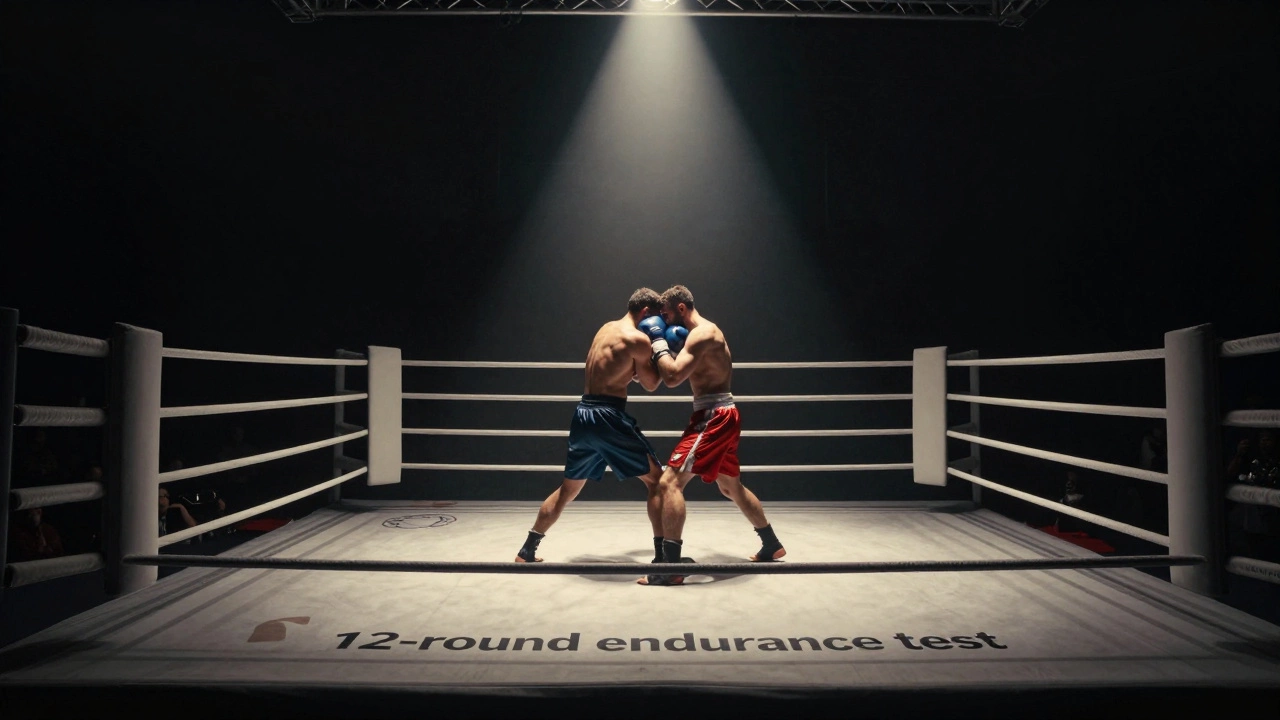
As they climb the rankings, they hit the "main event" territory. A 10-round fight is a serious endurance test. However, the gold standard is the 12-round fight. This is where World Championship boxing happens. Why 12? Historically, fights used to be 15 rounds, but that was changed in the 1980s. After seeing too many fighters take devastating damage in those final three rounds when they were completely exhausted, governing bodies decided 12 was the limit for safety.
| Fight Type | Number of Rounds | Round Duration | Typical Fighter Level |
|---|---|---|---|
| Amateur/Olympic | 3 | 3 Minutes | Beginner/Elite Amateur |
| Pro Debut | 4 | 3 Minutes | Novice Professional |
| Mid-Tier Pro | 6 to 10 | 3 Minutes | Contender |
| World Title | 12 | 3 Minutes | World Class |
| Women's Title | 10 | 2 Minutes | World Class |
Amateur Boxing: The Sprint Approach
Amateur boxing, like what you see in the Olympic Games, is a completely different beast. Here, the goal isn't to wear an opponent down over an hour of combat; it's about explosive scoring and technique. Most amateur bouts are 3 rounds. If you're fighting in a local club, it might even be shorter.
The focus here is on high intensity. Because the fight is so short, the pace is often much faster than a professional 12-round fight. A pro boxer can't punch at 100% speed for 36 minutes without collapsing, but an amateur can certainly do it for 9. This is why you'll see amateurs bouncing around the ring more than the pros, who tend to manage their energy with a more calculated, slower rhythm.

How a Match Actually Ends
Just because a fight is scheduled for 12 rounds doesn't mean it will last that long. There are three main ways a boxing match concludes before the final bell.
First, there is the Knockout (KO). This happens when a fighter is floored and cannot beat the referee's count of ten. It's the most definitive end to a fight. Then you have the Technical Knockout (TKO), which occurs when the referee, the ringside doctor, or the fighter's own corner decides they can no longer safely continue. This is common when a fighter takes too many unanswered punches.
Finally, there's the decision. If the fighters go the full distance-say, all 12 rounds-the result goes to the Judges. They use a 10-point must system, where the winner of the round gets 10 points and the loser gets 9 (or fewer if they were knocked down). This is why boxing rounds are so critical; one bad round can wipe out the lead a fighter built over the previous five.
The Role of the Corner and the Rest Period
Between those rounds, there is a one-minute break. This isn't just a breather. It's a frantic, high-pressure tactical meeting. The trainer (or "cutman") is rushing in to stop bleeding with a cotton swab and adrenaline-soaked petroleum jelly, while the coach is shouting instructions about the opponent's patterns.
Have you ever noticed the water bottle and the stool? That stool is the only place a boxer can sit. If a fighter falls through the ropes or refuses to get up, the round ends. That sixty seconds of rest is where the mental game is won. A fighter who can recover their breath and stay calm during the break usually has a massive advantage in the next round.
Common Misconceptions About Fight Length
One big mistake people make is thinking that all fights are the same because they see a highlight reel of a championship bout. In reality, the "undercard"-the fights that happen before the main event-are usually much shorter. You might see a 4-round fight, followed by a 6-round fight, leading up to the 12-round headliner.
Another confusion comes from the women's game. In many professional organizations, women's bouts are scheduled for 10 rounds instead of 12, and the rounds themselves are often 2 minutes instead of 3. This isn't because they aren't tough; it's simply the standard set by the governing bodies to optimize the pace and safety of the sport for female athletes.
Why are there 12 rounds in a championship fight?
It's a balance between testing a fighter's endurance and ensuring their safety. It used to be 15 rounds, but that was reduced to 12 to prevent excessive brain trauma and fatigue-related injuries that often occurred in the final three rounds.
What happens if a fight ends in a draw?
If the judges' scorecards end up equal, the fight is declared a draw. In title fights, the champion usually keeps the belt in the event of a draw, as the challenger failed to "take" the title away from them.
How long is the break between rounds?
Every round is followed by a exactly one minute of rest. During this time, the fighter returns to their corner to receive medical attention and strategic advice from their coach.
Do amateur boxers have the same round length as pros?
Generally, yes, amateur rounds are 3 minutes long. However, the total number of rounds is much lower (usually 3), whereas pros can fight up to 12.
What is a '10-point must' system?
It is the standard scoring system where the winner of a round is awarded 10 points, and the loser receives 9. If the loser is knocked down, they may receive only 8 or 7 points for that round.
What to Watch for Next
Now that you know the timing, you can start paying attention to "pacing." Watch how a 12-round fighter handles the 7th and 8th rounds-that's usually where the "wall" hits and the fight is won or lost based on who has the better gas tank. If you're interested in the gear that makes these long fights possible, looking into the differences between 10oz and 16oz gloves is a great next step.