How Popular Is Rugby in Brazil? A Reality Check
Brazil Rugby Popularity Estimator
Explore how rugby's reach in Brazil stacks up against global giants and regional rivals. Adjust the parameters to see how population size impacts perceived popularity.
Comparison Analysis
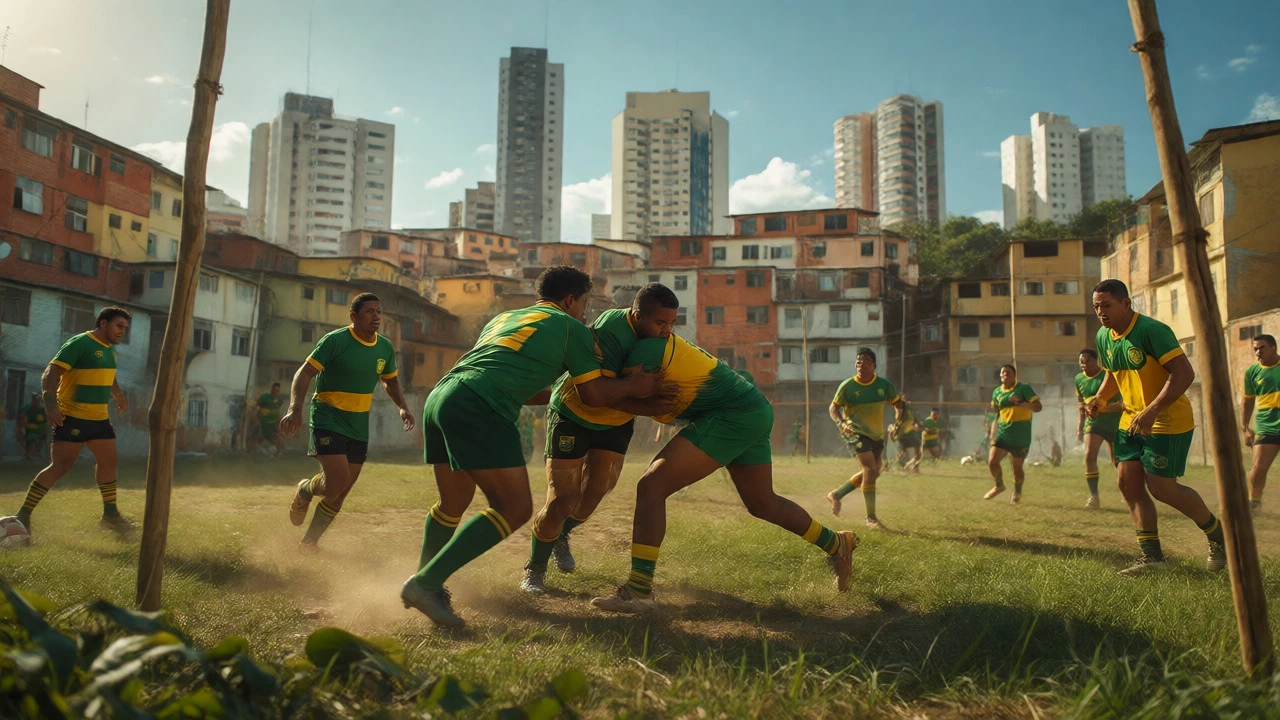
You probably picture football (soccer) when you think of Brazil. Maybe volleyball on the beach or MMA fighters dominating the UFC. But if you ask a random person on the streets of São Paulo about rugby, you’ll likely get a blank stare followed by, "Is that the one with the oval ball and no helmets?" It’s a fair question. Rugby in Brazil is a niche sport, but it’s not dead. In fact, it’s growing quietly, driven by expats, universities, and a national team called the Tupis that’s trying to punch above its weight.
So, how popular is it really? Let’s cut through the noise. We’re talking about actual numbers, cultural barriers, and whether this sport has any chance of breaking into the mainstream consciousness of the world’s most passionate football nation.
The Current State of Play
Let’s start with the hard data. According to World Rugby, Brazil has approximately 15,000 registered players. That sounds decent until you compare it to neighboring Argentina (over 60,000) or global giants like New Zealand (where nearly every kid plays). For a country of 215 million people, 15,000 active players is tiny. That’s less than 0.01% of the population.
But here’s the thing: those numbers don’t tell the whole story. Many players are unregistered, playing in university leagues or social clubs that don’t feed into the official stats. The Confederação Brasileira de Rugby (CBRu), which governs the sport, estimates there are closer to 30,000-40,000 people touching a rugby ball regularly. Still small, but significant enough to sustain a competitive structure.
| Country | Registered Players | Population (Millions) | Players per 10k People |
|---|---|---|---|
| Brazil | ~15,000 | 215 | 0.7 |
| Argentina | ~60,000 | 46 | 13.0 |
| Chile | ~10,000 | 19 | 5.2 |
| New Zealand | ~150,000 | 5 | 300.0 |
This table shows the reality. Brazil lags behind even Chile in per-capita engagement. Why? Infrastructure. You need fields, coaches, and gear. In many parts of Brazil, finding a pitch with proper posts is harder than finding a soccer field. Most rugby is played in major cities: São Paulo, Rio de Janeiro, Curitiba, and Porto Alegre. Outside these hubs, the sport is virtually invisible.
Who Actually Plays?
If you walk into a rugby club in São Paulo, you won’t see a diverse cross-section of Brazilian society. You’ll see mostly upper-middle-class kids, university students, and a handful of expats from Europe, Australia, or South Africa. Rugby in Brazil suffers from an elitist image. It’s seen as expensive-cleats, mouthguards, and club fees add up quickly compared to free-to-play futsal.
Universities are the biggest driver. The University of São Paulo (USP) and Pontifical Catholic University of Rio de Janeiro (PUC-Rio) have strong programs. These institutions provide scholarships and facilities, making rugby accessible to talented athletes who might otherwise stick to football or volleyball. When these students graduate, they often stay involved as coaches or administrators, keeping the ecosystem alive.
Then there’s the expat factor. Cities like Florianópolis and Balneário Camboriú attract digital nomads and retirees from rugby-loving nations. They form social clubs that double as community hubs. This influx brings knowledge, coaching standards, and sometimes funding. But it also creates a bubble. Locals watch them play but rarely join. Breaking that barrier is the CBRu’s biggest challenge.

The Tupis: Can They Inspire a Nation?
National teams drive interest. Think of the All Blacks’ impact on New Zealand or the Springboks’ role in South Africa. Brazil’s men’s team, the Tupis, and women’s team, the Yaras, are fighting for recognition. The Tupis have qualified for the Rugby World Cup twice (2015 and 2023), which was a massive deal. Suddenly, TV channels showed highlights. Newspapers wrote profiles. For a few weeks, rugby wasn’t just a curiosity; it was a national story.
But consistency is elusive. The Tupis struggle against tier-two nations like Uruguay and Chile due to lack of depth. Their best players often move to Portugal, Italy, or France for better pay and competition. This brain drain hurts domestic development. When your stars leave at 22, local leagues lose their marquee names, and young fans lose role models.
Sevens rugby offers a brighter path. With shorter games and faster action, it fits Brazil’s sporting culture better. The Yaras have been competitive in South American championships, and Sevens gets more media coverage during events like the Pan American Games. If Brazil can produce a medal contender in Sevens, expect a surge in youth participation. It’s easier to sell a fast, exciting format than a 80-minute grind.

Cultural Barriers: Why Football Rules
Let’s be honest: football is religion in Brazil. Kids grow up kicking balls in alleys, beaches, and parks. The infrastructure for football is everywhere. Every neighborhood has a court. Every school has a team. Rugby requires space, specialized equipment, and understanding complex rules. Try explaining offside or rucks to someone who’s never seen a match. It’s tough.
Also, violence perception matters. Brazilians love contact sports-MMA is huge-but rugby’s collision-heavy nature scares parents. Without protective padding, heads clash. To many, it looks dangerous without reward. Compare this to football, where injury risk is lower and glory is higher. Unless rugby can showcase safety improvements and fun benefits, it’ll remain a fringe activity.
Media coverage is another hurdle. Prime-time sports slots are dominated by football, basketball, and volleyball. Rugby gets scraps. No live broadcasts mean no casual viewers. And no casual viewers mean no sponsors. It’s a vicious cycle. Breaking it requires strategic partnerships. Perhaps aligning with fitness trends could help. Position rugby as a full-body workout, not just a game. Gyms and CrossFit boxes in urban centers are already introducing touch rugby as a cardio alternative. That’s a gateway drug.
Future Outlook: Growth or Stagnation?
Will rugby ever become big in Brazil? Probably not in the way football is. But it can carve out a sustainable niche. Look at Japan’s model. They invested heavily in schools and corporate teams. Brazil could do similar, leveraging its large private education sector. Imagine rugby becoming a standard extracurricular in elite schools. That builds a base of affluent supporters who fund clubs and attend matches.
Digital streaming helps too. Platforms like DAZN show international rugby. Fans can follow the Six Nations or Super Rugby Pacific. This exposure creates knowledgeable fans who understand the game, even if they don’t play. Knowledge breeds loyalty. Over time, these fans might bring their kids to local clinics.
The key metric to watch isn’t just player numbers-it’s retention. How many try rugby once and quit? How many stay for years? The CBRu needs robust youth pathways. Without clear progression from U-16 to senior levels, talent leaks away. Also, diversity initiatives could broaden appeal. Targeting underrepresented communities with free equipment drives could uncover hidden talent pools.
Is rugby popular in Brazil compared to other sports?
No, rugby is far less popular than football, volleyball, or basketball. It ranks outside the top five sports in terms of participation and media coverage. However, it has a dedicated following among university students and expatriate communities in major cities like São Paulo and Rio de Janeiro.
Does Brazil have a professional rugby league?
Brazil does not have a fully professional domestic league comparable to England’s Premiership or France’s Top 14. Most players are semi-professional or amateur, balancing jobs with training. Top talent often moves abroad to Europe for professional opportunities, limiting the quality of domestic competition.
Why did Brazil qualify for the Rugby World Cup?
Brazil qualified for the 2015 and 2023 Rugby World Cups through regional qualifiers and repechage tournaments. Success came from improved coaching, increased investment by the CBRu, and naturalizing some foreign-born players. While they didn’t win matches, qualifying raised the sport’s profile significantly within the country.
Can I find rugby clubs in tourist areas of Brazil?
Yes, especially in coastal cities like Florianópolis, Rio de Janeiro, and Salvador. Many clubs welcome visitors for touch rugby or tag rugby sessions. These are low-contact formats ideal for tourists wanting to experience the sport without intense physical demands. Check local listings or ask at hostels for open training days.
What is the future of rugby in Brazil?
The future lies in school integration and Sevens rugby. By embedding rugby in private education systems and focusing on the faster, more accessible Sevens format, Brazil aims to grow its base. Digital media exposure and fitness-oriented introductions may also help convert casual observers into participants over the next decade.