Is Rugby Growing in Brazil? A Look at the Sport's Rise
Brazilian Rugby Growth Estimator
Explore how different factors influence the trajectory of rugby in Brazil. Adjust the sliders to see how changes in school programs, Olympic visibility, and infrastructure might impact the sport's popularity compared to traditional football dominance.
Projected Status
Enter values to see analysis.
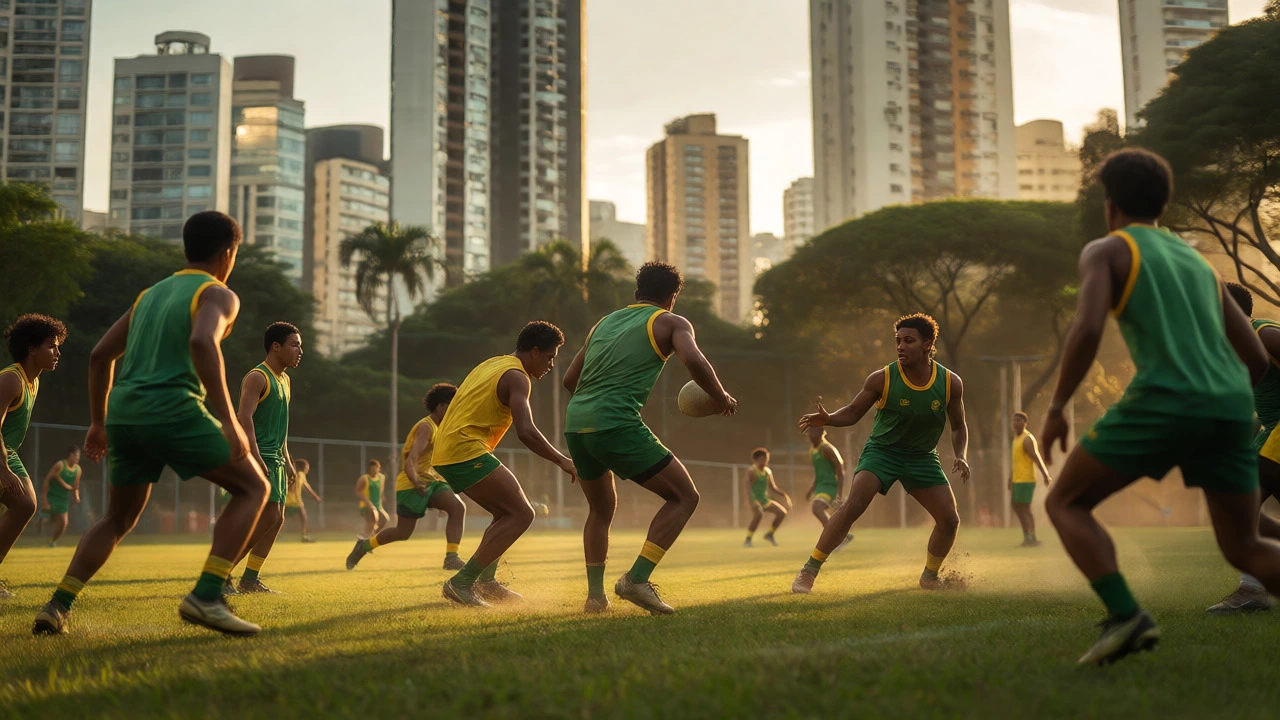
You probably picture football stadiums packed with screaming fans when you think of Brazil. It’s the spiritual home of football, a nation where the beautiful game dictates the rhythm of life from Rio to Recife. But look past the green and yellow jerseys, and you’ll find something unexpected happening on the pitches: rugby is quietly carving out its own space. The question isn’t just whether it exists there-it’s about momentum. Is this contact sport actually gaining traction in a country dominated by soccer, or is it still a niche hobby for expats and university students?
The short answer is yes, but with caveats. The growth isn’t explosive like the viral spread of futsal; it’s steady, structural, and increasingly visible. If you’re tracking global sports trends, Brazil represents one of the most interesting case studies in emerging rugby markets. Let’s break down what’s really driving this shift, who’s playing, and why the future looks surprisingly bright despite the odds.
From Niche Hobby to National Ambition
Rugby in Brazil didn’t start yesterday. The Brazilian Rugby Confederation (CBRu) has been around since 1972, which means the infrastructure has had decades to simmer. However, for a long time, it was invisible to the average Brazilian. You’d only hear about it if you lived in São Paulo or had friends studying abroad in Australia or the UK. That changed significantly in the last decade.
Why now? Partly because of globalization. Young Brazilians are more connected than ever, watching international leagues on streaming platforms. They see the physicality and speed of the Six Nations or the Super Rugby Pacific and get curious. But curiosity alone doesn’t build teams. What built them was strategic investment. The CBRu shifted focus from purely elite men’s XV rugby to broader participation models, specifically targeting schools and universities. This wasn’t just about winning matches; it was about making the sport accessible in a culture that often views non-football team sports as foreign imports.
The numbers back this up. While exact registration figures fluctuate, the trend line is undeniably upward. We’re talking about thousands of new players entering the system annually, not hundreds. This isn’t a fleeting fad; it’s a demographic shift within the sporting community.
The Power of Rugby Sevens
If you want to understand how rugby broke into mainstream consciousness in Brazil, look no further than Rugby Sevens. Fifteen-a-side rugby is complex. It requires patience, deep tactical understanding, and massive time commitments for training. For a population obsessed with the fast-paced, technical flair of football, full-contact XV rugby can feel heavy and slow to learn.
Sevens is different. It’s faster, more open, and emphasizes individual skill-dodging, passing under pressure, and raw speed. These traits align perfectly with the Brazilian athletic DNA. When Rugby Sevens was included in the Olympic Games, it gave the sport instant legitimacy. Suddenly, rugby wasn’t just a club activity; it was an Olympic discipline. This status change opened doors for government funding and media coverage that traditional XV rugby never managed to secure on its own.
Brazil’s national sevens teams, both men’s and women’s, have become competitive forces in South America. Their performances in regional tournaments draw crowds and generate social media buzz. This visibility creates a feedback loop: kids see heroes on TV, ask to join local clubs, and the base expands. It’s a classic example of how format adaptation can drive adoption in new markets.

Schools and Universities: The Grassroots Engine
Forget professional franchises for a moment. The real heart of Brazilian rugby growth beats in schools and universities. Programs like "Rugby in Schools" have introduced the ball to children who might never touch a rugby pitch otherwise. These programs aren’t just teaching handling skills; they’re teaching values. Respect, teamwork, and resilience-core tenets of rugby-are being marketed as character-building tools for youth development.
Universities play a crucial role here too. Cities like São Paulo, Rio de Janeiro, and Curitiba have vibrant university leagues. These aren’t just student hangouts; they’re semi-professional incubators. Many players use these leagues as stepping stones to higher-level competition or even overseas scholarships. The academic connection gives parents peace of mind, knowing their child’s athletic pursuit supports their education rather than distracting from it.
This grassroots approach solves a major problem: talent identification. In a country of over 200 million people, finding athletes with the right physical profile for rugby is easier than you’d think. Once they’re exposed to the game early, retention rates improve because they feel part of a community, not just a team.
Challenges Still Standing Tall
Let’s be real-rugby isn’t going to dethrone football anytime soon. There are significant hurdles that prevent rapid, unchecked growth. First, cost. Unlike football, where you need a ball and two goals, rugby requires specialized gear. Mouthguards, boots, and proper jerseys add up. In a country with economic disparities, this barrier keeps many talented kids out of the sport.
Second, media coverage remains limited. While digital platforms help, traditional Brazilian sports networks still prioritize football, volleyball, and basketball. Without consistent prime-time exposure, rugby struggles to capture the imagination of the general public. You can’t support what you don’t see regularly.
Third, infrastructure. Dedicated rugby pitches are rare. Most teams share facilities with football clubs, which leads to scheduling conflicts and poor field conditions. Imagine trying to practice scrums on a muddy football pitch after a rainy season in Paraná. It’s doable, but it’s not ideal for player development or spectator experience.
| Factor | Brazil (Emerging Market) | Australia/UK (Established) |
|---|---|---|
| Primary Driver | Olympic inclusion & school programs | Historical tradition & professional leagues |
| Media Coverage | Digital & niche TV channels | Mainstream national broadcasting |
| Infrastructure | Shared multi-use fields | Dedicated rugby stadiums |
| Player Pathway | University to Regional/National | Junior Club to Pro Franchise |

The Role of International Partnerships
No sport grows in isolation, especially in emerging markets. Brazil benefits heavily from partnerships with established rugby nations. Organizations like World Rugby provide funding, coaching education, and tournament opportunities. But beyond the big governing bodies, bilateral agreements matter. Countries like Argentina, France, and New Zealand have sent coaches and players to Brazil to share expertise.
These exchanges do more than improve technique. They build cultural bridges. When a Brazilian coach trains in New Zealand, they bring back not just drills, but a mindset. They return with confidence, knowing their methods meet global standards. This trickle-down effect raises the quality of play across all levels. Local referees get better trained, ensuring fairer games. Club administrators learn better management practices, leading to more stable organizations.
Furthermore, hosting international events helps. Even if Brazil doesn’t host a World Cup yet, participating in high-profile friendlies against top-tier nations generates excitement. Fans love seeing their national team compete against giants. These matches sell tickets, attract sponsors, and create memorable moments that fuel long-term interest.
What Does the Future Hold?
So, where does this leave us? Is rugby growing in Brazil? Absolutely. But it’s growing in a distinctly Brazilian way. It’s not replicating the English club model or the Australian franchise system wholesale. It’s adapting. The blend of sevens-focused entry points, strong university ties, and digital engagement suggests a sustainable path forward.
Expect to see more mixed-gender tournaments and inclusive formats. Brazil has always been progressive in terms of social integration in sports, and rugby is following suit. Women’s rugby, in particular, is showing robust growth, driven by successful national team performances and targeted outreach programs.
For fans outside Brazil, keep an eye on the South American Championship. As Brazil tightens its grip on regional dominance, the gap between them and traditional powers like Argentina narrows. This competitiveness raises the stakes for everyone involved. More intense matches mean more drama, more stories, and ultimately, more fans.
The next few years will be critical. If the CBRu can secure consistent sponsorship deals and improve facility access, the current trajectory could accelerate. If they rely solely on volunteer passion without professionalizing the business side, growth might plateau. But given the energy on the ground, betting against rugby in Brazil seems like a risky move.
Is rugby popular in Brazil compared to football?
No, not yet. Football dominates Brazilian sports culture overwhelmingly. However, rugby is one of the fastest-growing alternative team sports. While it lacks the mass appeal of football, it has a dedicated and expanding niche audience, particularly among younger demographics and university students.
Does Brazil have a professional rugby league?
Brazil currently operates primarily on an amateur and semi-professional level. There is no fully professional domestic league comparable to England’s Premiership or Australia’s Super Rugby. Players typically balance jobs or studies with their rugby careers, though top national team members may receive some financial support from the federation.
Why is Rugby Sevens more popular than XV rugby in Brazil?
Sevens is faster, requires fewer players to form a team, and aligns better with the technical, agile style of play valued in Brazilian sports culture. Its inclusion in the Olympics also boosted its profile significantly, making it more attractive to young athletes and sponsors than the more complex and resource-intensive XV format.
Can I watch Brazilian rugby matches online?
Yes, availability has improved. Major tournaments are often streamed via World Rugby’s digital platforms or specific sports streaming services. Additionally, the Brazilian Rugby Confederation frequently posts highlights and live streams of key matches on their official social media channels and website.
What are the main challenges facing rugby in Brazil?
Key challenges include limited funding, lack of dedicated infrastructure (most teams share fields with football clubs), minimal mainstream media coverage, and the high cost of equipment relative to average incomes. Overcoming these barriers requires sustained investment and strategic marketing to broaden the fan base.