What is a Bye in Tennis? Rules, Benefits, and Draw Mechanics
Tennis Draw & Bye Calculator
Enter the total number of players in the main draw to see how many byes are needed to balance the bracket for the next round.
Draw Analysis Results
You’re watching the first round of a major tournament, and suddenly, a top seed like Novak Djokovic or Iga Swiatek isn’t playing. They’re just sitting in the stands or warming up on practice courts. Did they withdraw? Are they injured? No. They got a bye. For many new fans, this feels unfair. Why do the best players skip the first hurdle while others grind it out? The answer lies in how tournament brackets work mathematically and strategically.
The Basic Definition: Skipping Round One
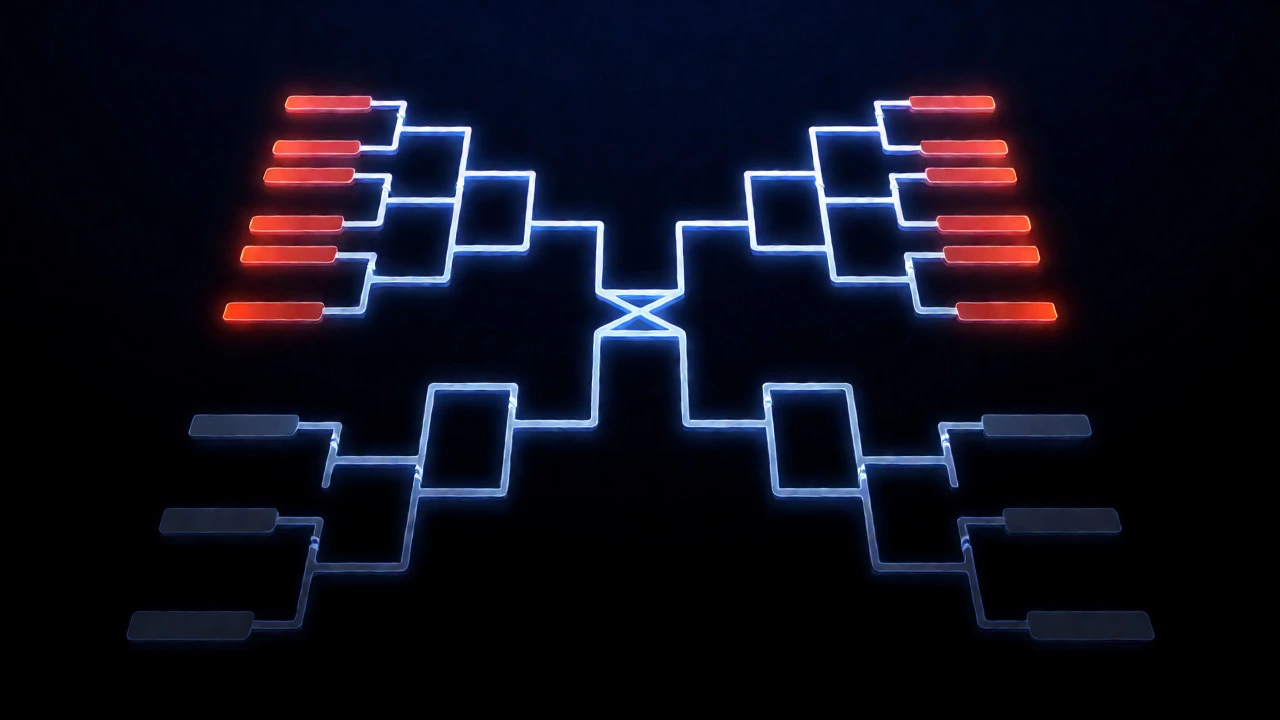
A bye in tennis is an automatic advancement to the next round without playing a match. It happens when the number of players in a draw doesn’t perfectly fill the bracket slots. If you have a 16-player draw but only 14 players show up, two players need to sit out the first round so the second round can start with exactly 8 matches (16 slots filled). Those two players get a bye.
In professional tours like the ATP and WTA, byes are rarely about missing players anymore. Instead, they are a structural feature of large tournaments. Grand Slams have 128 main-draw spots. A standard knockout bracket needs powers of two to work cleanly (2, 4, 8, 16, 32, 64, 128). Since 128 is a power of two, everyone plays in the first round at Wimbledon or the US Open. But smaller tournaments often use draws of 32 or 56 players. If a tournament has a 56-player draw, it’s not a clean power of two. To fix this, the organizers give byes to the highest-ranked seeds, pushing them into the second round to balance the bracket for later stages.
Why Do Byes Exist? The Math Behind the Bracket
Tournament directors hate odd numbers. Knockout formats require pairs. If you have an uneven number of competitors, someone must wait. Let’s look at a simplified example. Imagine a local club tournament with 7 players. You can’t make 3.5 matches. So, one player gets a bye. The other six play three matches. Now you have 4 winners left (the 3 winners plus the 1 who got a bye). That makes a perfect quarterfinal setup. Without that initial bye, the bracket would collapse or require messy "play-in" matches that complicate scheduling.
At higher levels, byes serve a different purpose: fairness and ranking protection. The ITF and tour rules dictate that the top seeds receive byes if the draw size requires it. This ensures that the strongest players don’t eliminate each other too early due to bad luck or fatigue from unnecessary extra matches. It rewards consistency over the previous year or weeks.
Who Gets the Bye? Seeding vs. Qualifying
Not just anyone can grab a bye. It’s strictly tied to your ranking. In a typical 56-draw event, the top 8 seeds might get byes to the second round. This means they avoid the potential upset risk of facing a hungry qualifier or a lower-ranked opponent who has nothing to lose. For these players, a bye is worth money and energy conservation.
Qualifiers-players who fought through preliminary rounds-never get byes. They’ve already played extra matches to earn their spot. Giving them a bye would negate the effort they put in during qualifying. So, if you see a player ranked #50 getting a bye while a qualifier plays immediately, it’s because the system prioritizes established top-tier performance records.
| Scenario | Player Status | Bye Eligibility | Strategic Impact |
|---|---|---|---|
| Grand Slam Main Draw | All Players | No Byes | Everyone plays Round 1; high physical toll from day one. |
| ATP/WTA 500/250 Events | Top Seeds (e.g., Top 4-8) | Yes | Saves energy; avoids early-round injuries/upsets. |
| Challenger Tour | High-Ranked Entrants | Occasionally | Helps players maintain points without excessive travel/matches. |
| Qualifiers | Lowest Ranked in Draw | No | Must play immediately; no rest advantage. |
The Hidden Cost: Match Rhythm and Timing
Here’s the controversial part. While a bye saves energy, it kills rhythm. Tennis is a game of timing. You need to feel the court speed, adjust to the bounce, and sync your eyes with the ball. When you skip the first round, you enter the second round cold. Your opponent, meanwhile, has just played a 90-minute battle. They are loose, sweating, and dialed in.
This phenomenon is known as the "rust factor." Many coaches argue that playing a low-stakes first-round match against a weaker opponent is better than resting. It acts as a warm-up under pressure. Remember when top seeds lose in the second round after getting a bye? It’s often because they weren’t ready for the intensity spike. Conversely, some players thrive on it. They use the extra day to recover from minor tweaks or adjust to time zones. It’s a gamble: freshness versus sharpness.
How Byes Affect Tournament Scheduling
If you’re planning to watch a tournament, check the draw size. If it’s a 32-draw event with 8 byes, the top seeds won’t appear until Day 3 or 4. This affects ticket sales and TV schedules. Broadcasters know that casual viewers tune in for big names. If Djokovic doesn’t play until Wednesday, Monday and Tuesday ratings might dip slightly compared to a week where he plays Sunday.
Organizers also use byes to manage weather delays. If rain washes out Monday’s schedule, having players who haven’t played yet gives flexibility. You can push matches around more easily if half the bracket hasn’t started. It’s a logistical safety net. Without byes, every single slot is occupied, and rescheduling becomes a nightmare of overlapping commitments.

Byes in Doubles vs. Singles
Doubles tournaments operate similarly but with fewer teams. Because there are fewer doubles entries than singles, byes are almost guaranteed in smaller events. However, doubles partners often rely on chemistry built through matches. A bye can disrupt that flow. Teams that play together infrequently might benefit from a bye to regroup, while long-standing partnerships might prefer the immediate test of competition.
In mixed doubles or team events like the Davis Cup format adaptations, byes can determine home-court advantages or strategic matchups. Coaches might intentionally let a player take a bye to save them for a critical tie-break situation later in the weekend.
Common Misconceptions About Byes
People often confuse a bye with a walkover. They are not the same. A walkover happens when your opponent withdraws before the match starts. You advance because the other guy quit or got hurt. A bye is planned. You didn’t beat anyone; you just waited. Another myth is that byes are "free wins." Statistically, players with byes win fewer matches in the long run compared to those who play regularly, largely due to the rust issue mentioned earlier. The data from recent seasons shows that second-round exits are disproportionately high among seeded players who received byes.
FAQ
Do all tennis tournaments have byes?
No. Grand Slams (Australian Open, French Open, Wimbledon, US Open) have 128-player draws, which is a perfect power of two, so no byes are needed in the main draw. Smaller tournaments with non-power-of-two draws (like 56 or 64 with qualifiers filling gaps) often use byes to balance the bracket.
Is getting a bye good or bad for a player?
It’s a double-edged sword. Good: It conserves physical energy and protects top seeds from early upsets. Bad: It causes "match rust," meaning the player may lack competitive rhythm when they finally step onto the court. Many players prefer playing a weak first-round opponent to get warmed up.
Can a qualifier get a bye?
Generally, no. Qualifiers have already played multiple matches to earn their spot in the main draw. Byes are typically reserved for direct entrants with high rankings. Giving a bye to a qualifier would undermine the difficulty of the qualifying rounds.
What is the difference between a bye and a walkover?
A bye is a scheduled absence from the first round due to bracket structure. A walkover occurs when a player advances because their opponent withdraws before the match begins due to injury or illness. Both result in advancing, but the reason differs significantly.
How does a bye affect prize money?
In most tours, reaching the second round via a bye counts as reaching the second round for prize money purposes. However, since the player didn’t play a match, they don’t incur the physical wear and tear of that specific match. Some tournaments have specific clauses, but generally, the financial reward is the same as winning the match.