What kind of body does cycling give you?
Cycling Body Transformation Estimator
Your Cycling Habits
Your Transformation Potential
Belly Fat Reduction
Muscle Tone
Posture Improvement
If you’ve ever watched a professional cyclist zoom past on a road bike, you’ve probably wondered: what kind of body does cycling actually build? It’s not just about being lean or having strong legs. Cycling shapes your whole body in ways you might not expect - and it’s one of the most effective, low-impact ways to transform your physique over time.
Your legs get stronger, not bigger
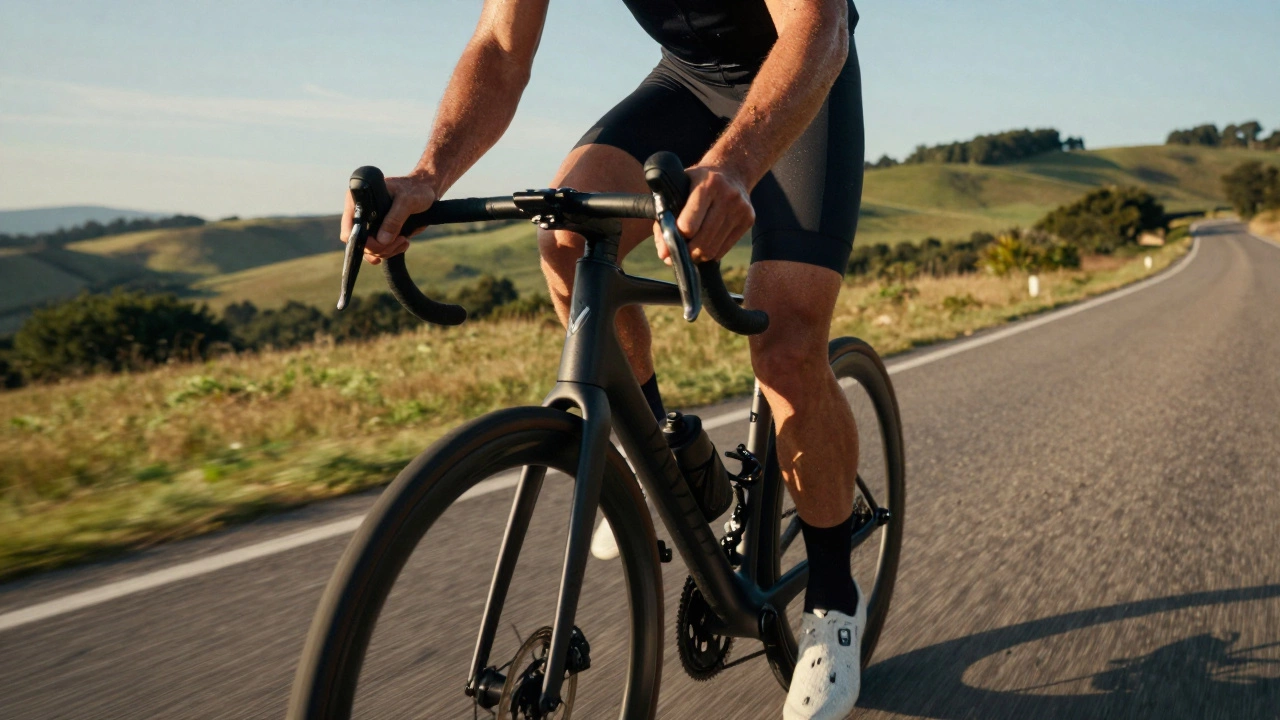
Cycling is famous for sculpting your quads, hamstrings, and calves. But don’t worry - you won’t end up with bulky, bodybuilder legs. Unlike weightlifting, cycling builds endurance muscle, not mass. Your leg muscles become more defined and efficient, not swollen. A study from the Journal of Sports Sciences found that regular cyclists have 20-30% more muscle endurance in their thighs compared to non-cyclists, but muscle size stays within a natural range. That’s because cycling uses repetitive, low-resistance movements that train your muscles to work longer, not harder.
Think of it like this: your legs become like high-performance engines - lean, powerful, and built for stamina. You’ll notice it when climbing hills, sprinting to catch a light, or even just walking up stairs after a long ride. Your quads carry the load, your hamstrings stabilize, and your calves push through each pedal stroke. Over months, you’ll see a noticeable change in tone and definition - especially if you ride at least three times a week.
Your glutes wake up
Most people think glutes are only worked by squats or lunges. But cycling? It’s one of the best glute activators out there. Every time you push down on the pedal, your glutes fire. On climbs, they’re working overtime. Even on flat terrain, a proper pedaling technique engages them fully. Many riders report feeling sore glutes after their first long ride - and that’s a good sign.
Unlike sitting at a desk all day, where your glutes go to sleep, cycling wakes them up. Over time, your butt becomes firmer, rounder, and more powerful. It’s not about size - it’s about function. Strong glutes improve posture, reduce lower back pain, and make everyday movements easier. You’ll stand taller. Walk with more confidence. And yes, your jeans will fit better.
Your core tightens up
Here’s the surprise: cycling doesn’t just work your legs. It turns your core into a stabilizing powerhouse. When you’re out on the road, especially on rough terrain or during climbs, your abs, obliques, and lower back are constantly working to keep you balanced. You’re not just pedaling - you’re holding your body steady against the motion of the bike.
Try this: ride without holding the handlebars for 30 seconds. You’ll immediately feel your core tighten. That’s because your body needs to stay upright, and only your core can do that. Over time, your abdominal muscles become stronger and more defined. You won’t see six-pack abs from cycling alone - but you’ll have a tighter, more stable midsection that supports everything else you do.
Upper body? It’s not forgotten
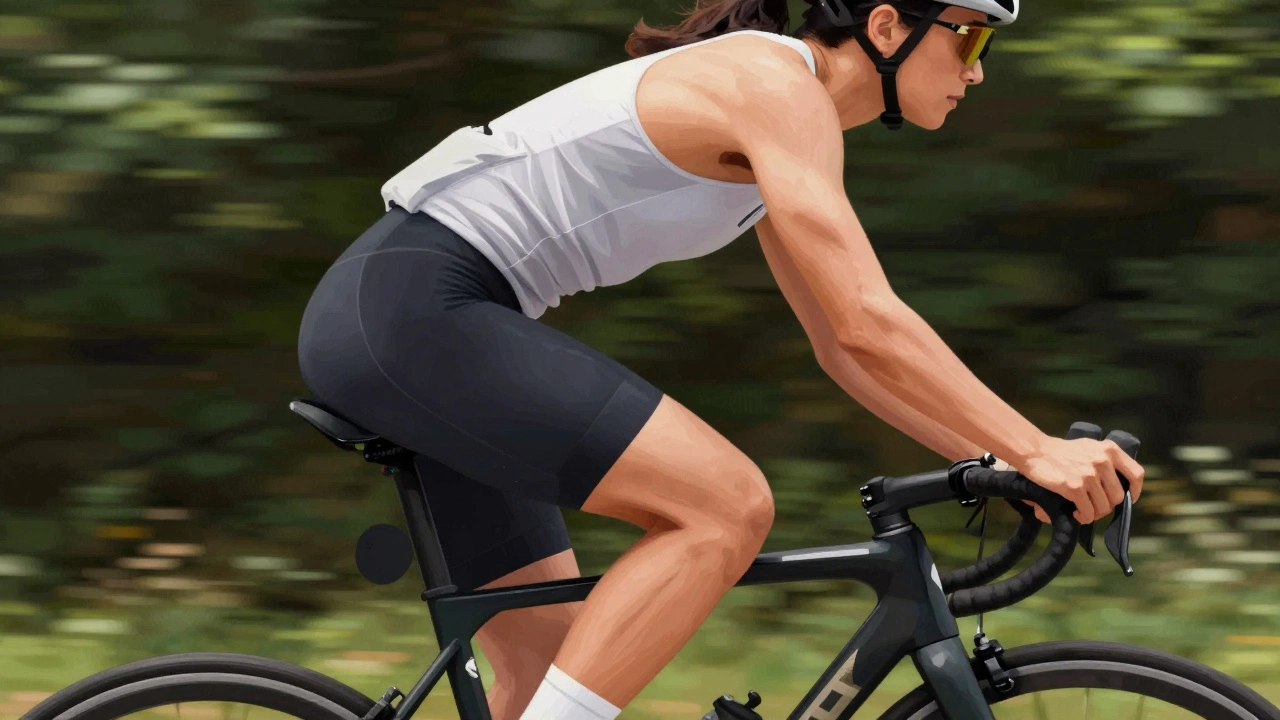
Most people assume cycling is just a lower-body workout. But your arms, shoulders, and back are quietly doing their part. Holding the handlebars, especially during long rides or aggressive descents, builds endurance in your triceps, deltoids, and lats. Mountain bikers know this best - when you’re navigating roots and rocks, your upper body is absorbing shocks, steering, and stabilizing.
Even on a road bike, your upper body gets a workout. Your shoulders stay engaged to keep your posture steady. Your back muscles prevent you from hunching over. If you ride with drop handlebars, you’re constantly shifting positions - and each shift activates different muscle groups. Over months, you’ll notice your arms feel stronger when lifting groceries, and your shoulders feel more relaxed because they’ve learned how to support weight efficiently.
Body fat drops - especially around the midsection
Cycling is one of the most effective ways to burn fat without starving yourself. A 60-minute ride at a moderate pace burns between 400 and 650 calories. Do that five times a week, and you’re looking at 2,000-3,000 calories burned per week. That’s roughly half a pound of fat lost every week - without changing your diet.
And here’s the kicker: cycling targets visceral fat - the dangerous kind that wraps around your organs. A 2023 study from the University of Adelaide tracked 200 recreational cyclists over 12 months. Those who rode at least 150 minutes per week saw an average 8% reduction in belly fat. That’s more than what most people lose with steady-state cardio like jogging. Why? Because cycling keeps your heart rate in the fat-burning zone for long periods, and it’s easy to sustain.
You don’t need to go all-out. Even a casual 30-minute ride after work adds up. The key is consistency. Over time, your waistline shrinks, your clothes feel looser, and your energy levels climb.
Posture improves - naturally
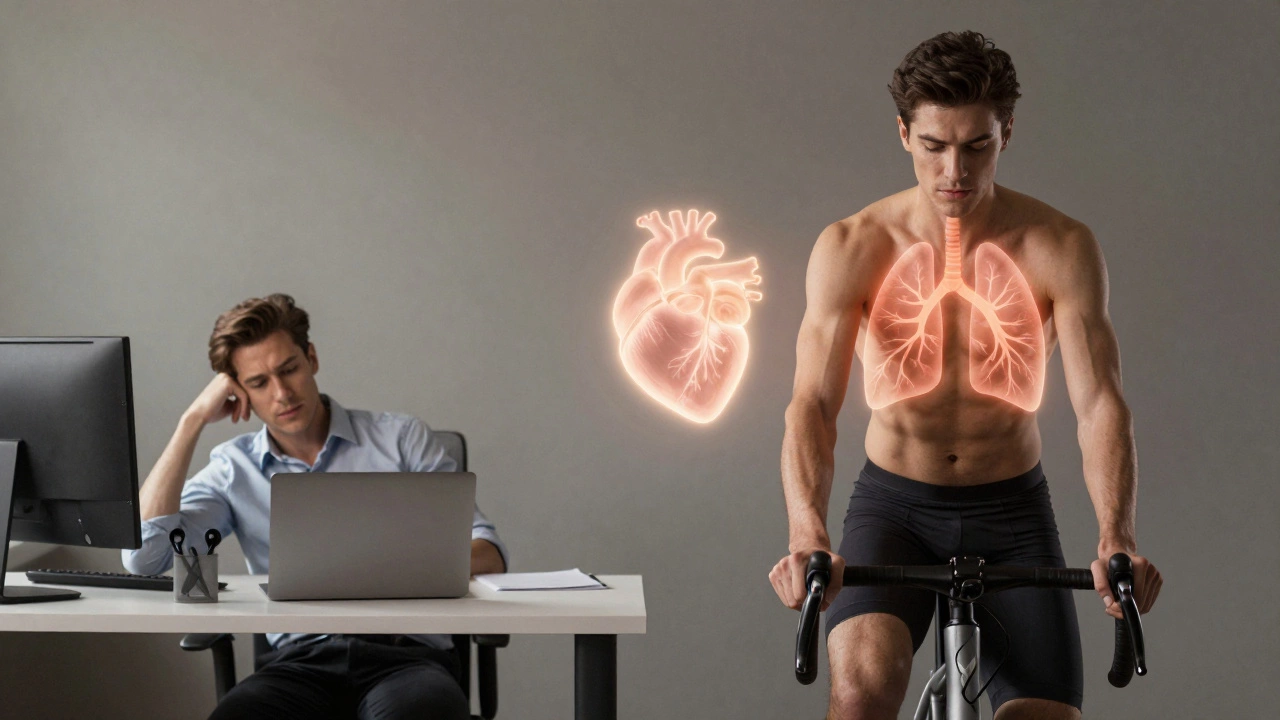
Most people slouch. We sit too much. Our shoulders roll forward. Our necks strain. Cycling fixes that. To ride efficiently, you need to open up your chest, pull your shoulders back, and lengthen your spine. Your body learns to hold this position - and eventually, it carries over into your daily life.
After a few months of regular riding, many people report standing taller, sitting straighter, and even sleeping better. Why? Because cycling trains your posture muscles - the ones you ignore at the office. Your rhomboids, traps, and deep spinal stabilizers get stronger. Your hips stay flexible. Your neck stays relaxed. It’s not a magic trick - it’s biomechanics.
It’s not just muscle - it’s resilience
What cycling gives you isn’t just a new body shape. It’s a tougher, more resilient body. Your bones get denser. Your heart becomes more efficient. Your lungs take in more oxygen. Your joints stay lubricated and mobile. Unlike high-impact sports, cycling puts minimal stress on your knees and ankles - which means you can keep doing it for decades.
People who ride regularly report fewer injuries, better sleep, and more stamina for daily tasks. They’re not just fit - they’re durable. That’s why cyclists in their 50s and 60s often outperform younger people in endurance tests. It’s not about speed. It’s about sustainability.
What kind of body do you get? The answer
You get a body that’s leaner, stronger, and more balanced. Your legs are sculpted for power, not bulk. Your glutes are firm and active. Your core is tight and stable. Your posture is upright and confident. Your fat stores shrink - especially around your waist. And your whole body becomes more resilient.
You don’t need to be a pro to see these changes. Just ride. Three times a week. 45 minutes. At a pace where you can talk but not sing. That’s all it takes. In three months, you’ll notice. In six, people will ask you what you’ve been doing. In a year, you won’t recognize the person in the mirror - and you’ll love who they’ve become.