Why Is It Called Par in Golf? The History and Math Behind the Number

Golf Scoring & Par Calculator
Enter Your Score
Enter your score to see the official golf term.
Scoring Terminology Guide
Click to LearnSelect a Term
Hover over or click any term above to read its history and definition based on the article.
You step up to the tee box. The sign says "Par 4." You hit a solid drive, land on the green, and sink two putts. You look at your scorecard, write down a 4, and feel that sweet rush of satisfaction. But have you ever stopped to wonder why is it called par? Why not "standard," "target," or just "four"? The word feels oddly nautical for a sport played on grass, doesn't it?
The answer isn’t hidden in some obscure rulebook from the 1800s, though the roots are definitely old. The term "par" actually comes from stock market jargon, not golf itself. Before we get into how a financial term ended up dictating your weekend handicap, let’s clear up the confusion. Many beginners think par is a hard limit-a maximum number of strokes allowed. It’s not. It’s a benchmark. Think of it less like a speed limit and more like a target score for a scratch golfer (someone with a handicap of zero) playing under normal conditions.
The Stock Market Connection: Where "Par" Actually Comes From
Here is the twist most people miss: golfers didn’t invent the word "par." In the mid-19th century, "par" was common slang in British finance. If a stock was trading at its face value, it was "at par." If it traded below, it was "under par." If it traded above, it was "over par." It simply meant the standard, expected, or nominal value of something.
Golf adopted this terminology because it fit perfectly. When you play a hole, there is an expected number of shots a good player should take. That’s the "face value" of the hole. If you take fewer shots than expected, you are "under par." If you take more, you are "over par." The logic is identical to buying shares. This linguistic crossover happened around the 1870s, when golf was still largely a Scottish pastime before becoming a global phenomenon.
How Do They Decide If a Hole is Par 3, 4, or 5?
It’s not random. Course architects don’t just pick numbers out of a hat. There’s a mathematical formula based on distance. While modern technology has changed how far players hit the ball, the basic classification system remains surprisingly consistent across most courses worldwide.
The general rule of thumb relies on the length of the hole from the tees being played. Here is how the USGA (United States Golf Association) generally categorizes them:
- Par 3: Up to 260 yards for men (or up to 220 yards for women). These holes require one shot to reach the green, followed by two putts.
- Par 4: Between 260 and 470 yards for men (220 to 420 yards for women). This requires a drive, an approach shot to the green, and two putts.
- Par 5: Over 470 yards for men (over 420 yards for women). These allow for three shots to reach the green plus two putts, or two long shots if the player is exceptional.
Notice the pattern? Par always assumes two putts on the green. So, a Par 4 means the architect expects you to get the ball onto the green in two shots. A Par 5 means they expect you to get it on in three. The "two putts" assumption is baked into every single par rating on the planet. If you consistently three-putt, you’re making bogeys even if you hit great iron shots.
| Par Rating | Men's Distance Range | Women's Distance Range |
|---|---|---|
| Par 3 | Up to 260 yards | Up to 220 yards |
| Par 4 | 260 - 470 yards | 220 - 420 yards |
| Par 5 | Over 470 yards | Over 420 yards |
Why Are Most Courses Par 72 or 71?
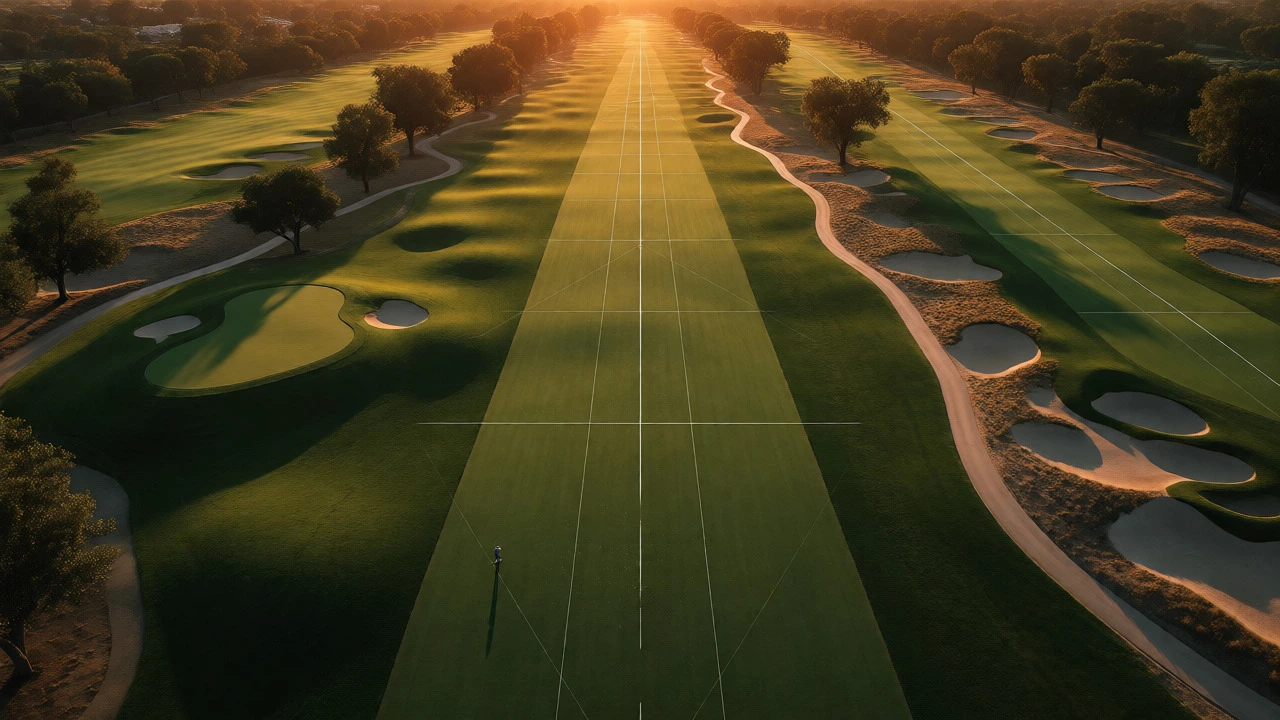
If you count the pars on a standard 18-hole course, you’ll usually land on 70, 71, or 72. Why these specific numbers? Because of the mix of hole types. A typical layout might have four Par 5s, four Par 3s, and ten Par 4s. Let’s do the math: (4 x 5) + (4 x 3) + (10 x 4) = 20 + 12 + 40 = 72.
This balance keeps the game fair. Too many Par 5s would favor big hitters who can reach the green in two. Too many Par 3s would favor short-game wizards. The mix tests every part of your skill set: driving power, iron accuracy, and putting nerve. Some famous courses, like Augusta National during certain setups, can play as a Par 72, while others might be a Par 70 if they feature shorter Par 4s or fewer Par 5s.
What Happens If You Go Under or Over?
This is where the fun starts. Since par is just a baseline, beating it gives you bragging rights. Missing it hurts your ego. The terminology here is colorful and rooted in that same birdie/eagle metaphor that came later.
- Birdie (-1): One stroke under par. Originated in the early 1900s in Atlantic City, New Jersey, when a player made a low score and exclaimed he shot a "bird" (slang for cool/excellent).
- Eagle (-2): Two strokes under par. Named after the birdie because eagles are bigger and better birds.
- Albatross/Double Eagle (-3): Three strokes under par. Extremely rare. Usually happens on a Par 5 with a drive and a 2-iron home.
- Bogey (+1): One stroke over par. Originally, the "Bogey Man" was a fictional opponent every golfer played against. Beating him was winning; losing to him was taking a bogey.
- Double Bogey (+2): Two strokes over par.
Understanding these terms helps you read a leaderboard instantly. If you see a pro at -14, they aren’t just good; they are consistently hitting greens and sinking putts while their competitors are missing chances.
Does Par Change Based on Wind or Weather?
No. The official par of a hole is static. It doesn’t change because the wind is blowing 20 mph from the north. However, the difficulty changes. On a calm day, a Par 5 might play easy. On a windy day, reaching the green in two becomes nearly impossible, effectively turning it into a Par 6 challenge for average players. But the scorecard still says Par 5. You still aim for five shots.
Course ratings do adjust for difficulty via Slope Ratings, but that affects your handicap calculation, not the raw par number. So, if you’re playing a links course in Scotland with high winds, don’t expect the committee to change the sign from Par 4 to Par 5. You just have to adapt your club selection.

Common Myths About Par
Let’s bust a few things people say in the clubhouse bar.
Myth 1: Par is the maximum score allowed.
False. You can shoot an 8 on a Par 4. It’s ugly, but legal. There is no cap unless you’re playing a specific format like Stableford, which stops counting after a certain number of strokes.
Myth 2: Beginners should aim for par.
Realistically? No. A beginner might shoot 80-100+ on a Par 72 course. Aiming for par sets you up for frustration. Aim for consistency instead. Try to break 100 first, then 90. Par is for pros and scratch amateurs.
Myth 3: All Par 4s are the same difficulty.
Absolutely not. A 280-yard downhill Par 4 with a wide fairway is vastly different from a 450-yard uphill Par 4 with bunkers guarding the green. The number tells you the expected strokes, not the actual pain level.
Key Takeaways
- The word "par" comes from 19th-century stock market slang meaning "standard value."
- Par assumes two putts on the green for every hole.
- Distance determines par: Short holes are Par 3, medium are Par 4, long are Par 5.
- Most 18-hole courses total Par 70-72 due to a balanced mix of hole types.
- Scoring under par uses bird/eagle metaphors; over par uses bogey references.
Why is it called "bogey" if I go over par?
The term "bogey" originated in the late 19th century from a popular song called "The Bogey Man." Golfers created a fictional ghost-like figure named Colonel Bogey who scored a perfect game. If you took one more shot than the "Bogey Man" (who represented a scratch golfer), you had taken a "bogey." It stuck as the term for one over par.
Can a hole be Par 6 or Par 7?
Yes, but they are extremely rare. A Par 6 would typically be over 670 yards for men. These exist mostly on very long championship courses or public courses with unusual layouts. Par 7 holes are almost non-existent in modern regulation play, though some historic or novelty courses may feature them.
Does the color of the tee boxes change the par?
Generally, no. The par rating is assigned to the hole regardless of which tees you play. However, on some courses, moving to forward tees might technically shorten a Par 4 into Par 3 range, but the official scorecard usually retains the original par designation for standardization. Always check the local house rules if you're playing a casual round with mixed skill levels.
What is the lowest possible score on a Par 4?
Theoretically, a hole-in-one is 1 stroke. Practically, for a skilled player, the lowest realistic score is often 2 (an eagle), achieved by driving the green and holing a putt, or hitting a wedge directly into the cup. A score of 1 is a hole-in-one, which is statistically improbable but legally valid.
Why do some Par 5s seem easier than Par 4s?
This depends on the design. A reachable Par 5 allows aggressive players to try for an eagle (2 shots). If they fail, they settle for a birdie (3 shots). A difficult Par 4 might require precise iron play just to reach the green, leading to higher scores for average players. Strategy plays a huge role in perceived difficulty versus numerical par.