The 5 Essential Gym Exercises You Need to Build Strength

Essential Strength Routine Builder
Configuration
Your Personalized Plan
Weekly Schedule Structure
Walk into any gym, and you’ll see the same scene: rows of machines blinking with digital displays, people staring at phones while cycling on stationary bikes, and a few dedicated souls lifting heavy iron in the corner. If you’re new to this world, it’s easy to feel overwhelmed. There are hundreds of ways to move your body, but do you really need them all? No. In fact, trying to learn every single exercise is the fastest way to quit.
The truth is that effective strength training doesn’t require complexity. It requires consistency and focus on the right movements. These are known as compound exercises, which are movements that engage multiple joints and muscle groups simultaneously. By focusing on just five foundational lifts, you can build a physique that looks great, functions well, and lasts for decades. Let’s break down the five essential gym exercises that form the backbone of almost every successful training program.
1. The Squat: King of Lower Body Movements
If there is one exercise that defines leg day, it’s the squat. Specifically, we’re talking about the Barbell Back Squat, a fundamental lower-body exercise where you lower your hips from a standing position and then stand back up. This isn’t just about building big thighs; it’s about functional strength. Think about how you sit down, pick up groceries, or climb stairs. Your legs and core do the work. The squat trains exactly those patterns.
When performed correctly, the squat targets your quadriceps (front thighs), hamstrings (back thighs), glutes (buttocks), and even your lower back and core stabilizers. It forces your entire posterior chain to work together. Many beginners fear squats because they’ve heard myths about knee damage. However, research consistently shows that proper squatting actually strengthens the tendons and ligaments around the knee, making them more resilient over time.
To start, don’t worry about loading the bar with maximum weight. Focus on depth. Your goal is to get your hip crease below your knee level-often called "breaking parallel." Keep your chest up, your core tight like you’re about to take a punch, and drive through your heels. If you don’t have access to a barbell yet, goblet squats holding a dumbbell at your chest are an excellent alternative that teaches the same mechanics with less spinal load.
2. The Deadlift: Total Body Power
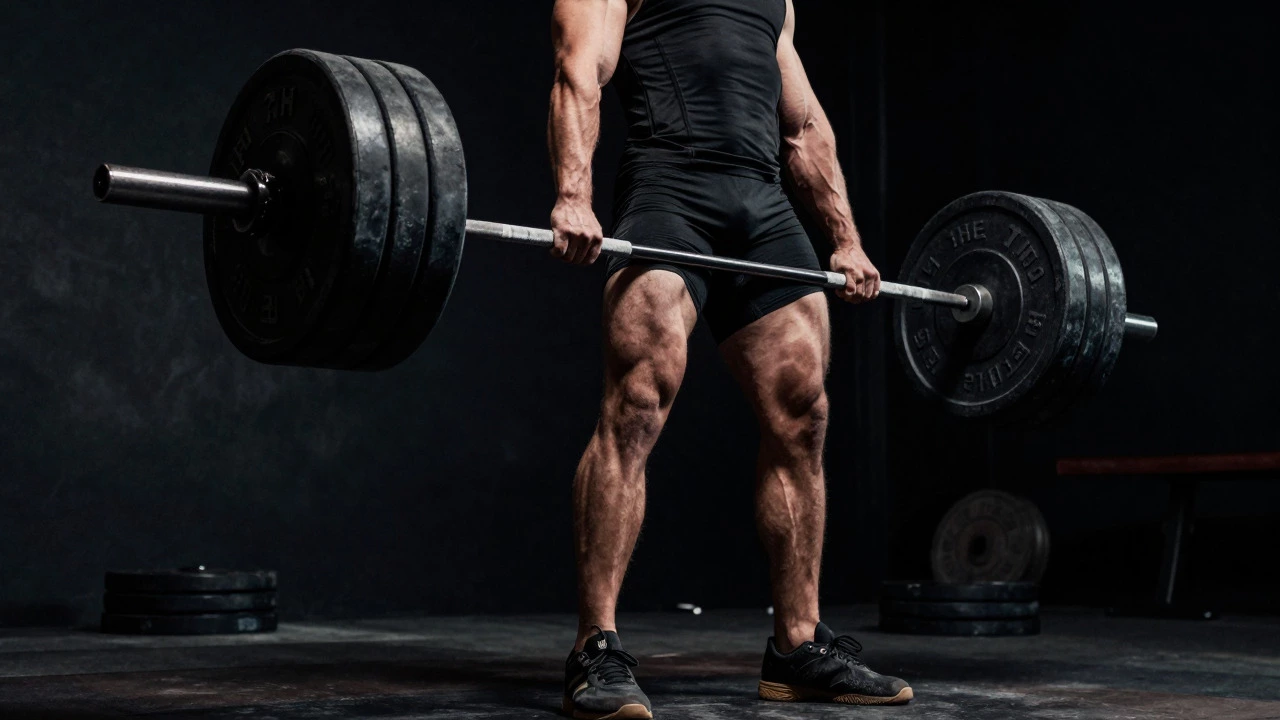
Next up is the movement that often intimidates newcomers the most: the Deadlift, a weight training exercise in which a loaded barbell is lifted off the ground to the level of the hips, and then lowered again. Unlike the squat, which starts with weight on your back, the deadlift starts with the weight on the floor. This makes it incredibly practical. How many times a day do you bend down to pick something up? Probably several. Doing it with poor form leads to back pain. Doing it with good form builds armor-plated resilience.
The deadlift is unique because it recruits nearly every major muscle in your body. Your grip strength is tested immediately. Your forearms, lats, traps, shoulders, glutes, hamstrings, and erector spinae (lower back muscles) all fire intensely. It’s a hinge movement, meaning the primary motion happens at your hips, not your knees. This distinction is crucial. If you bend at the waist instead of pushing your hips back, you risk injury. Learn to hinge. Feel your hamstrings stretch as you push your butt backward. Then, drive your feet into the floor to lift the weight.
You don’t need Olympic-level flexibility to deadlift. Start with lighter weights or even kettlebells to master the hip-hinge pattern. Once you nail the technique, progressive overload-gradually adding weight-will yield dramatic strength gains. It’s no wonder powerlifters and strongman athletes consider this the ultimate test of raw strength.
3. The Bench Press: Upper Body Pushing Power
Now let’s move to the upper body. The first essential push movement is the Bench Press, a resistance training exercise consisting of pressing a weighted barbell upward from a supine position on a flat bench. While bodybuilders might chase pump and isolation, the bench press is about moving significant weight horizontally away from your body. This mimics real-world actions like pushing a heavy car out of traffic or shoving a door open against resistance.
This exercise primarily targets your pectorals (chest muscles), anterior deltoids (front shoulders), and triceps (back of the arms). But here’s the secret: a stable bench press requires a strong back. You need to retract your shoulder blades-pull them back and down-to create a solid platform. If your shoulders are rounded forward, you’re putting unnecessary stress on the rotator cuff. Imagine squeezing a pencil between your shoulder blades throughout the set.
Common mistakes include bouncing the bar off the chest or flaring the elbows out to 90 degrees. Both increase injury risk. Instead, aim for a slight elbow tuck, around 45 to 75 degrees from your torso. Lower the bar to your mid-chest, pause briefly without resting, and press up explosively. If you’re training alone, dumbbell bench presses are safer because you can drop the weights if you fail a rep, eliminating the need for a spotter.
4. The Overhead Press: Vertical Stability
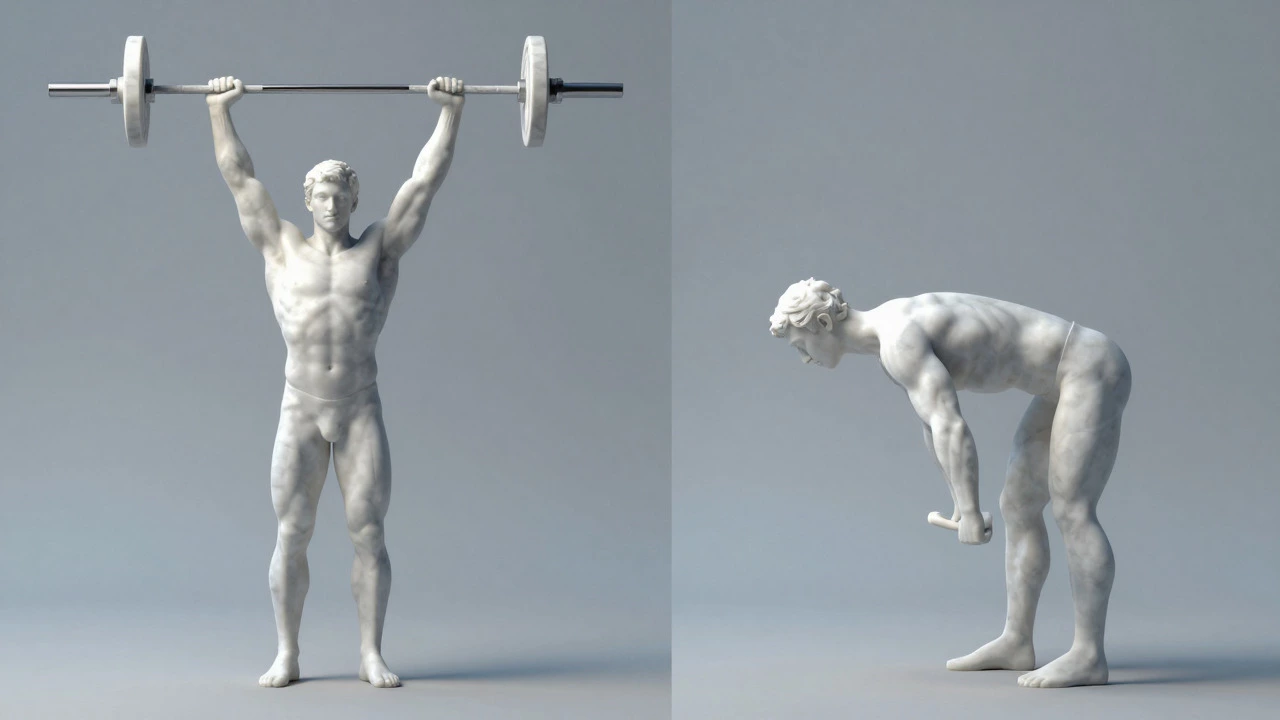
Horizontal pushing is important, but vertical pushing is equally critical for balanced shoulder health and posture. Enter the Overhead Press (also known as the Military Press), a shoulder exercise where you press a weight vertically from your shoulders to overhead. This movement demands immense core stability. Try pressing a heavy weight overhead while slouching-it’s impossible. Your body naturally braces itself to protect the spine. This makes the OHP one of the best full-core workouts disguised as a shoulder exercise.
The overhead press heavily involves the deltoids, triceps, and upper traps. It also requires significant mobility in your thoracic spine (upper back) and shoulders. If you struggle to get the bar behind your head or feel pinching in your shoulders, you likely lack the necessary mobility. Don’t force it. Incorporate band pull-aparts and thoracic extensions into your warm-up. For those with limited shoulder mobility, the Landmine Press (pressing one end of a barbell anchored in a corner) is a fantastic variation that reduces joint strain while still building pressing strength.
Avoid arching your lower back excessively to compensate for weak shoulders. Keep your ribs down and your glutes squeezed. A tight core acts as a bridge between your legs and your arms, allowing you to transfer force efficiently. As you get stronger, you’ll notice improvements in your posture and everyday activities that require reaching or lifting objects above your head.
5. The Row: Pulling Balance
We’ve covered two pushing movements. Now we need to balance them out with pulling. Without adequate pulling exercises, you risk developing "tech neck"-rounded shoulders and forward head posture caused by hours of sitting and screen time. The solution? The Barbell Row, a compound exercise where you pull a weighted barbell towards your lower ribcage while hinging at the hips. Rows strengthen the latissimus dorsi (lats), rhomboids, rear deltoids, and biceps. They literally pull your shoulders back into a healthy, upright position.
There are many variations of rows, including dumbbell rows, cable rows, and chin-ups. The barbell row is highly effective because it allows for heavy loading, but it requires strict form. Hinge at your hips until your torso is nearly parallel to the floor. Keep your back flat-not rounded. Pull the bar to your belly button, leading with your elbows. Squeeze your shoulder blades together at the top. Control the weight on the way down.
If your lower back fatigues before your back muscles, switch to a supported variation like the Chest-Supported Dumbbell Row. This removes the spinal load, allowing you to isolate the back muscles more effectively. Remember, the goal isn’t just to look good in a mirror; it’s to counteract the sedentary nature of modern life. Strong backs mean fewer injuries and better posture.
| Exercise | Primary Muscle Groups | Movement Pattern | Key Benefit |
|---|---|---|---|
| Squat | Quads, Glutes, Core | Knee-Dominant Lift | Functional leg strength & stability |
| Deadlift | Hamstrings, Glutes, Back | Hinge Movement | Total body power & grip strength |
| Bench Press | Chest, Shoulders, Triceps | Horizontal Push | Upper body pushing strength |
| Overhead Press | Shoulders, Triceps, Core | Vertical Push | Shoulder stability & core bracing |
| Row | Lats, Rhomboids, Biceps | Horizontal Pull | Posture correction & back thickness |
Building Your Routine Around These Five
Knowing the exercises is only half the battle. How do you put them together? You don’t need to train all five every day. That would lead to burnout and overtraining. Instead, structure your week to allow for recovery. A common approach is an Upper/Lower split or a Full-Body routine performed three times a week.
For beginners, a Full-Body routine is often superior. Train Monday, Wednesday, and Friday. Each session includes one squat variation, one deadlift/hinge variation, one push, and one pull. This frequency ensures you practice each movement often enough to improve technique quickly. Rest days are when your muscles actually grow and repair, so don’t skip them. Sleep seven to nine hours a night, and ensure you’re eating enough protein-aim for roughly 1.6 to 2.2 grams per kilogram of body weight.
Progressive overload is the engine of growth. If you lift the same 20kg dumbbell for months, your body adapts and stops changing. You must gradually increase the demand. Add a small amount of weight, do one more rep, or slow down the tempo. Track your workouts in a notebook or app. Seeing numbers go up is motivating and provides objective data on your progress.
Common Mistakes to Avoid
Even with simple exercises, errors creep in. Ego lifting is the biggest culprit. Trying to impress others by adding too much weight too soon compromises form and invites injury. Leave your ego at the door. Master the empty bar or light dumbbells first.
Another mistake is neglecting warm-ups. Jumping straight into heavy sets is a recipe for disaster. Spend five to ten minutes doing dynamic stretches-leg swings, arm circles, bodyweight squats-to increase blood flow and lubricate the joints. This prepares your nervous system for the work ahead.
Finally, don’t ignore pain. Discomfort from muscle fatigue is normal; sharp, shooting pain is not. If something hurts, stop. Assess your form. Consult a trainer or physical therapist if needed. Longevity in the gym comes from listening to your body, not ignoring it.
How many times a week should I do these 5 exercises?
For most beginners, performing these exercises in a full-body routine 3 times per week is ideal. This allows for sufficient frequency to learn the movements while providing ample rest days for muscle recovery and growth. Advanced lifters might split these into upper/lower days, training 4-5 times a week.
Can I build muscle without using barbells?
Absolutely. Dumbbells, kettlebells, and resistance bands can replicate the benefits of these compound movements. Goblet squats replace barbell squats, dumbbell rows replace barbell rows, and push-ups or dumbbell presses replace the bench press. The key is maintaining the movement pattern, not the specific equipment.
Is it safe for beginners to try deadlifts?
Yes, provided you start with very light weights or even just a PVC pipe to learn the hip-hinge mechanism. Form is paramount. Consider hiring a certified personal trainer for a session or two to check your technique before adding significant load. Properly executed, deadlifts are one of the safest and most beneficial exercises for spinal health.
How long does it take to see results?
Strength gains often happen within the first 4-6 weeks due to neurological adaptations (your brain getting better at recruiting muscles). Visible muscle changes typically become noticeable after 8-12 weeks of consistent training and proper nutrition. Patience and consistency are key; fitness is a marathon, not a sprint.
Do I need to do cardio if I’m lifting weights?
While not strictly required for strength gains, incorporating moderate cardio (like brisk walking or cycling) 2-3 times a week supports heart health and aids recovery. It doesn’t interfere with muscle growth if kept moderate and separated from heavy lifting sessions by a few hours.