Why is it called G League? The History Behind the NBA's Minor League Name
G League History Quiz
1. What does the "G" in NBA G League primarily stand for?
2. When did the NBA Development League (D-League) officially rebrand to the G League?
3. Why did the NBA move away from the term "Development League"?
4. How has the ownership structure of G League teams changed significantly since 2017?
Quiz Completed!
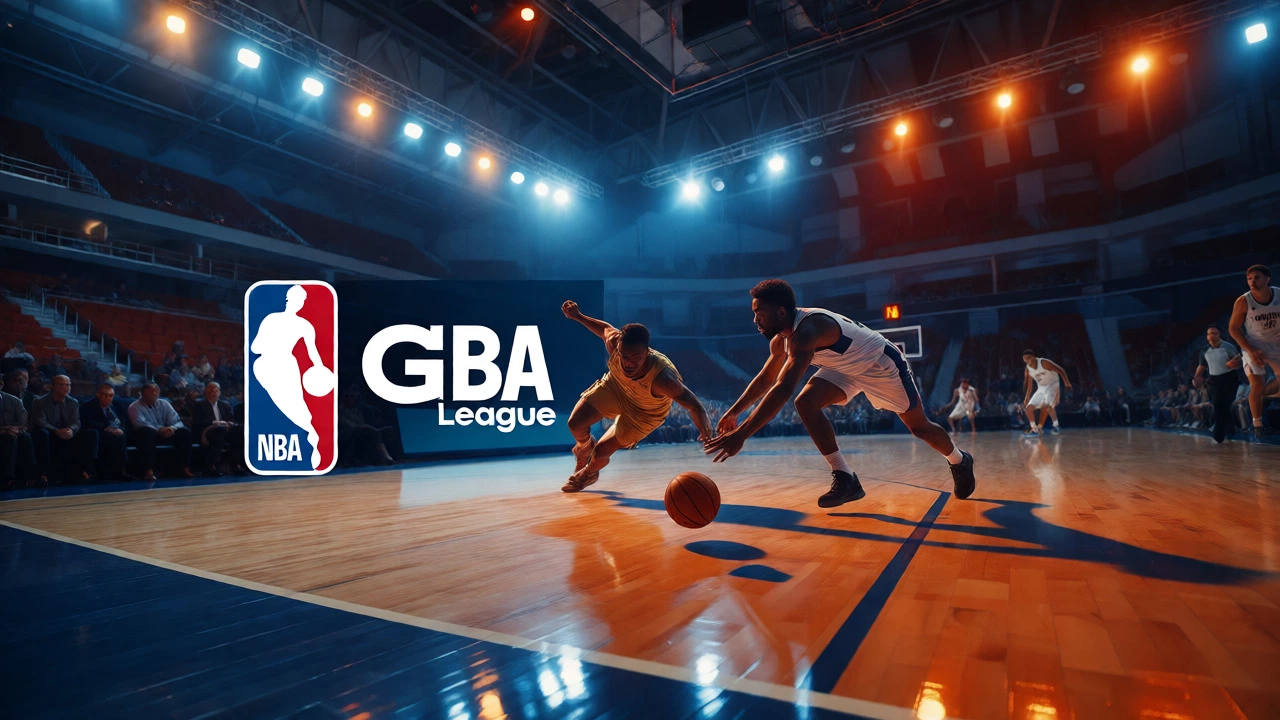
You’re watching a Tuesday night game on ESPN. Two guys are battling for a loose ball in a half-empty arena in Delaware. The broadcast graphic flashes NBA G League. You pause. Why “G”? Is it for “Great”? “Global”? Or maybe just because someone ran out of letters that started with “D”?
It’s a fair question. For over a decade, this circuit was known as the NBA Development League, or simply the D-League. Then, in 2017, it vanished overnight, replaced by a single letter. This wasn’t a random marketing stunt. It was a strategic pivot driven by corporate money, a shift in how we view player development, and a desire to shed an outdated stigma. If you’ve ever wondered why the NBA’s farm system looks different today than it did ten years ago, the answer lies in that one letter.
The Short Answer: Money Talks
Let’s cut through the noise. The league isn’t called the G League because “G” stands for “Development.” It doesn’t stand for “Game,” either. The “G” stands for Gatorade, which is the title sponsor of the league since its rebranding in 2017.
When the NBA decided to revamp its minor league system, they needed cash. Not just any cash, but significant investment to improve facilities, travel, and salaries. Gatorade, owned by PepsiCo, stepped up with a multi-year deal. In exchange, they got naming rights. So, technically, it’s the Gatorade League. But nobody wants to say “Gatorade League” three times a second during a broadcast. It’s clunky. It sounds like a thirst-quencher commercial, not a competitive sports entity. So, they shortened it to the G League.
This practice is standard in modern sports. Think about the Barclays Center in Brooklyn or the Mercedes-Benz Stadium in Atlanta. Corporate sponsorship dictates names. But in this case, the abbreviation stuck because the original name-NBA Development League-was actively hurting the brand.
Why “D-League” Was Failing the Brand
To understand the change, you have to look at what came before. From 2001 to 2017, it was the National Basketball Development League (NBDL), later shortened to the NBA Development League. The problem wasn’t the league itself; it was the perception.
“Development” sounded like a holding pen. It implied these players were unfinished products, waiting rooms for talent, or worse, players who had failed elsewhere. For fans, “D-League” felt amateurish. For players, it carried a stigma. Being sent down to the “D” felt like a demotion rather than an opportunity.
The NBA wanted to change that narrative. They didn’t want a place where washed-up veterans played out their contracts. They wanted a laboratory. A place where young prospects could refine their skills, experiment with new roles, and prove they belonged in the NBA. Calling it the “Development League” reinforced the idea that these games weren’t “real” basketball yet. Dropping the “D” removed that psychological barrier.
From Affiliate Model to Team-Based Structure
The name change coincided with a massive structural overhaul. Before 2017, most G League teams were independently owned franchises that had loose affiliation agreements with NBA teams. Players were assigned there, sure, but the relationship was often transactional and distant.
Starting around 2015-2016, the NBA began pushing for direct ownership. Today, nearly every NBA team owns or co-owns its G League affiliate. This shift changed everything. When the Golden State Warriors bought the Santa Cruz Warriors, or when the Toronto Raptors took over the Raptors 905, the integration became seamless.
Now, if a rookie struggles with shooting mechanics in the NBA, he can be sent down to his own team’s G League affiliate. The coaching staffs communicate daily. The playbooks are identical. The player isn’t going to a stranger’s gym; he’s staying within the organization’s ecosystem. This tight loop made the term “affiliate” feel too weak. “G League” felt more integrated, more like a sister league than a distant cousin.
What Does “G” Actually Mean to Fans Now?
While Gatorade pays the bills, the NBA has cleverly repurposed the ambiguity of the letter “G” to mean whatever the context requires. It’s a blank canvas.
- For Players: It represents Growth. This is where two-way contract players earn their minutes. It’s where undrafted rookies fight for roster spots.
- For Teams: It represents Grind. These games are physical, fast-paced, and often chaotic. It’s a proving ground.
- For Innovators: It represents Games-specifically, experimental formats. Remember the Elam Ending? That was tested here first.
This flexibility is intentional. By avoiding a specific word like “Development,” the league allows its identity to evolve. Today, it’s not just about fixing jump shots. It’s about testing rules, experimenting with technology, and scouting international talent.
The Global Reach: More Than Just US Farm System
If you think the G League is only for American players, you’re missing half the picture. The “G” also nods to Global, even if that wasn’t the primary sponsor reason.
In recent years, the league has expanded its footprint significantly. We see more international players than ever before. The NBA Academy Africa sends top prospects directly into the G League pipeline. Teams scout heavily from Europe, Australia, and South America. The league hosts the NBA G League International Challenge, bringing in teams from Mexico, Canada, and beyond.
| Era | Name | Primary Focus | Structure |
|---|---|---|---|
| 2001-2005 | National Basketball Development League (NBDL) | Stabilizing minor league basketball | Independent franchises |
| 2005-2017 | NBA Development League (D-League) | Player rehabilitation & depth | Affiliation agreements |
| 2017-Present | NBA G League | Integrated development & innovation | Direct NBA ownership |
This global angle helps justify the generic “G.” It’s not limited by geography. It’s a worldwide talent incubator. When you watch a game featuring a prospect from Senegal playing alongside a former college star from Duke, the “G” feels inclusive rather than restrictive.
Common Misconceptions About the Name
People love to guess what the G stands for. Here are the most common wrong answers I hear:
- “It stands for Greatness.” Nice sentiment, but no. Marketing departments don’t usually pick names based on abstract virtues unless it’s a slogan.
- “It’s short for ‘Guard’.” Unlikely. While guards dominate the perimeter play, centers and forwards thrive here too.
- “It’s a typo for ‘D’.” Tempting, given the keyboard proximity, but the change was deliberate and planned over months.
The truth is boring but effective: It’s a sponsorship deal. But the execution turned a boring contract clause into a versatile brand asset. The NBA realized that “D-League” was hard to sell to casual fans. “G League” is short, punchy, and fits easily into social media hashtags (#GL). It’s easier to chant. It looks better on merchandise.
How the Rebrand Changed Player Perception
Has the name change actually worked? Look at the data. Since 2017, the number of players drafted from the G League or signed as free agents after time spent there has risen steadily. More importantly, the attitude toward assignment has shifted.
Young stars like Luka Dončić (who played in Europe, not the G League, but influenced the trend) and Trae Young showed that alternative paths exist. But locally, players like Jalen Brunson or Austin Reaves used the G League as a springboard, not a exile. Because the league now features high-level competition and clear pathways to NBA minutes, being assigned there isn’t seen as a punishment anymore. It’s seen as a tactical move.
The branding helped. When you call something a “Laboratory” instead of a “Waiting Room,” people treat it differently. The G League markets itself as a place for innovation. They test new uniforms, new streaming technologies, and new fan engagement tools. This energetic vibe attracts sponsors and viewers who might have skipped the old D-League broadcasts.
Final Thoughts: The Power of a Single Letter
So, why is it called the G League? Because Gatorade paid for the naming rights, and the NBA wanted to erase the negative connotations of the word “Development.”
But don’t let the corporate origin fool you. The rebrand succeeded because it aligned with a genuine evolution in the sport. The minor leagues aren’t just for leftovers anymore. They are essential components of the NBA ecosystem. The “G” is ambiguous enough to allow that evolution to continue. Whether it means Growth, Global, Game, or just Greenbacks from PepsiCo, the name serves its purpose: it signals that this is serious basketball, worthy of your attention.
Next time you tune in to a Wednesday night matchup between the Long Island Nets and the Maine Celtics, remember: you’re not watching a B-game. You’re watching the future of the NBA, branded by a sports drink, and redefined by ambition.
Does the G stand for anything else besides Gatorade?
Officially, no. The primary reason is the sponsorship deal with Gatorade. However, the NBA encourages fans to interpret it flexibly, associating it with concepts like "Growth," "Global," or "Greatness" to build positive brand associations.
Is the G League the same as the old D-League?
Yes, it is the same organization. The NBA Development League (D-League) was rebranded to the NBA G League in 2017. While the core function remains player development, the structure changed significantly with more NBA teams owning their affiliates directly.
Why did the NBA drop the name "Development League"?
The term "Development" carried a stigma of being a place for failures or unfinished players. The NBA wanted to position the league as a premier pathway to the NBA, focusing on elite training and integration rather than just remedial work.
Do all NBA teams have a G League team?
As of the 2024-2025 season, nearly all NBA teams own or co-own a G League franchise. There are a few exceptions where teams share affiliations or rely on independent partners, but the trend is overwhelmingly toward direct ownership for better control over player development.
Can players go back and forth between the NBA and G League?
Yes, this is very common. Players on "Two-Way Contracts" spend part of the season with the NBA team and part with the G League affiliate. Even standard NBA players can be assigned to the G League for conditioning or injury recovery and recalled quickly.