Why Is Golf Called Golf? Unraveling the History and Origins of the Name
Golf History & Etymology Quiz
Ready to Play?
Can you separate golf folklore from historical fact? Test your knowledge of the game's origins, from the Middle Dutch roots to the 1457 ban.
Question 1 of 5
Golf Historian Score
Quick Summary: Key Takeaways
The short answer lies in a mix of Dutch and Scottish linguistic roots that solidified in the 15th century. While people often debate whether it came from "chou-wan" or "kolf," evidence points strongly toward a Germanic word evolution found in Low Countries trade routes. Understanding the term helps clarify the sport's legal status and cultural footprint across centuries.
- The name likely derives from the Middle Dutch word kolf, meaning club or staff.
- Scottish dialects adapted this term into gowf before standardizing to golf.
- A 1457 law banned the game due to its distraction from military archery practice.
- Early clubs at St Andrews formalized the spelling we recognize today.
Where the Word Actually Comes From
When you walk onto a course and look at the green grass, it's tempting to assume the name describes the action itself. However, **golf etymology** isn't about the ball or the hole initially; it was about the stick. In the mid-16th century, the sport was already established enough to warrant a ban, but the spelling varied wildly depending on who held the pen. Most historians agree the root sits firmly within the Germanic branch of languages.
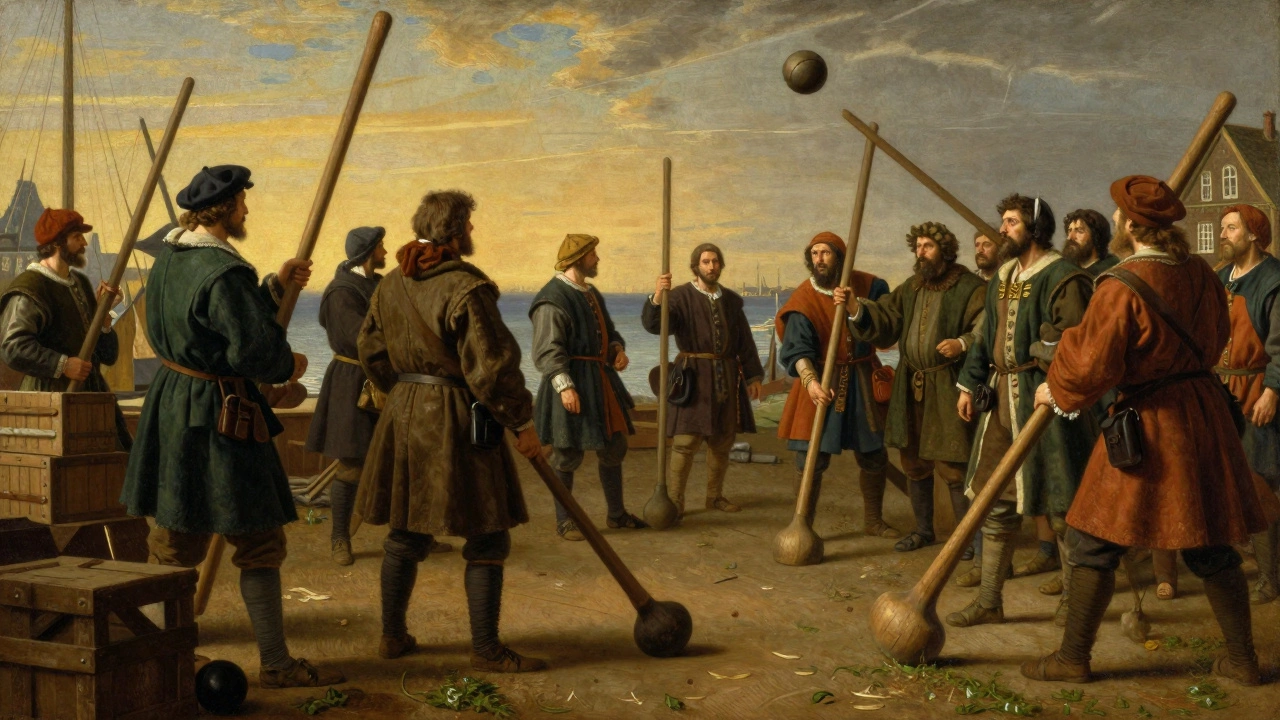
The most credible theory connects the word to the Middle Dutch kolf. This referred to the stick used to hit the ball. If you travel to Flanders or parts of the Netherlands, you see similar terms for walking sticks or clubs. It makes sense when you think about trade between the Low Countries and Britain during the medieval era. Merchants carried language along with wool and cloth, bringing the concept of the game-and its name-across the channel.
Golf is a precision club and ball sport where players use various clubs to hit balls into a series of holes. Also known as The Royal and Ancient Game, the terminology has remained consistent since the 1400s despite regional slang.There is a competing story that the term comes from an ancient Chinese game called ts'u-kuo-chu or chuwan. Some claim Marco Polo witnessed something similar while visiting Asia. While fascinating, there is no written link connecting those Asian games to European clubs. The gap in documentation is too wide to make a direct claim. Without manuscripts showing the word traveling east or west continuously, we treat that as folklore rather than linguistics.
The Scottish Ban That Proves History
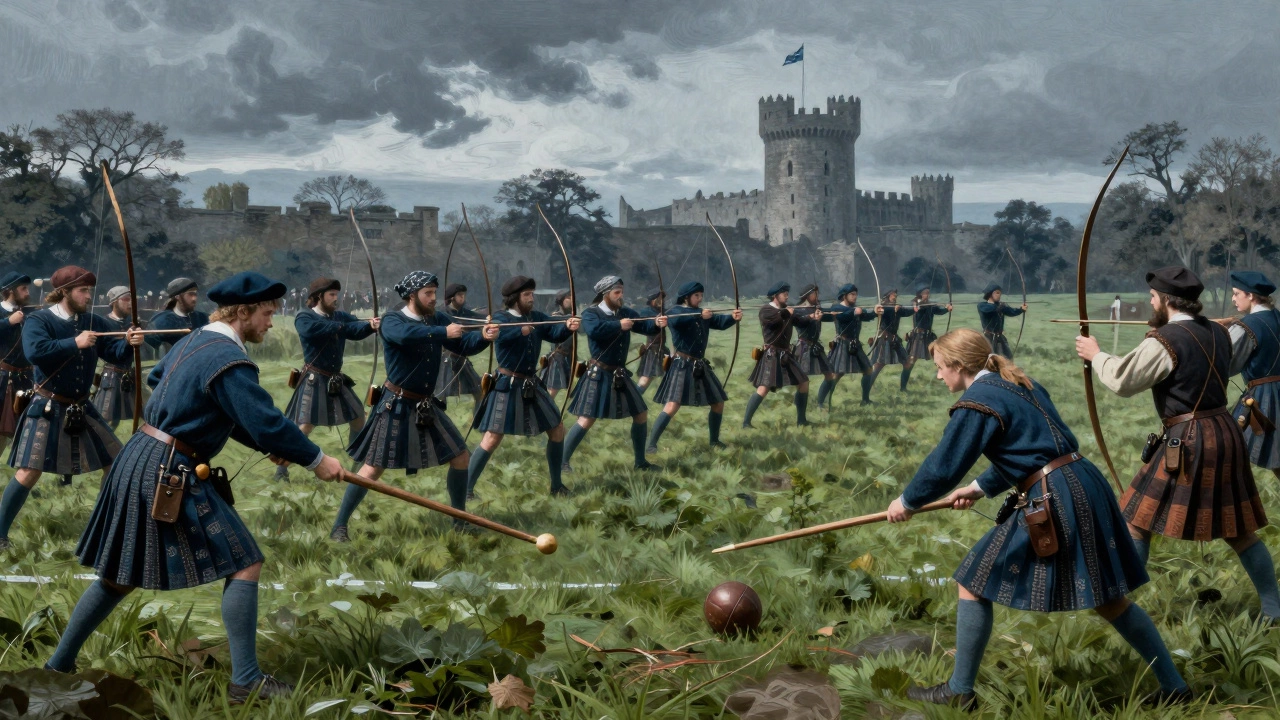
If you want proof of the name's existence, look at the laws passed by James II of Scotland. Back in 1457, Parliament issued a decree explicitly banning the playing of golfe and futball. They weren't trying to stop exercise; they were worried men were skipping archery drills. Archery was national defense back then. Men spending hours hitting balls with sticks wasn't helping prepare for war.
This document is crucial because it uses a spelling very close to what we have now. Earlier records might just say "game," but this law was specific. Interestingly, King James V lifted the ban later in 1502 when he decided it made for good recreation. He famously told his wife he preferred his time on the green to sitting in the court. This proves the sport was popular enough to threaten state safety protocols and eventually win royal approval.
| Year | Event / Document | Significance to Name |
|---|---|---|
| 1457 | Parliament of Scotland Bans Game | First clear reference to golfe |
| 1502 | King James V Lifts Ban | Royal acceptance of the sport |
| 1567 | Mary Queen of Scots Plays | Documented use of modern equipment |
| 1744 | Rules of Golf Published | Standardizes rules and terminology |
| 1890 | Federal Reserve Act Era | Tourism and mass popularity begins |
Dialect Differences Across Borders
Language changes based on geography, and the word followed the players. In the Highlands, it was sometimes spelled differently or pronounced with a softer sound. The transition from the hard 'c' sound in Dutch to the guttural 'g' in British English shows how the phonetics shifted as the game became more localized in East Lothian and Fife.
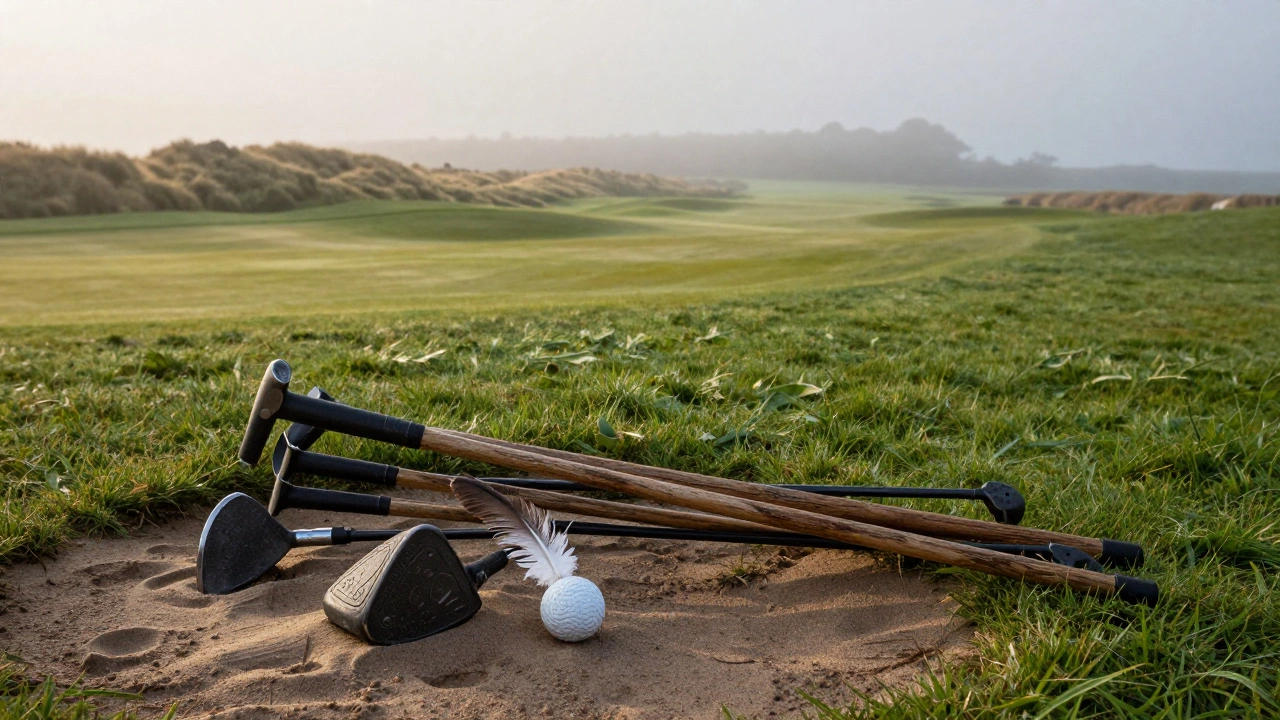
You also see variations in how regions describe the equipment. Early clubs were simply called woods or irons based on their shape and material, not distinct brand names like today. Even the ball changed names. Before gutta-percha rubber balls existed, they were leather stuffed with feathers, known as featheries. As the material improved, so did the slang for the equipment, but the core name of the activity stuck firmly as golf.
St Andrews Golf Club is the oldest governing body of golf located in Fife, Scotland. Established in the 1780s, it serves as the historic authority on the rules of play.The Role of St Andrews in Standardizing Terms
The Old Course at St Andrews didn't just host games; it hosted the dictionary. When the Gentlemen Golfers of Perth and other clubs started meeting regularly, they needed agreed-upon terms. You couldn't play matches effectively if one side thought the rules meant something different. The Rules of Golf, first drawn up in 1744, cemented the spelling and usage.
This shift marks a turning point where the game moved from a pastime to an organized sport. It created a distinction between the casual stick-and-ball games played in fields and the formal sport requiring clubs, greens, and scores. If you visit the clubhouse at St Andrews today, the library archives show exactly how the term evolved in handwriting over decades.
Modern Misconceptions About the Name
In the age of social media, myths spread fast. There are persistent stories claiming the acronym stands for something grand like "Gentlemen Only, Ladies Forbidden." You can easily debunk this by looking at dates. Women played the sport long before acronyms were trendy. Mary Queen of Scots played with a set of clubs gifted by her husband, King Henry Stuart. To claim it was gender-exclusive ignores the documented history of female participation in the 16th century.
Another common belief links the game solely to monks practicing with sticks. While monastic orders often had enclosed land where early games occurred, the monks weren't necessarily the originators of the term. It's safer to assume these spaces provided the necessary open ground for the Dutch imports to take root among the local peasantry.
Why the Name Matters for Today's Players
Understanding the origin gives you more than trivia; it grounds the identity of the sport. When brands release new gear, they often pay homage to these origins using terms like "heritage" or "classic." Knowing that the word relates back to "club" helps explain why driver shafts and irons share such deep connections in design history.
For students of sports history, the timeline offers a map of how culture shifts. The move from a banned activity to a symbol of leisure and business networking reflects economic changes. In the early days, it was a rural distraction. Now, it is an integral part of corporate culture globally. Yet, the core mechanics-and the core name-remain unchanged through five hundred years of innovation.
Frequently Asked Questions
Did golf originate from China?
While some theories suggest similarities to the Chinese game chuwan, there is no historical documentation linking the name or the sport directly to China. The strongest evidence points to Dutch and Scottish linguistic roots.
What does the word kolf mean?
Middle Dutch for "club" or "stick." It refers to the implement used to strike the ball, which is believed to be the precursor to our current spelling.
Who was the first person to ban golf?
King James II of Scotland signed an act in 1457 forbidding the game of golfe and futball, fearing it distracted archers from training.
Is golf an acronym?
No, it is not. Stories like "Gentlemen Only, Ladies Forbidden" are false backronyms created much later. The word predates the use of acronyms for naming sports.
When did the Rules of Golf get published?
The earliest code of rules was drafted by the Honorable Company of Edinburgh Golfers in 1744, establishing standardized terminology and gameplay norms.
Whether you play nine holes locally or travel for the majors, knowing the weight behind the name adds depth to your round. The next time someone asks, you can confidently trace the line back to 15th-century trade routes and the parlor of a Scottish king. It isn't just a game; it is a piece of living history carried forward by every swing.