Simple Machines in Sports: Levers, Pulleys, and Inclined Planes Explained
Interactive Lever Simulator
Lever Analysis
Seesaw, Rowing Oar
Wheelbarrow, Calf Raise
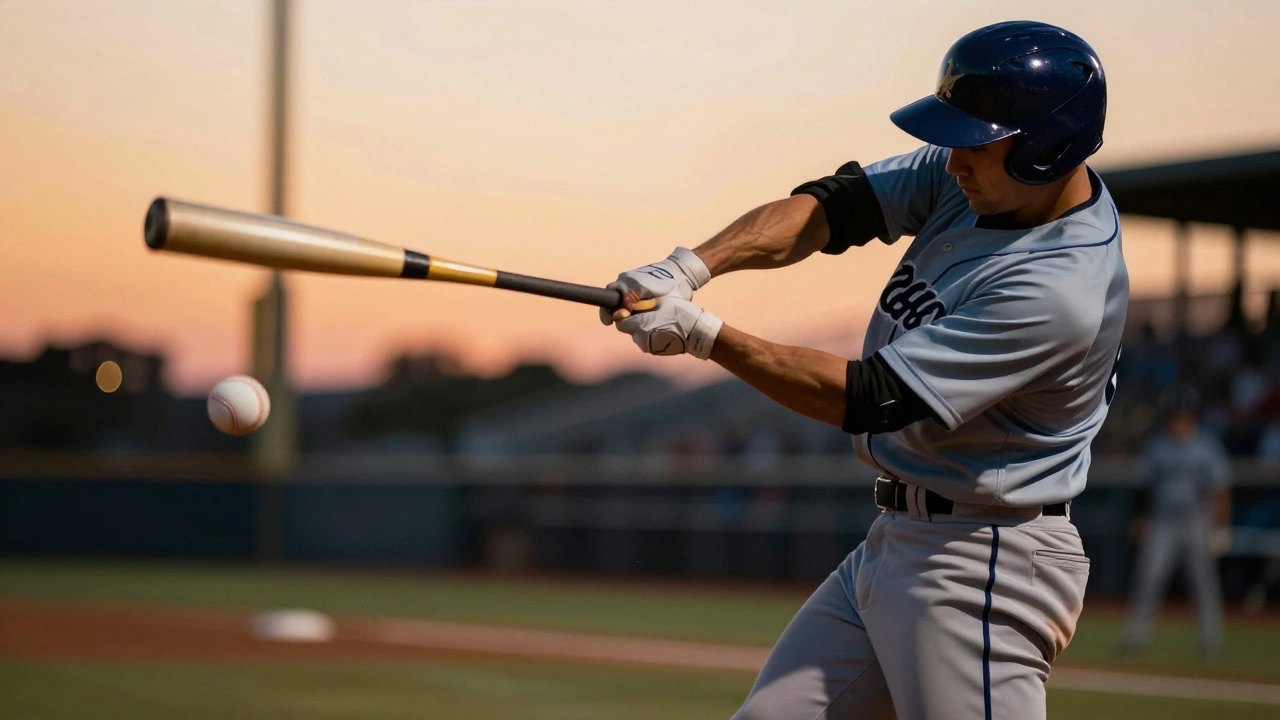
Baseball Bat, Bicep Curl
Have you ever wondered why a baseball bat feels lighter at the handle than at the barrel? Or how a rowing machine lets you pull against heavy resistance with just your arms? It isn't magic. It’s physics. Specifically, it is the clever application of simple machines. These six basic mechanical devices-levers, pulleys, wheels and axles, inclined planes, wedges, and screws-are the hidden engines behind almost every piece of sports equipment we use today.
Understanding these mechanisms doesn’t just help you ace a science test; it helps you understand how to move better, lift heavier, and play smarter. From the tennis racket in your hand to the bike path you ride on, simple machines are working to multiply force, change direction, or increase speed. Let's break down exactly where they hide in the world of sports and fitness.
The Lever: The Most Common Machine in Athletics
If there is one simple machine that dominates sports, it is the lever. A lever consists of a rigid bar that pivots around a fixed point called a fulcrum. In sports, your body is essentially a collection of levers. Your bones are the bars, your joints are the fulcrums, and your muscles provide the effort.
There are three classes of levers, and you use all of them depending on the sport:
- First-Class Levers (Fulcrum in the middle): Think of a seesaw. In sports, the classic example is a rowing oar. The oarlock is the fulcrum, your hands provide the effort, and the water provides the load (resistance). Another example is the neck when you nod your head; the joint is the pivot, the back of the neck pulls up, and the weight of the skull is the load.
- Second-Class Levers (Load in the middle): Imagine a wheelbarrow. This is rare in human anatomy but common in equipment. A calf raise machine works like this. The ball of your foot is the fulcrum, the weight stack is the load on top of your foot, and your calf muscle pulls up from the heel. This setup is great for lifting heavy loads because it multiplies force.
- Third-Class Levers (Effort in the middle): This is the most common type in the human body. When you throw a baseball, your elbow is the fulcrum, your bicep applies effort just below the elbow, and the ball in your hand is the load. Third-class levers sacrifice force for speed and range of motion. That’s why you can swing a golf club fast, even if you aren't incredibly strong.
When you hold a tennis racket, you are extending this lever system. The longer the racket, the greater the leverage, which allows you to hit the ball with more power from the same amount of arm strength. However, this also makes the racket harder to control. Players choose racket length based on whether they want more power (longer lever) or more maneuverability (shorter lever).
Pulleys: Changing Direction and Resistance
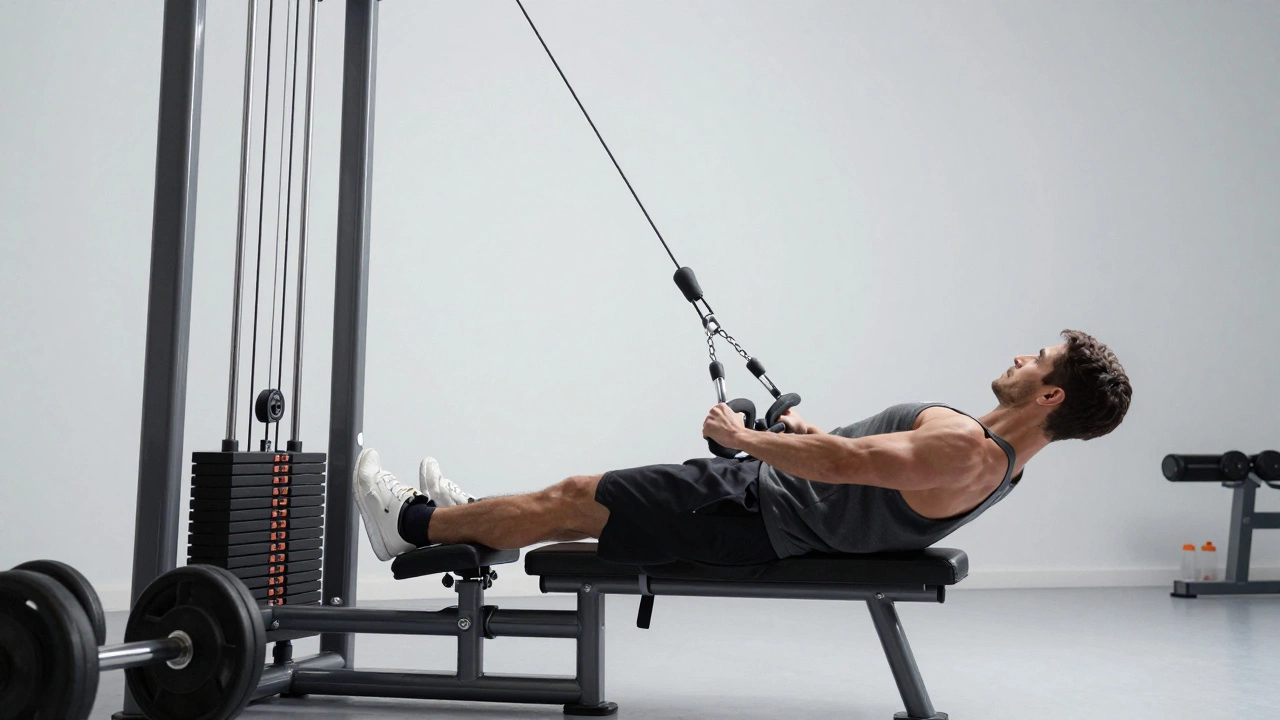
Pulleys might seem like industrial tools, but they are the backbone of modern gym equipment. A pulley is a wheel with a groove that holds a rope or cable. Its primary job in sports is to change the direction of force or to reduce the effort needed to lift a load.
In a home gym, look at a lat pulldown machine. You pull the bar down, but the weight stack moves up. The pulley system redirects your downward pulling force into an upward lifting action for the weights. Without pulleys, you would have to physically lift the weight stack directly above your head, which is awkward and limits the range of motion.
Cable crossover machines use multiple pulleys to create smooth, constant tension throughout an exercise. Unlike free weights, where gravity only pulls straight down, pulleys allow you to push or pull from any angle while maintaining consistent resistance. This is crucial for rehabilitation exercises where controlled movement is more important than raw power.
Even in outdoor sports, pulleys appear. Climbing belay devices use friction and pulley-like mechanics to control the descent of a climber. Zip lines used in adventure parks are giant pulley systems that allow gravity to do the work while the pulley reduces friction against the cable.
Wheels and Axles: Speed and Efficiency
The wheel and axle is perhaps the most recognizable simple machine. It consists of two circular objects of different sizes attached so they rotate together on a central axis. In sports, this combination is all about reducing friction and increasing speed.
Bicycles are the ultimate example. The pedals and chainrings form one wheel-and-axle system, while the rear cassette and wheel form another. By changing gears, you are altering the ratio between these two systems. Low gears make it easier to pedal uphill (more torque), while high gears allow you to go faster on flat ground (more speed).
Skateboards and rollerblades rely on small wheels to minimize rolling resistance. The smaller the wheel, the less energy is required to start moving, but the rougher the ride. Inline skates often feature larger wheels for stability and speed on smooth surfaces, while skateboards use smaller, softer wheels for grip and trick performance.
Golf clubs also utilize this principle subtly. The shaft acts as an axle, and the head acts as a weighted wheel at the end. When you swing, the head rotates around the axis of the shaft. The flexibility of the shaft (the "kick") stores energy like a spring, releasing it at impact to propel the ball further.
Inclined Planes: Managing Height and Force
An inclined plane is simply a sloping surface. It allows you to move a heavy object to a higher elevation with less force than lifting it straight up, though you have to move it over a longer distance. In sports, inclined planes are everywhere, often disguised as ramps or slopes.
Ski jumps and snowboarding half-pipes are massive inclined planes. They convert gravitational potential energy into kinetic energy. As a skier descends the slope, they gain speed. The steeper the incline, the faster the acceleration. Engineers design these slopes with precise angles to ensure athletes reach optimal speeds without exceeding safe limits.
Track and field events use inclined planes too. Hurdles are small vertical obstacles, but the approach run is often on a slight incline in training facilities to build leg strength. More visibly, wheelchair basketball courts must be perfectly level, but ramps leading to bleachers or locker rooms are essential inclined planes that allow athletes with mobility impairments to access the venue independently.
Even treadmills use inclined planes. When you increase the incline on a treadmill, you are simulating walking or running uphill. This increases the workload on your glutes and hamstrings without increasing your speed. It’s a way to vary intensity by changing the angle of the plane beneath your feet.
Wedges: Cutting Through Air and Water
A wedge is essentially two inclined planes joined back-to-back. It is used to split, cut, or hold things in place. In sports, wedges are critical for aerodynamics and hydrodynamics.
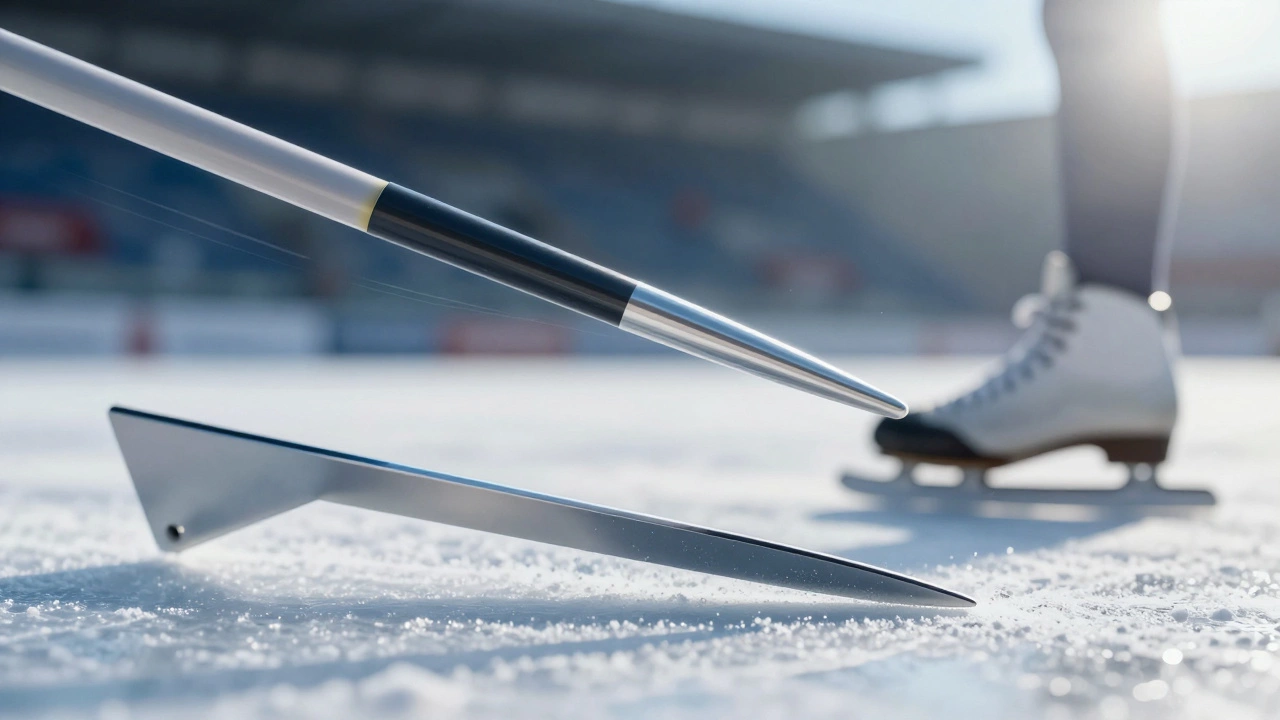
Darts are perfect examples of wedges. The sharp tip penetrates the cork board with minimal resistance. Similarly, javelins and arrows use wedge-shaped tips to slice through air. The streamlined shape reduces drag, allowing the projectile to travel farther and faster.
Swimming fins act as wedges underwater. The blade pushes water backward, propelling the swimmer forward. The angle of the fin determines how much water is displaced. Too steep, and you lose efficiency; too shallow, and you slip. Competitive swimmers choose fins with specific wedge profiles to maximize thrust during training.
Ice skates feature a blade that is slightly curved and sharpened to form a wedge edge. This edge bites into the ice, providing traction for turns and stops. Without this wedge shape, skaters would slide uncontrollably. The same principle applies to ski edges, which dig into snow to control direction.
Screws: Grip and Stability
A screw is an inclined plane wrapped around a cylinder. Its main function is to hold things together or to grip surfaces. In sports, screws are vital for safety and equipment integrity.
Think about a climbing harness. The buckles and adjustment points often use screw mechanisms to secure straps tightly. If a strap loosens mid-climb, the consequences could be fatal. Screws provide a reliable, non-slip connection that resists vibration and movement.
Bicycle seats and handlebars are attached to the frame using bolts and screws. These components must withstand significant torque and impact forces. High-quality bikes use titanium or stainless steel screws to prevent stripping under stress.
Even footwear relies on screws. Running shoes often have screws in the outsole to anchor cleats or studs. These studs act like tiny screws, digging into soft ground to provide traction. Golf shoes have metal spikes that screw into the sole, allowing players to replace worn-out grips easily.
Comparison of Simple Machines in Sports
| Machine Type | Primary Function | Common Sports Example | Benefit to Athlete |
|---|---|---|---|
| Lever | Multiply force or speed | Tennis racket, Baseball bat | Increases swing velocity and power |
| Pulley | Change force direction | Lat pulldown machine, Cable crossovers | Allows smooth, multi-angle resistance |
| Wheel & Axle | Reduce friction, increase speed | Bicycle, Skateboard | Enables efficient long-distance travel |
| Inclined Plane | Reduce lifting force | Ski jump, Treadmill incline | Controls acceleration and workout intensity |
| Wedge | Cut or penetrate | Javelin tip, Ice skate blade | Reduces drag and improves traction |
| Screw | Hold or grip | Climbing harness, Shoe studs | Ensures safety and stability |
Why Understanding Mechanics Matters for Performance
Knowing how simple machines work can actually improve your game. For instance, if you struggle with generating power in your golf swing, understanding the lever principle might lead you to adjust your grip position. Moving your hands closer to the clubhead shortens the lever, giving you more control but less power. Moving them away increases power but reduces accuracy. Finding the right balance is key.
In weightlifting, recognizing second-class levers helps you optimize your stance. During a deadlift, keeping the bar close to your shins minimizes the lever arm, reducing the strain on your lower back. This biomechanical tweak can add pounds to your lift without extra effort.
For cyclists, understanding wheel-and-axle ratios means choosing the right gear for the terrain. Shifting to a lower gear before hitting a hill prevents you from stalling and maintains cadence, which is more efficient for endurance.
Frequently Asked Questions
What is the most common simple machine in the human body?
The third-class lever is the most common simple machine in the human body. Examples include the bicep curling a weight or the quadriceps extending the knee. In these cases, the muscle attaches close to the joint (fulcrum), allowing for rapid movement and a wide range of motion, even though it requires more force to lift the load.
How do pulleys help in gym workouts?
Pulleys redirect force, allowing you to pull down to lift a weight up, or push horizontally to move a weight vertically. This enables exercises like lat pulldowns and cable flys, which target muscles from angles that free weights cannot. Pulleys also provide constant tension throughout the entire range of motion, unlike dumbbells where resistance varies with gravity.
Is a bicycle a simple machine?
A bicycle is a complex machine made up of several simple machines. It primarily uses wheels and axles for movement, levers in the brake handles and pedals, and pulleys in the chain drive system. Gears act as wheel-and-axle combinations to adjust speed and torque.
Why are wedges important in swimming?
Wedges reduce drag and increase propulsion. Swimming fins are shaped like wedges to push water backward efficiently. Additionally, the streamlined shape of a swimmer's body and cap acts as a wedge to slice through water, minimizing resistance and allowing for faster strokes.
Can you give an example of an inclined plane in track and field?
Sprinting starts often involve starting blocks set at an angle, creating an inclined plane for the athlete's feet. This allows sprinters to push off with greater force and achieve faster initial acceleration. Additionally, hurdles are placed on a flat track, but the act of clearing them involves overcoming a vertical displacement similar to navigating an obstacle course with varied elevations.