What Is a 3x5 Workout Plan? The Ultimate Guide to Building Strength

Build Your Personalized 3x5 Workout Plan
Weekly Schedule Recommendation
Walk into any serious gym, and you’ll likely see someone staring at a barbell, counting reps with intense focus. They aren’t trying to look like a bodybuilder or run a marathon. They are chasing raw power. This is the world of the 3x5 workout plan, which is a strength training protocol consisting of three sets of five repetitions per exercise. It’s simple, brutal, and incredibly effective. If you’ve ever wondered why your arms aren’t getting bigger despite hours on the machines, this might be the missing piece.
The beauty of this approach lies in its simplicity. You don’t need complex periodization charts or expensive supplements. You just need a barbell, some plates, and the discipline to lift heavy weights for low reps. But before you grab the heaviest dumbbells in the rack, it helps to understand exactly how this method works and why it builds muscle differently than high-rep bodybuilding routines.
How the 3x5 Protocol Works
At its core, the 3x5 plan is about intensity over volume. Most beginners start with three sets of ten or twelve reps because it feels safer and allows them to use lighter weights. While that builds endurance and some muscle size, it doesn’t maximize your potential for pure strength gains as efficiently as lower reps do.
When you perform three sets of five reps, you are targeting the neuromuscular system. This means you are teaching your brain to recruit more muscle fibers simultaneously. It’s not just about making the muscle bigger; it’s about making the connection between your mind and muscle stronger. This process leads to significant increases in force production.
Here is the basic structure:
- Sets: Exactly three working sets per exercise.
- Reps: Exactly five repetitions per set.
- Rest: Two to three minutes between sets to allow full recovery.
- Weight: A load that makes the fifth rep challenging but doable with perfect form.
You might wonder why we stop at five. Going to failure on five reps is dangerous if your form breaks down. The goal is to leave one or two reps "in the tank." This ensures you can complete all three sets with good technique, reducing injury risk while still providing enough stimulus for growth.
Choosing the Right Exercises
Not every exercise fits the 3x5 model. You cannot safely squat 200 pounds using a machine leg extension. This protocol relies on compound movements, which are exercises that involve multiple joints and muscle groups working together. These lifts allow you to move the most weight safely and effectively.
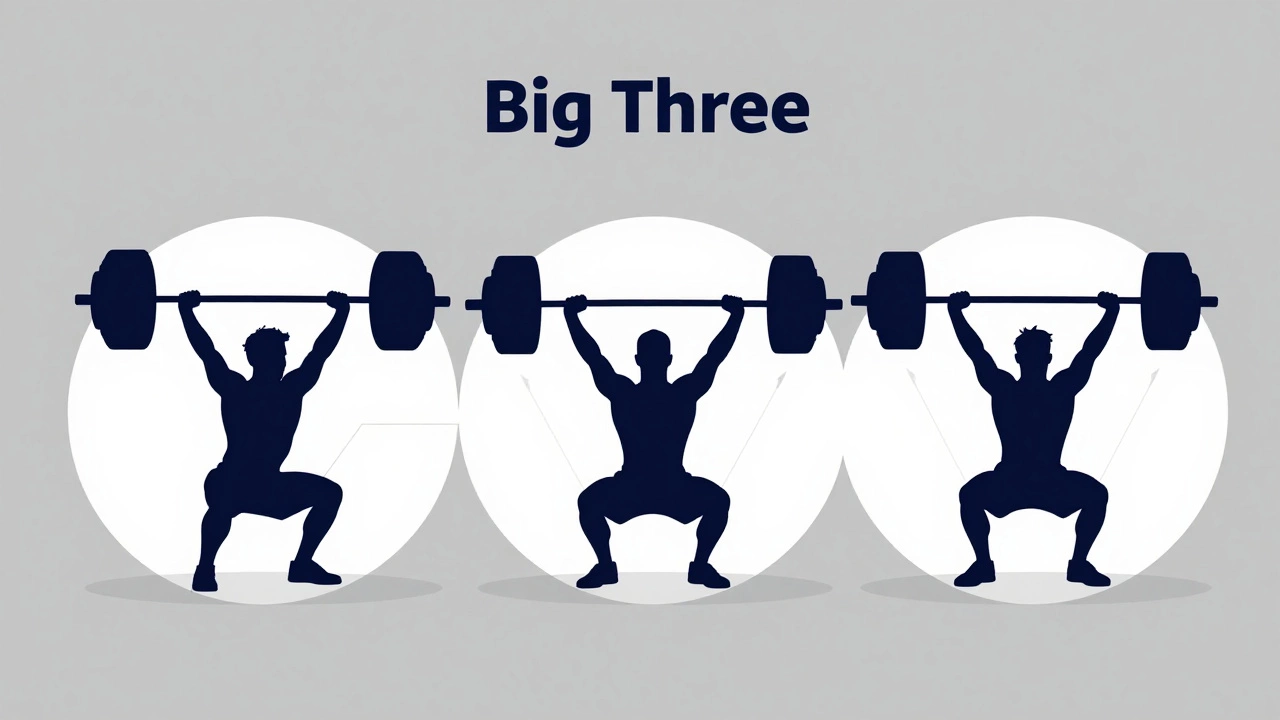
The "Big Three" powerlifting lifts are the foundation of almost every 3x5 program:
- Barbell Squat: Targets quads, glutes, hamstrings, and core.
- Deadlift: Works the entire posterior chain (back, hamstrings, glutes).
- Bench Press: Focuses on chest, shoulders, and triceps.
Many programs also include the Overhead Press (or Military Press) and Barbell Row to balance out upper body pushing and pulling. Using free weights like barbells forces your stabilizer muscles to work harder than machines do, leading to functional strength that translates to real-life activities.
Progressive Overload: The Key to Results
If you lift the same weight for three sets of five every week, nothing will change after month two. To keep growing, you must apply progressive overload. This simply means gradually increasing the demand placed on your muscular system.
In a 3x5 context, progression usually looks like this:
- Week 1: Warm up, then lift 100 lbs for 3x5.
- Week 2: Lift 105 lbs for 3x5.
- Week 3: Lift 110 lbs for 3x5.
Adding small increments, such as 2.5 to 5 pounds (1-2 kg), each session or week, seems minor. But over six months, those small jumps add up to massive strength gains. If you fail to hit five reps on all three sets, do not increase the weight. Repeat the same weight until you can comfortably complete the prescribed volume. This patience prevents plateaus and injuries.
Sample Weekly Schedule
Consistency beats intensity. Doing a perfect workout once a month does nothing. A structured schedule ensures you hit each muscle group frequently enough to stimulate growth without overtraining. Here is a common Full Body Split performed three days a week, such as Monday, Wednesday, and Friday.
| Exercise | Sets | Reps | Focus Area |
|---|---|---|---|
| Barbell Squat | 3 | 5 | Legs & Core |
| Bench Press | 3 | 5 | Chest & Triceps |
| Barbell Row | 3 | 5 | Back & Biceps |
| Overhead Press | 3 | 5 | Shoulders |
| Deadlift (Optional) | 1 | 5 | Posterior Chain |
Note that Deadlifts are often done for only one working set because they are extremely taxing on the central nervous system. Adding accessory work, like pull-ups or lunges, can help fill out your physique, but keep the main lifts focused on the 3x5 format.

Common Mistakes to Avoid
Even with a simple plan, people make errors that stall progress. The biggest mistake is ego lifting. Trying to impress others by adding too much weight too soon leads to bad form. Bad form leads to injury. Injury means no training. No training means no results. Keep your back straight during deadlifts and squats. Don’t bounce the bar off your chest on bench press.
Another error is skipping warm-up sets. You should never jump straight into your heavy working sets. Perform one light set with just the bar, followed by two progressively heavier sets before your first working set of five. This prepares your joints and tendons for the load.
Finally, don’t neglect recovery. Strength is built when you rest, not when you train. Aim for seven to nine hours of sleep per night. Eat enough protein-roughly 1.6 to 2.2 grams per kilogram of body weight-to repair muscle tissue. If you feel constantly exhausted or your performance drops, take an extra rest day. Listening to your body is part of the strategy.
Who Should Use This Plan?
This plan is ideal for beginners who want to build a solid strength base quickly. It is also excellent for intermediate lifters who have stalled on higher-rep programs. However, it may not be suitable for advanced bodybuilders whose primary goal is maximum muscle hypertrophy (size) rather than strength. For them, higher volume and varied rep ranges might be more effective.
If you are recovering from an injury, consult a physical therapist before starting heavy compound lifts. Proper technique is non-negotiable. Consider hiring a coach for a few sessions to check your form on squats and deadlifts. The investment pays off in longevity and safety.
Is 3x5 better than 3x10 for building muscle?
It depends on your goal. 3x5 is superior for building maximal strength and dense muscle fiber recruitment. 3x10 is better for muscular endurance and metabolic stress, which contributes to muscle size. For general fitness, 3x5 provides a great foundation of strength that supports overall health and athletic performance.
How long should I rest between sets in a 3x5 workout?
You should rest for two to three minutes between heavy sets. This allows your ATP-PC energy system to replenish fully, ensuring you can lift the same heavy weight with good form on the next set. Shorter rests lead to premature fatigue and reduced performance.
Can I do a 3x5 workout at home?
Yes, if you have access to a barbell, adjustable dumbbells, or a kettlebell. Many home gyms now offer compact squat racks. If space is limited, focus on dumbbell variations like goblet squats and dumbbell bench presses, maintaining the 3x5 rep scheme.
Should I increase weight every single workout?
Ideally, yes, but listen to your body. Some weeks you might feel tired or stressed. In those cases, repeating the previous week's weight is acceptable. Consistency over time matters more than aggressive weekly jumps. If you fail to hit five reps, stay at the same weight for the next session.
Do I need to count warm-up reps towards my 3x5?
No. Warm-up sets are preparatory and should not be counted as working sets. Your three sets of five begin only after you have loaded your target working weight. Warm-ups prime your nervous system without causing fatigue.