What Is the 5 by 5 Rule in Gym? A Complete Guide to StrongLifts and Powerlifting

StrongLifts 5x5 Weekly Planner & Volume Calculator
Enter the weight you successfully completed for 5 sets of 5 reps last week.
Enter weights and click generate to see your customized schedule.
Weekly Training Analysis
This represents the total tonnage lifted across all 5 exercises for the week (3 workouts).
If you hit all reps with good form, add 5 lbs to each exercise next time.
Walk into any serious gym, and you’ll likely see someone staring at their phone, calculating numbers before lifting a barbell. They aren’t checking social media; they are following the 5 by 5 rule, also known as 5x5 training. It is one of the most effective, time-tested methods for building raw strength and muscle mass. But what exactly is it, and why do so many lifters swear by it?
The 5 by 5 rule is simple: perform five sets of five repetitions for your main compound lifts. That’s it. No fancy machines, no endless isolation exercises. Just heavy weights, consistent reps, and steady progress. This approach isn’t just a trend-it’s a foundational pillar of strength training used by everyone from novice bodybuilders to elite powerlifters.
Key Takeaways
- The 5x5 rule focuses on five sets of five reps for major compound movements like squats, bench press, and deadlifts.
- It relies on progressive overload, meaning you increase weight slightly each session to force continuous adaptation.
- This method is ideal for beginners and intermediates looking to build a solid strength base quickly without spending hours in the gym.
- Recovery is critical; most programs recommend training three days a week to allow muscles adequate time to repair.
Understanding the Core Concept
At its heart, the 5 by 5 rule is about efficiency and intensity. Unlike bodybuilding routines that might involve three sets of ten or twelve reps with lighter weights, 5x5 targets the neuromuscular system differently. You are lifting heavier loads relative to your maximum capacity. This teaches your nervous system to recruit more muscle fibers simultaneously, which is the key to getting stronger.
Think of it this way: if you want to run faster, you practice sprinting. If you want to lift heavier, you must lift heavy. The 5x5 structure sits in a sweet spot. Five reps are enough to provide significant mechanical tension (the stimulus for growth) but not so many that fatigue becomes the primary factor limiting your performance. This makes it superior for strength compared to higher-rep schemes.
The most famous program built around this principle is StrongLifts 5x5, created by Mike Fitch. While there are variations, the core philosophy remains the same: prioritize compound lifts, track every rep, and add weight whenever possible. It removes the guesswork from training. You show up, you hit your numbers, you leave. Simple, yet incredibly powerful.
The Essential Exercises
You won’t find bicep curls or leg extensions in a standard 5x5 routine. The focus is strictly on multi-joint compound movements. These exercises engage multiple muscle groups and joints simultaneously, allowing you to move the most amount of weight safely. Here are the big three that form the backbone of the 5x5 rule:
- Squat: Targets the quadriceps, glutes, hamstrings, and core. It is often considered the king of all exercises because it builds lower-body strength and overall stability.
- Bench Press: Works the chest, shoulders, and triceps. This is the primary upper-body pushing movement for building pressing strength.
- Deadlift: Engages the entire posterior chain, including the back, glutes, hamstrings, and grip. It teaches you how to transfer force from the ground through your body.
Many 5x5 programs also include the Overhead Press (or Military Press) and the Barbell Row. These fill in the gaps for shoulder development and back thickness. By mastering these five lifts, you cover almost every major muscle group in the body. There is no need for additional accessory work in the early stages, which keeps workouts short and focused.
| Exercise | Primary Muscles Worked | Secondary Muscles |
|---|---|---|
| Squat | Quadriceps, Glutes | Hamstrings, Core, Calves |
| Bench Press | Chest, Front Delts | Triceps, Serratus Anterior |
| Deadlift | Erector Spinae, Hamstrings | Glutes, Lats, Forearms |
| Overhead Press | Shoulders (Deltoids) | Triceps, Upper Chest, Core |
| Barbell Row | Lats, Rhomboids | Biceps, Rear Delts, Lower Back |

How Progressive Overload Drives Results
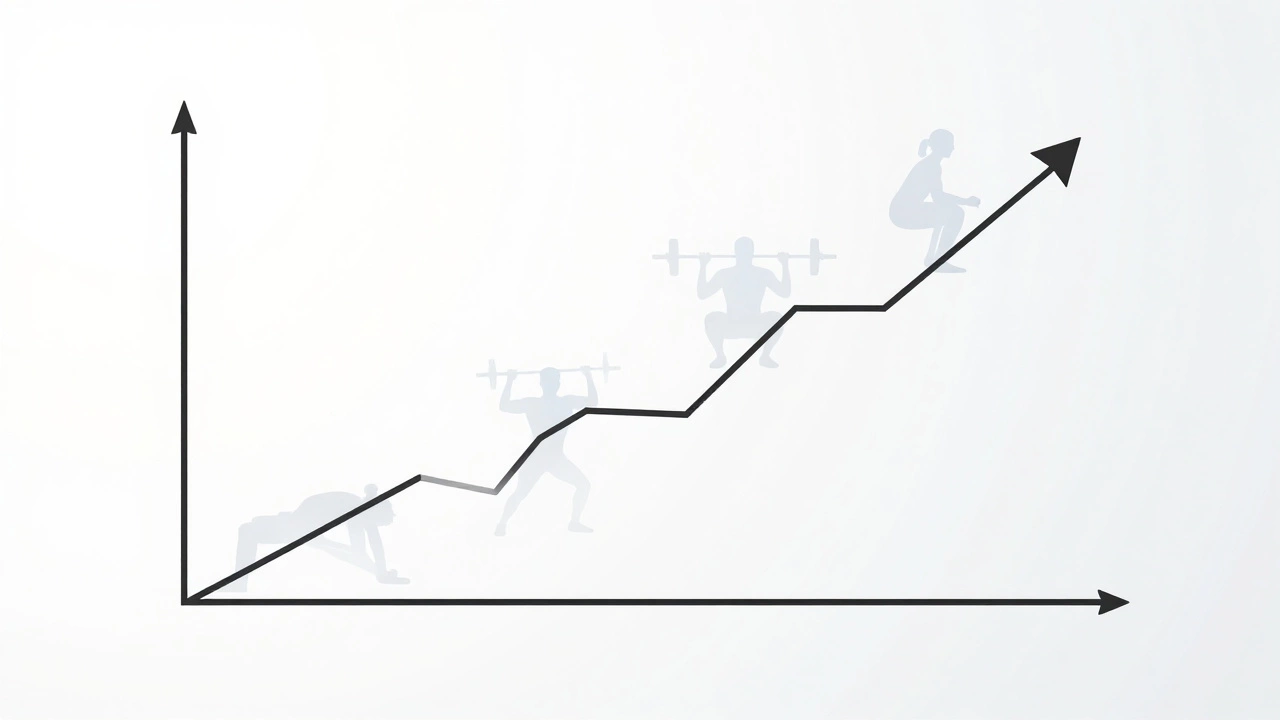
The magic of the 5 by 5 rule isn’t just the repetition scheme; it’s the systematic application of progressive overload. In simple terms, this means gradually increasing the demand placed on your musculoskeletal system. Without progression, your body has no reason to adapt, and you will plateau quickly.
In a typical 5x5 program, you start with a weight you can comfortably lift for five sets of five reps. Let’s say you bench press 100 pounds. Your goal for the next session is to add two to five pounds to the bar. If you successfully complete all five sets of five reps with good form, you add weight again the next time you train that exercise. This linear progression allows for rapid strength gains in the first few months.
However, life happens, and so does fatigue. Eventually, you will reach a point where you cannot complete all five reps with the new weight. This is called a "stall." When this occurs, most 5x5 protocols instruct you to reduce the weight by 10% and repeat the set until you can finish it cleanly. Then, you resume adding weight. This deload strategy prevents injury and ensures long-term consistency, which is far more valuable than short-term heroics.
Structuring Your Weekly Schedule
Consistency is key, but so is recovery. You cannot train heavy every day. The central nervous system needs time to bounce back from high-intensity efforts. Most successful 5x5 programs utilize an A/B split performed three days a week, such as Monday, Wednesday, and Friday.
Here is how a standard A/B split looks:
- Workout A: Squat, Bench Press, Barbell Row
- Workout B: Squat, Overhead Press, Deadlift
You alternate between these workouts. So, Week 1 might be A-B-A, and Week 2 would be B-A-B. This ensures you hit each muscle group twice a week while providing 48 hours of rest between sessions involving similar movements. For example, you never squat on consecutive days. This frequency strikes the perfect balance between stimulus and recovery, maximizing hypertrophy and strength adaptations without burning out.
If you have more time or recover exceptionally well, some advanced variations use four-day splits. However, for most people, especially those working full-time jobs, the three-day schedule is sustainable. It fits into a busy lifestyle while still delivering impressive results.
Common Mistakes to Avoid
Even with a simple program like 5x5, lifters make errors that hinder progress or lead to injury. Being aware of these pitfalls can save you months of frustration.
Ego Lifting: Adding too much weight too soon is the fastest way to ruin your form. If your technique breaks down-say, your hips shoot up during a squat or your lower back rounds during a deadlift-you are inviting injury. Leave your ego at the door. Prioritize perfect form over the number on the plate.
Neglecting Warm-ups: Jumping straight into heavy sets is dangerous. Always perform general warm-ups (like jumping jacks or light cardio) followed by specific warm-up sets. Start with an empty bar, then gradually increase the weight until you reach your working weight. This prepares your joints and nervous system for the load ahead.
Ignoring Accessory Work: While 5x5 focuses on compounds, small muscle groups can become weak links. If your grip fails during deadlifts or your shoulders hurt during bench presses, incorporate targeted exercises like wrist curls or face pulls. Listen to your body and address imbalances before they become injuries.
Who Should Use the 5 by 5 Rule?
The 5 by 5 rule is not for everyone. It is particularly effective for beginners and intermediate lifters who have less than two years of consistent training experience. Novices benefit immensely from the simplicity and the rapid strength gains associated with linear progression. It builds a strong foundation of movement patterns and muscular endurance.
Advanced lifters may find 5x5 less effective over time. As you get stronger, the volume required to maintain muscle mass increases, and the ability to add weight linearly decreases. Advanced athletes often switch to periodized programs that vary intensity and volume more complexly. However, even seasoned pros sometimes return to 5x5 for a "deload" phase or to break through plateaus by focusing purely on strength mechanics.
If you are returning to the gym after a long break, 5x5 is an excellent choice to rebuild confidence and competence. It reminds you of the basics and helps you reconnect with your body’s capabilities.
Frequently Asked Questions
Is 5x5 better than 3x10 for muscle growth?
It depends on your goals. 5x5 is generally superior for building raw strength because it uses heavier loads. 3x10 is often preferred for pure hypertrophy (muscle size) as it creates more metabolic stress. However, research shows that both rep ranges can build muscle effectively if taken close to failure. For most people, starting with 5x5 provides a better overall physique foundation due to increased density and strength.
Can I do 5x5 every day?
No, you should not do 5x5 every day. Heavy compound lifting places significant stress on your central nervous system and joints. Training the same muscle groups daily leads to overtraining, poor recovery, and increased risk of injury. Stick to the recommended 3-day-per-week schedule to allow adequate rest between sessions.
What should I eat when doing 5x5?
To support the intense demands of 5x5, aim for a slight caloric surplus if you want to gain muscle and strength. Focus on high-quality protein sources like chicken, fish, eggs, and lean beef to aid muscle repair. Carbohydrates are crucial for fueling your workouts, so include rice, oats, potatoes, and fruits. Don’t neglect healthy fats from avocados, nuts, and olive oil for hormonal health.
How long does it take to see results with 5x5?
Most beginners notice significant strength gains within the first 4 to 6 weeks. You may see visible changes in muscle definition and posture within 8 to 12 weeks. Consistency is the biggest factor. If you stick to the program, eat properly, and sleep well, the results will be undeniable. Remember, strength gains often precede visible muscle growth.
Do I need a spotter for 5x5?
Having a spotter is highly recommended, especially for exercises like the bench press and squat. Since you are lifting near your limit, a spotter can ensure safety if you fail a rep. If you don’t have a training partner, consider using a rack with safety bars for squats and a bench with safety pins for bench presses. Safety should always be your top priority.
What if I miss a rep?
If you miss a rep (for example, you only get 4 reps on your last set), do not add weight the next session. Repeat the same weight until you can complete all 5 sets of 5 reps with perfect form. Once you succeed, then add weight. This ensures you are truly ready for the next load and prevents accumulating bad habits.