What Sport Is Brazil Best At?
Brazil World Cup Win Calculator
Brazil has won the FIFA World Cup five times—more than any other nation. This calculator shows the time between each victory.
When you think of Brazil, what comes to mind? Sun-drenched beaches, samba rhythms, or maybe the electric energy of a packed Maracanã Stadium? If you’re asking what sport Brazil is best at, the answer isn’t even close to a debate-it’s football. Not just popular, not just loved, but woven into the DNA of the country. Brazil doesn’t just play football; it breathes it, dreams it, and lives it.
Football Is Brazil’s National Identity
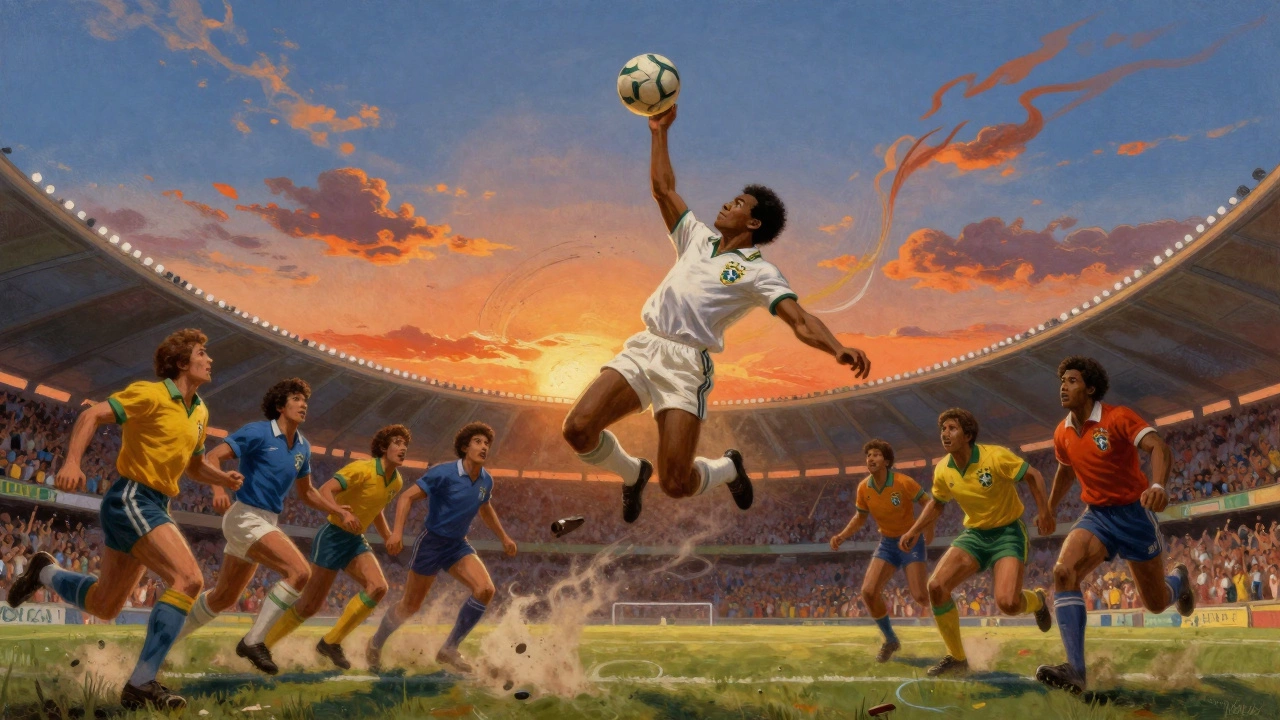
Brazil has won the FIFA World Cup five times-more than any other nation. Those titles came in 1958, 1962, 1970, 1994, and 2002. Each win wasn’t just a trophy; it was a moment that united a country of over 210 million people. The 1970 team, led by Pelé, is still called the greatest football team ever assembled. They didn’t just win-they played with artistry. Passes like poetry, dribbles that defied physics, goals that felt like miracles. That team didn’t just represent Brazil; they became Brazil.
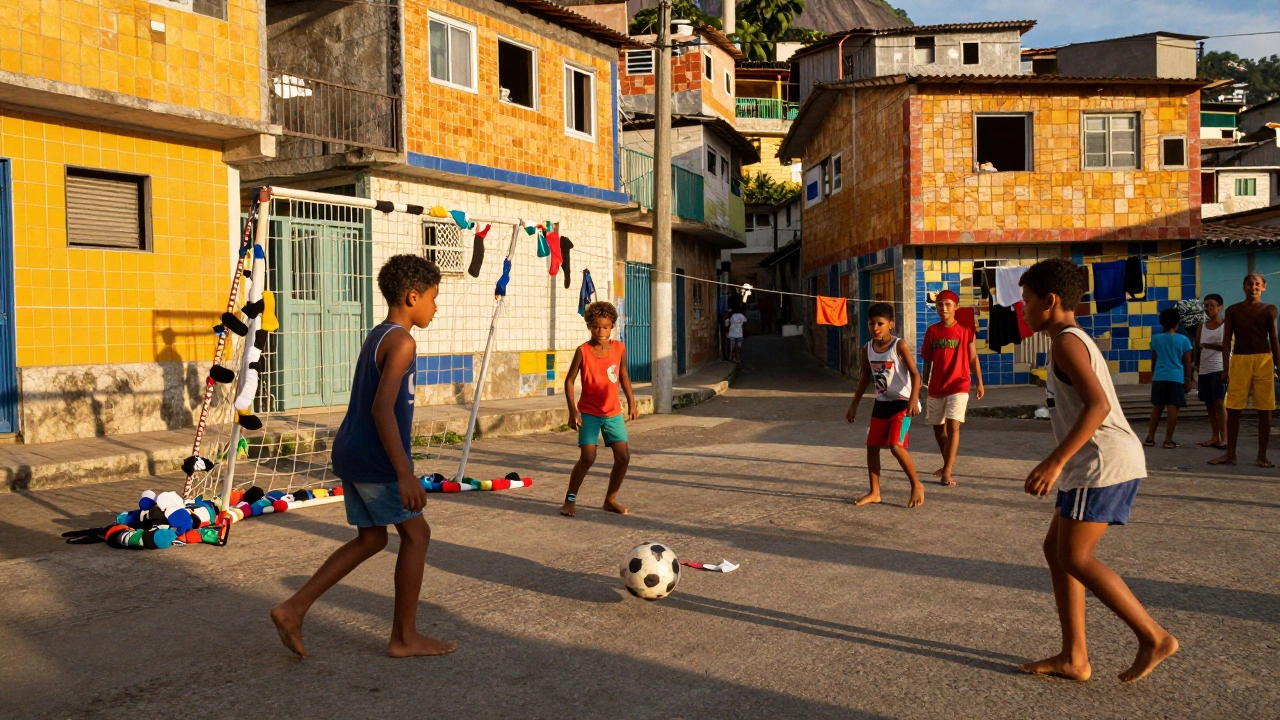
Today, you’ll find kids in favelas kicking a ball made of socks, teenagers in São Paulo practicing free kicks after school, and grandfathers in Rio arguing over tactics over caipirinhas. Football isn’t a pastime here-it’s a birthright. Every child grows up knowing the names of Zico, Romário, Ronaldo, Ronaldinho, and Neymar. They learn the moves not from coaches, but from watching highlights on YouTube or replaying them in the street.
Why Brazil Dominates the Game
Brazil’s success doesn’t come from fancy academies or billion-dollar budgets. It comes from culture. The country has over 4,000 professional football clubs, and nearly every town has its own local team. Youth academies aren’t just organized-they’re everywhere. Clubs like Flamengo, Corinthians, and Santos don’t just scout talent; they hunt it. They find kids with raw skill in alleyways, on dusty fields, and in makeshift nets made of laundry lines.
What sets Brazilian players apart? It’s their touch. They grow up playing futsal-five-a-side indoor football-on hard courts. That forces them to develop incredible ball control, quick thinking, and close-quarters creativity. Unlike players from countries where football is more structured and physical, Brazilian players learn to improvise. They don’t just react to the game-they anticipate it.
Look at the stats. Brazil has produced more Ballon d’Or winners than any other country. More than 100 Brazilians have played in Europe’s top five leagues. In the 2022 World Cup, Brazil had the highest number of players in La Liga and the Premier League combined. Even when they didn’t win, their players were the ones making the difference.
Other Sports? Sure, But Nothing Comes Close
You might hear about Brazil’s success in volleyball, mixed martial arts, or even Formula 1. Ayrton Senna was a national hero. Brazil has won Olympic gold in volleyball. MMA fighters like Anderson Silva and Charles Oliveira have made global names. But none of these come close to the scale, passion, or impact of football.
Volleyball is popular, yes. But how many Brazilian households have a TV tuned to a volleyball match on a Sunday afternoon? How many kids grow up saying they want to be a volleyball setter? Not many. Football? Every kid does. The national team has more fans than the entire population of most European countries.
Even rugby, which has been growing slowly in Brazil, is still a niche sport. The national rugby team, the Tupis, has never qualified for a Rugby World Cup. They play in lower-tier tournaments. The Brazilian Rugby Union has around 20,000 registered players. Football? Over 10 million. That’s not a comparison-it’s a chasm.
The Legacy in Every Goal
Brazil’s football legacy isn’t just in trophies. It’s in the way the game is played. The bicycle kick. The elastico. The rabona. These aren’t just tricks-they’re Brazilian inventions, born from joy, not strategy. When you watch a Brazilian player dance past three defenders, you’re seeing generations of street football, of barefoot kids learning to control a ball with no grass, no lines, no rules.
The 2014 World Cup, hosted in Brazil, showed the world what happens when football becomes a national obsession. Over 3.5 million fans packed stadiums. Streets emptied as people watched matches on giant screens. When Brazil lost 7-1 to Germany in the semifinals, it wasn’t just a defeat-it felt like a national wound. The country didn’t just lose a game; it lost a piece of its soul. That’s how deep this goes.
What’s Next for Brazilian Football?
Brazil is still producing world-class talent. Endrick, a 17-year-old striker for Real Madrid, is already being called the next Neymar. Vinícius Jr. plays for Real Madrid and is one of the most exciting wingers in Europe. Even in the women’s game, Brazil’s team is climbing-ranked in the top 10 globally, with players like Ludmila and Geyse lighting up the WSL.
The infrastructure is changing too. New training centers are opening in remote areas. Digital scouting tools are helping find talent in places no one thought to look before. But the heart of Brazilian football hasn’t changed. It’s still the same: raw talent, fearless creativity, and an unshakable belief that football is more than a sport-it’s freedom.
Why This Matters Beyond Brazil
Understanding why Brazil is best at football isn’t just about knowing history. It’s about seeing how culture shapes excellence. No country has turned a game into an identity the way Brazil has. The lessons are clear: passion beats funding, creativity beats structure, and joy beats pressure every time.
If you want to understand what makes a nation great at something, look at how deeply it’s embedded in daily life. In Brazil, football isn’t played on weekends. It’s played every day-in the backyard, on the beach, in the middle of traffic. And that’s why, no matter what other sports rise, Brazil will always be the king of football.
Is football really the only sport Brazil excels at?
Football is by far Brazil’s most dominant sport. While Brazil has strong teams in volleyball, MMA, and motorsports, none come close in terms of national obsession, global impact, or number of elite athletes. Brazil has won five World Cups and produced more legendary footballers than any other country. Other sports are popular, but they’re secondary.
Why does Brazil produce so many great footballers?
Brazil’s football success comes from a mix of culture, environment, and early exposure. Kids grow up playing futsal on hard courts, which builds exceptional ball control. Football is everywhere-in streets, beaches, and favelas. There’s no pressure to win; the focus is on creativity and joy. This environment allows natural talent to flourish without being crushed by rigid training systems.
Has Brazil ever won a World Cup without a superstar?
No. Every Brazilian World Cup-winning team had at least one transcendent player: Pelé in 1958 and 1970, Zico and Socrates in 1982 (even though they didn’t win), Romário and Ronaldo in 1994 and 2002. Brazil’s success relies on individual brilliance combined with team chemistry. The system thrives on star power.
How does Brazil’s football development compare to Europe’s?
European academies focus on structure, tactics, and physical conditioning. Brazilian development is organic-centered on improvisation and skill. Brazilian players often arrive in Europe with superior ball control but need time to adapt to tactical discipline. That’s why many Brazilian stars shine brightest in their early 20s, once they’ve learned to blend creativity with structure.
Is Brazilian football declining?
Not at all. Brazil still leads the world in producing top-tier players. The national team hasn’t won since 2002, but they’ve consistently reached semifinals and finals. Young stars like Endrick and Vinícius Jr. are already dominating in Europe. The talent pipeline is stronger than ever, and the passion hasn’t faded. Brazil may be rebuilding, but it’s not falling behind.